Mattress Guide for Side Sleepers (UK)
Published 2026-08-03. Last updated 2026-08-28. Desk research by Kaiser Khan — we have not product-tested side sleeper mattress. This is not a shop review and not medical advice.
In short
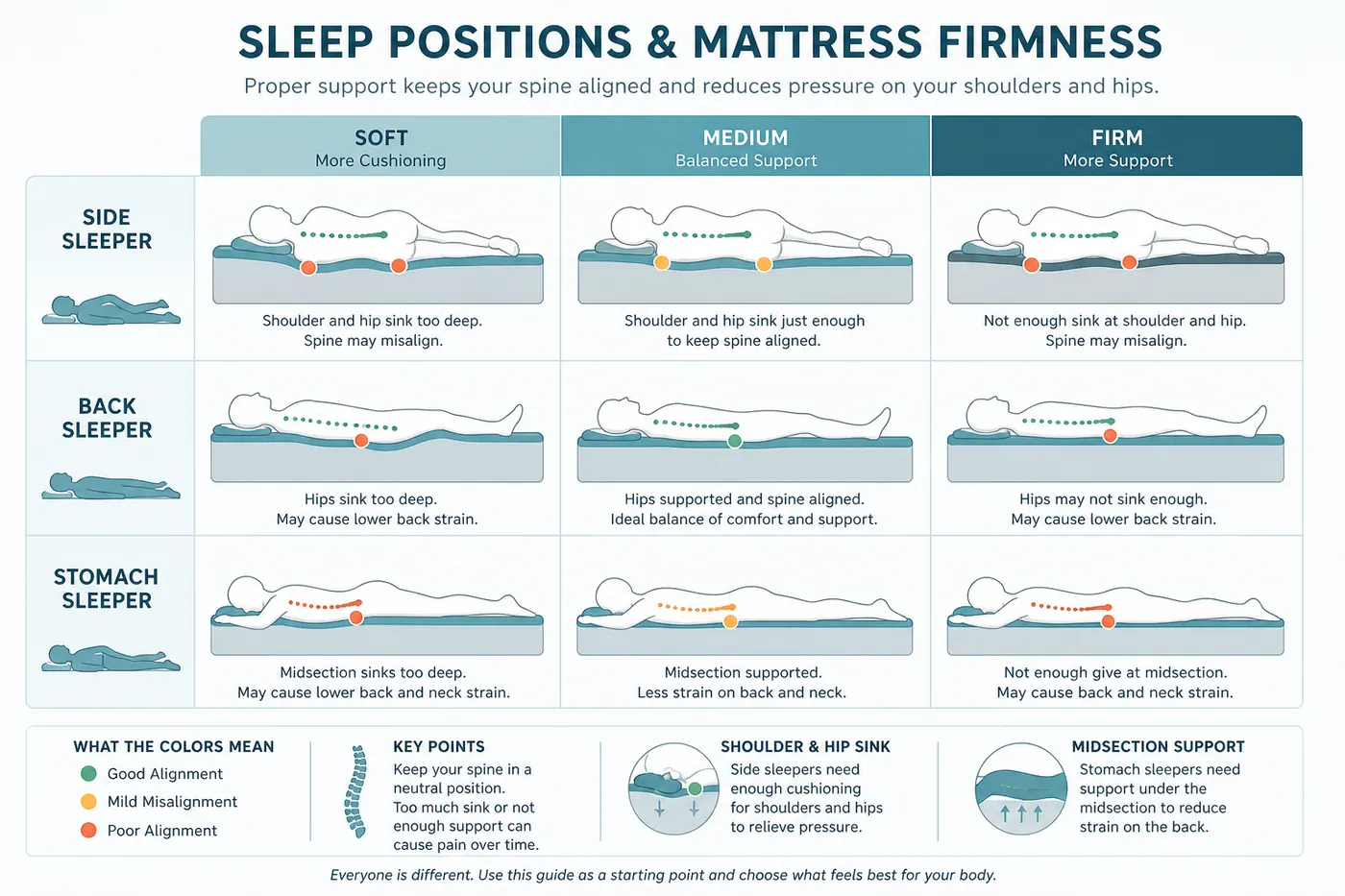
Side sleepers usually need enough surface give at the shoulder and hip so the spine stays nearer a straight line. Soft to medium pocket, hybrid or foam comfort layers are common starting points. Heavier side sleepers may need medium rather than very soft so hips do not drop. Shop firmness labels still vary — match support to body weight first.
- Pressure points
- Shoulder and hip
- Usual start
- Soft to medium
- Shop firmness
- Labels vary
- Then feel
- Weight first
Those joints take the load. The surface needs some give.
Heavier side sleepers may need medium so hips do not drop.
Soft, medium and firm are not a shared UK scale.
Match spring tension or foam density before a plush top.
About 3 minutes to read
What materials go into this mattress?
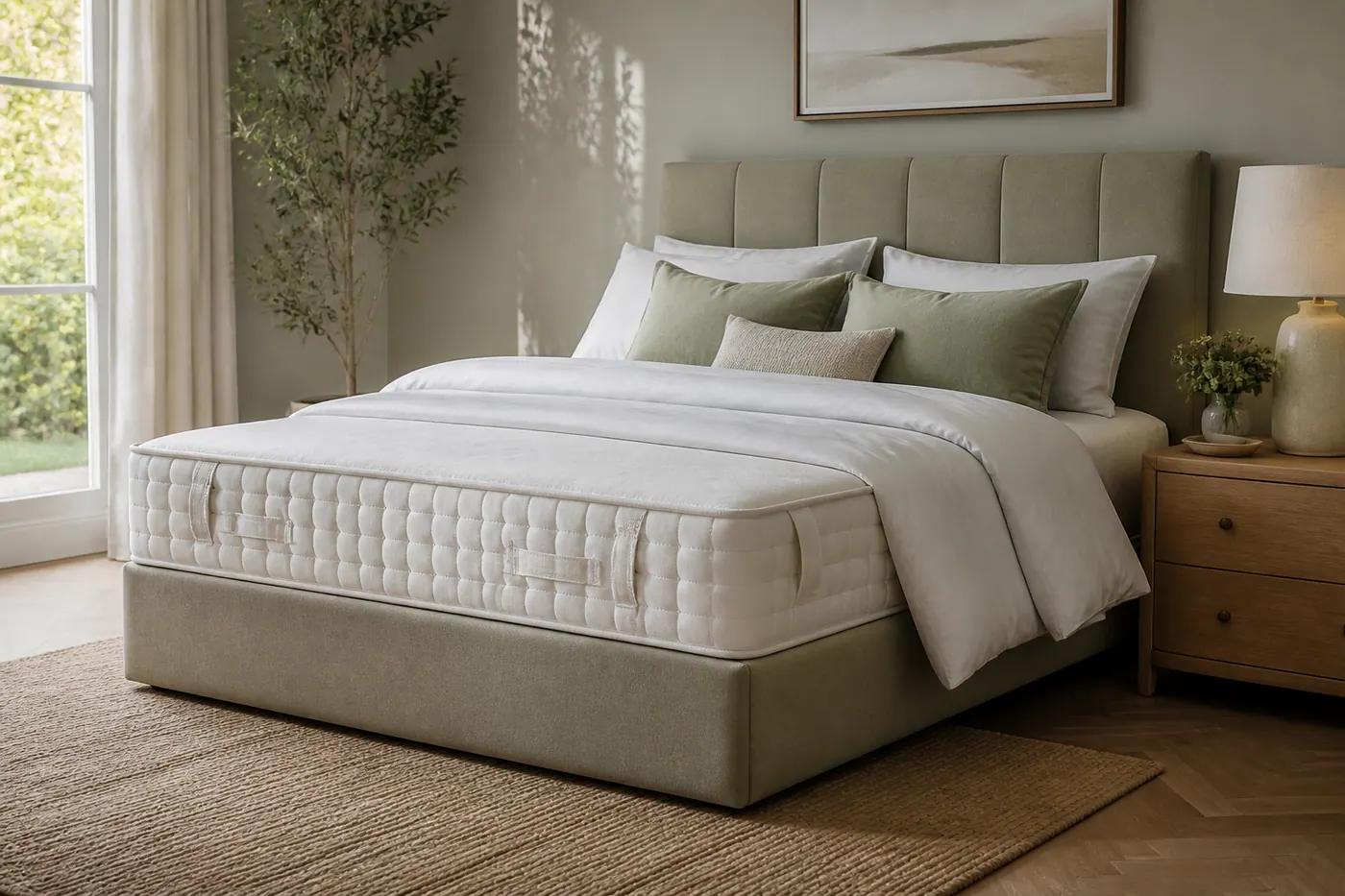
Typical builds use pocket springs, memory foam, latex, hybrid stacks. Exact stacks vary by model. Read the spec, not the shop slogan.
- pocket springs
- memory foam
- latex
- hybrid stacks
How long does this mattress typically last?
A typical range is 6– 10 years. Body weight, base support and rotation change that. It is not a warranty promise.
6– 10 years
Why is side sleeping demanding on a mattress?
Lying on your side puts load on the shoulder and hip. Those joints are smaller than a back sleeper’s contact patch. If the surface is too firm, those points take pressure. If the core is too soft for your weight, the hips can drop and the spine curves. The job is both: enough give at the surface, enough support in the core.
Shop words like soft, medium and firm are not a shared UK scale. Match spring tension or foam density to body weight first. Then pick a comfort layer you can sink a shoulder into.
What firmness band should side sleepers start with?
Soft to medium comfort layers are a common starting point. Heavier side sleepers often need medium rather than very soft, so the pelvis does not fall below the shoulder. Lighter side sleepers may need more surface give to get the shoulder in. These are patterns, not prescriptions. Ongoing pain needs a doctor. BedGuide does not treat anyone.
| Factor | Common side-sleeper pattern |
|---|---|
| Surface feel | Soft to medium comfort layers |
| Support core | Tension or density matched to weight |
| Build types to try | Pocket sprung, hybrid, memory foam, latex |
| Pillow | Higher loft — pillow guide |
Zoned support can put a firmer band under the waist. That is a layout. It is not a medical device.
Is memory foam the only option for side sleepers?
No. Memory foam can cushion well because it yields under heat and pressure. It can also sleep warm and needs a supportive base. Pocket sprung and hybrid beds with a plush comfort layer also work for many side sleepers. Choose the stack: comfort yield plus a core that holds the hips. Do not choose a slogan.
Latex can yield and bounce back faster than memory foam. That helps some people change position. It is not “better.” It is a different recovery speed. See latex Talalay vs Dunlop.
What pillow height should side sleepers use?
A side sleeper’s head sits farther from the mattress than a back sleeper’s. The pillow has to fill the shoulder gap. Too low and the neck drops. Too high and the neck bends up. Medium-high loft is a common starting point. The mattress surface also changes the gap: a deep sink at the shoulder shortens the gap. Test pillow and mattress together, not in isolation. See pillow ergonomics.
What should I check before I buy?
- Weight band versus spring tension or foam density.
- Partner needs if you share — motion isolation and zip-and-link.
- Base rules so foam cannot hammock between slats.
- A trial if you can use one honestly after break-in.
- The full checklist on before you buy a mattress.
Read firmness and sleep position if you change sides through the night. Combination sleepers often need a middle feel, not an extreme. See the combination sleeper guide. Pair pillow loft with the mattress on pillow height and mattress firmness.
Related BedGuide entries
How it works
Frequently asked questions
What mattress firmness do side sleepers need?
Soft to medium surfaces often help shoulders and hips sink enough to keep the spine nearer level. Heavier side sleepers may prefer medium so the hips do not drop below the shoulders. Labels are not standardised across UK shops.
Is memory foam best for side sleepers?
Memory foam can cushion pressure points well, but heat response and base rules still matter. Pocket sprung and hybrids with soft comfort layers also work for many side sleepers. Choose by stack and feel, not one material slogan.
Does pillow height matter for side sleepers?
Yes. Side sleepers usually need higher pillow loft to fill the shoulder gap. See how to choose a pillow and pillow ergonomics.
What if I side-sleep but my partner does not?
You may need a compromise feel, zoned comfort, or zip-and-link so each person has a different tension. One “side sleeper mattress” slogan will not always serve two body types. See couples and zip-and-link.