When to Replace a Mattress (UK Signs)
Published 2026-08-28. Last updated 2026-08-28. Desk research by Kaiser Khan — we have not product-tested when to replace a mattress. This is not a shop review and not medical advice.
In short
When to replace a mattress: support is gone — a hammock dip, springs you can feel, collapsing edges, or sleep that is better away from home — especially if it is past the usual material lifespan. Age alone is a clue, not a rule. Check the base first. A failed base can mimic a failed mattress.
- First step
- Check the base
- Usual band
- 6–10 years
- Clear sign
- Hammock dip
A hammocking foundation can fake a dead mattress.
Material and use shift this. Age alone is not a rule.
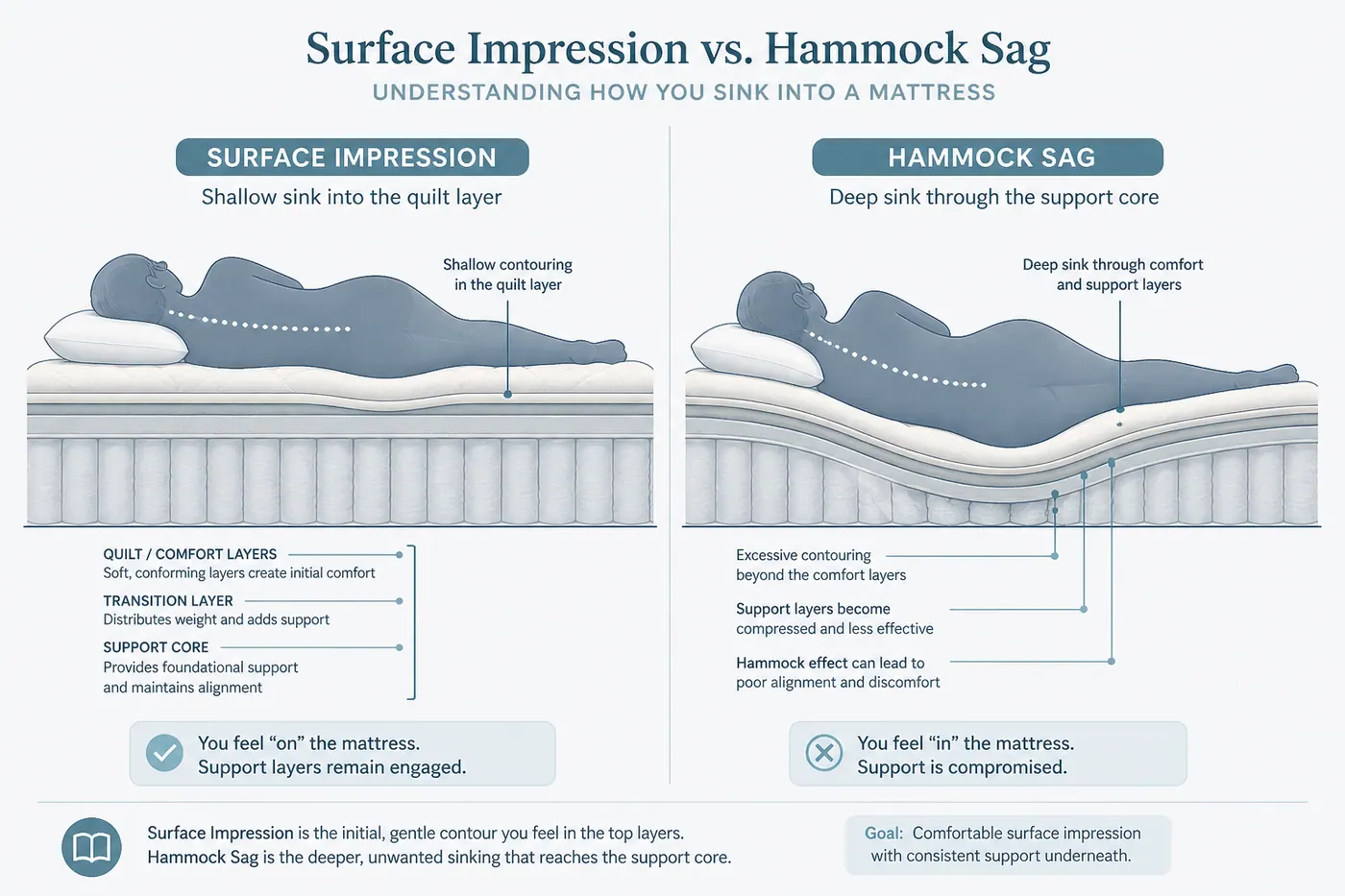
A dip that stays on a flat floor is not the same as a night-time dent.
About 4 minutes to read
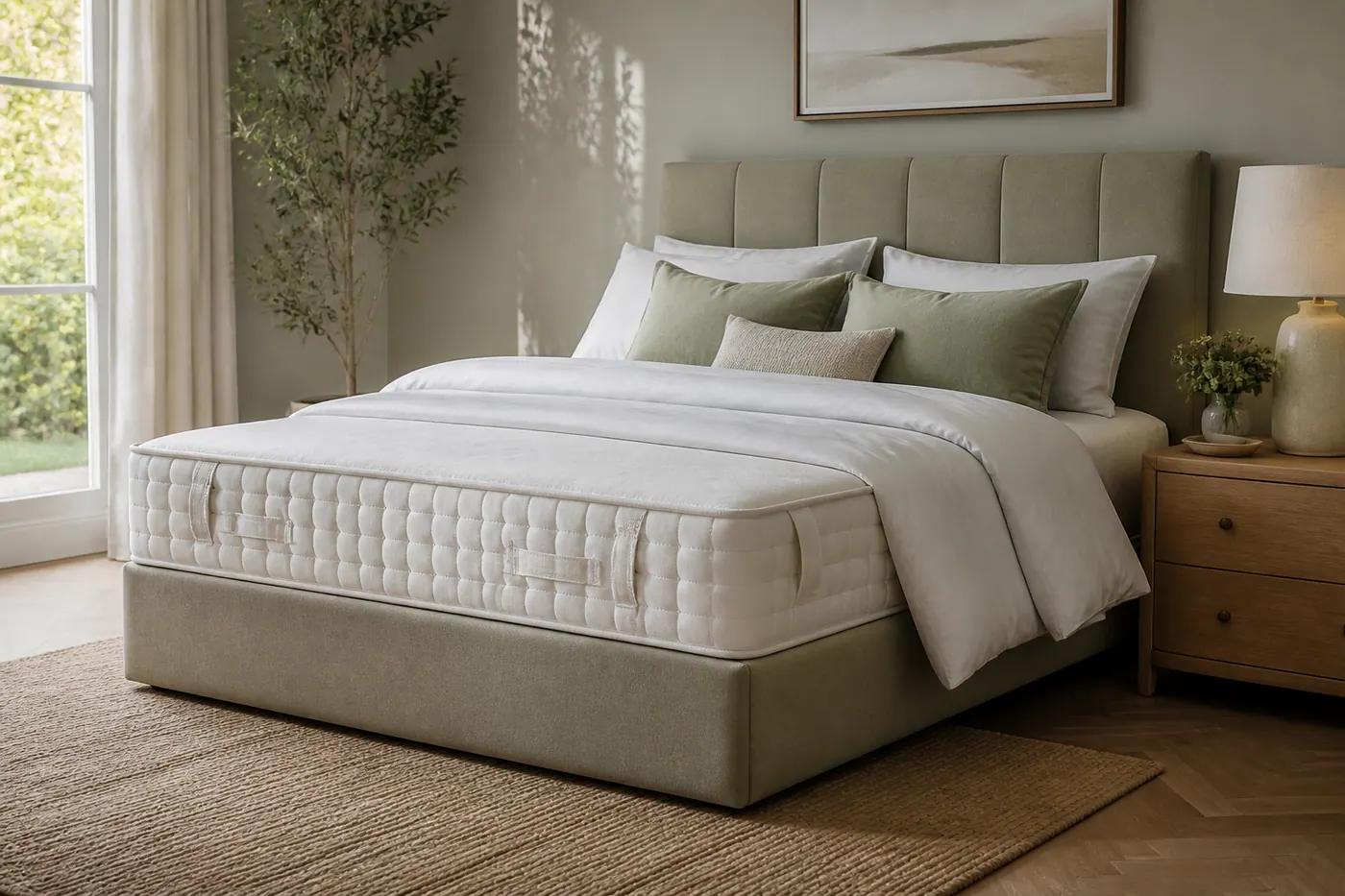
When should I replace my mattress?
Replace a mattress when the support is gone. A hammock dip that stays on a flat floor. Springs you can feel. Edges that collapse when you sit. Sleep that is clearly better in another bed. Age is a clue, not a rule.
Check the base first. Wide slats or a sagging divan can make a sound mattress look dead. Photograph the base and the dip before you bin the bed.
This page is a wear checklist. It is not medical advice. It is not a ranking of “longest lasting” brands.
What signs mean the mattress is worn out?
| Sign | What to check | Usually means |
|---|---|---|
| Hammock dip | Mattress on a flat floor, nobody on it | Core or comfort layers have taken a set |
| Springs through the quilt | Sit, then lie | Unit or fill has failed |
| Collapsing edge | Sit on the side | Edge wire or foam rail is tired |
| Roll-together | Two people slide to the middle | Open-coil grid or a shared dip — see roll-together |
| Better sleep away from home | Same pillows, different bed | The home mattress is the variable |
| Mould or a wet core | Smell, stains, cold patches | Hygiene and structure — often replace, not wash |
A shallow body mark that rebounds by morning can still be normal softening. That is why body impressions and sag sit next to this page. If the bed is still in warranty, read the millimetre rule on the card.
How long do UK mattresses last?
Desk-research bands on lifespan by material:
| Core | Typical years | How it usually dies |
|---|---|---|
| Memory foam | About 6–8 | Softening and cell fatigue |
| Pocket sprung | About 7–10 | Coil set and tired fill |
| Open coil | About 5–8 | Linked coils sag together |
| Latex | About 8–12 | Slow compression set |
| Hybrid | About 7–10 | Foam on top wears first |
These are not warranty promises. A heavy sleeper on a weak base wears a bed faster. A light sleeper who rotates and uses a protector can get the top of the band.
The National Bed Federation does not set a legal “replace after N years” rule. That note sits with their size-tolerance page, checked on 28 August 2026. There is no Act that says year eight is the end.
What is not a reason to replace?
A new mattress that feels odd in week one. That is often break-in. Give the fill time, and rotate if the ticket says so.
A smell in the first days on a rolled foam bed. That is often off-gassing. Air the room. It is not automatically a dead core.
Comfort dislike on a bed that still supports you. That is a trial question, if you still have one. It is not a wear sign.
A mattress that arrived wrong or broken. That is a fault and refund track, not a ten-year decision.
How should I check before I decide?
- Put the mattress on a flat floor. Wait. Look for a dip with a straight edge.
- Photograph the base and slat gaps.
- Note the age and the core type.
- Read any remaining warranty depth rule.
- Plan recycling before the new one arrives.
Air the old bed while you decide. Pull the covers back each morning. Maker care cards often ask for this because fillings hold moisture. Damp speeds settlement. That habit can slow wear. It cannot resurrect a hammocked core.
Who should skip this page?
Skip it if you want a shop to tell you your bed is “due” so they can sell a new one. Use the signs, not the slogan. Skip it if you need a doctor for pain. Skip it if the only question is King centimetres.
Related BedGuide entries
How it works
Frequently asked questions
When should I replace my mattress?
Replace it when support is gone — a hammock dip, springs you can feel, collapsing edges, or sleep that is better away from home — especially if it is past the usual material lifespan. Check the base first.
How long does a mattress last in the UK?
Typical desk-research bands are about 6–8 years for many consumer foams, 7–10 for pocket sprung and hybrids, and 8–12 for latex cores. Use and base support change that. It is not a warranty promise.
Is a body impression a reason to replace a mattress?
A shallow dip is often normal softening. A deep hammock that stays when you stand the mattress on a flat floor is a wear sign. Measure against any warranty depth rule if the bed is still in cover.
Should I replace a mattress that smells or has mould?
A damp or mouldy mattress is a hygiene and structure problem. Air the room and check the base. Many people replace rather than try to wash a soaked core. See damp and mould under a mattress. This is not medical advice.
Where do these facts come from?
BedGuide is desk research. The numbers and rules on this page were checked against the official or primary sources below. We name the check date. We do not invent a figure when a source is missing.
- National Bed Federation — regulations and standards — No legal UK size-tolerance Act. There is also no legal “replace after N years” rule. Wear signs and the maker’s warranty win. Checked 2026-08-28.
- GOV.UK — accepting returns and giving refunds — If the mattress is new and faulty, that is a refund or repair track, not a “replace at year eight” decision. Checked 2026-08-28.