Hybrid Mattresses: Layers, Springs & Base Fit
Published 2026-08-03. Last updated 2026-09-08. Desk research by Kaiser Khan — we have not product-tested hybrid mattress. This is not a shop review and not medical advice.
In short
A hybrid mattress combines springs with foam or latex layers. The arrangement varies: some use a main pocket spring core, while others place small springs above foam. Read the full layer diagram, not just the hybrid name. Compare the surface feel, spring type, depth, weight and approved base before deciding whether a model suits you.
About 5 minutes to read
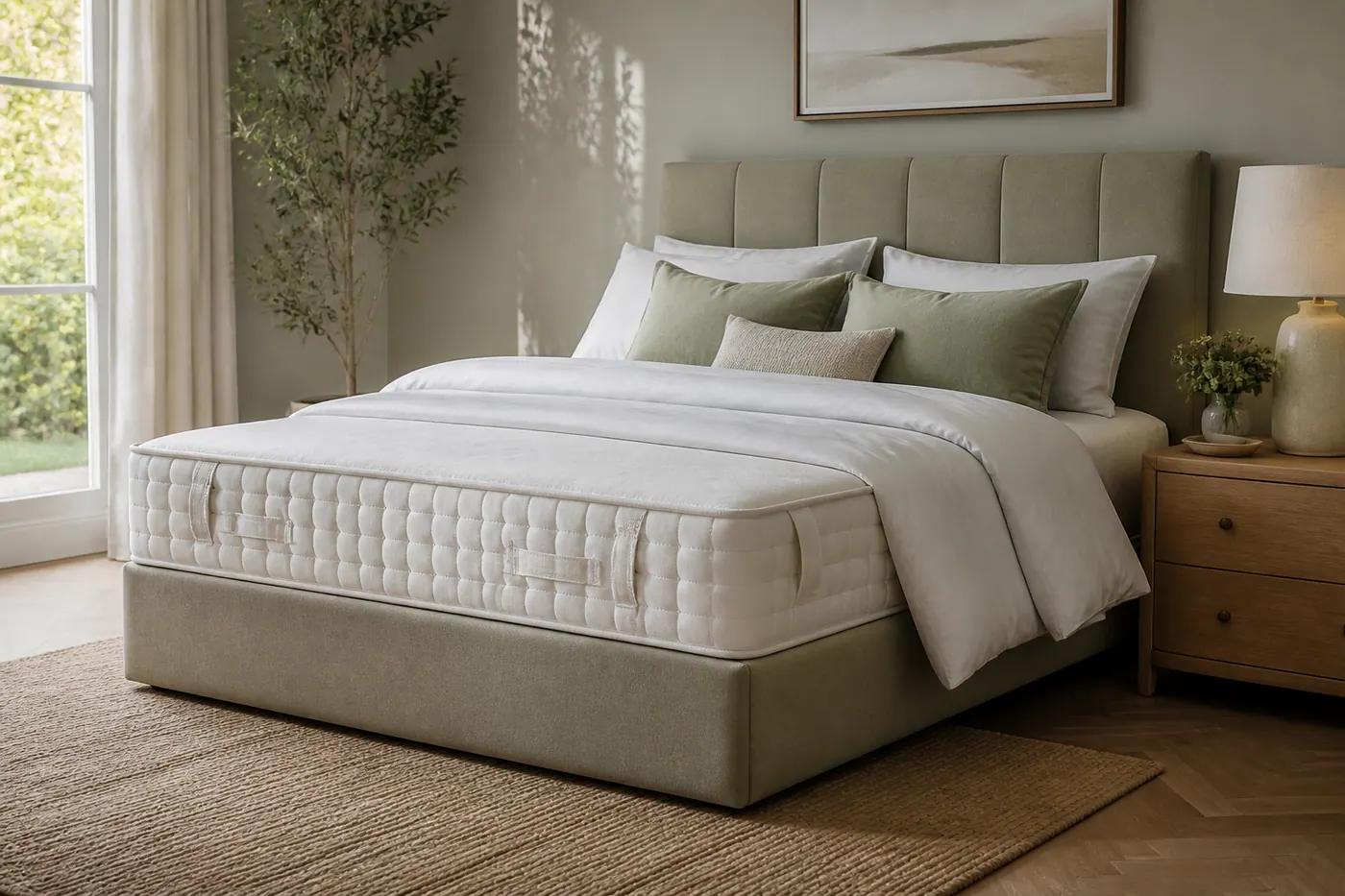
What materials go into this mattress?
Typical builds use pocket spring unit, polyfoam or memory foam comfort layers, latex (optional), high-density edge foam. Exact stacks vary by model. Read the spec, not the shop slogan.
- pocket spring unit
- polyfoam or memory foam comfort layers
- latex (optional)
- high-density edge foam
How long does this mattress typically last?
A typical range is 7– 10 years. Body weight, base support and rotation change that. It is not a warranty promise.
7– 10 years
What is inside a hybrid mattress?
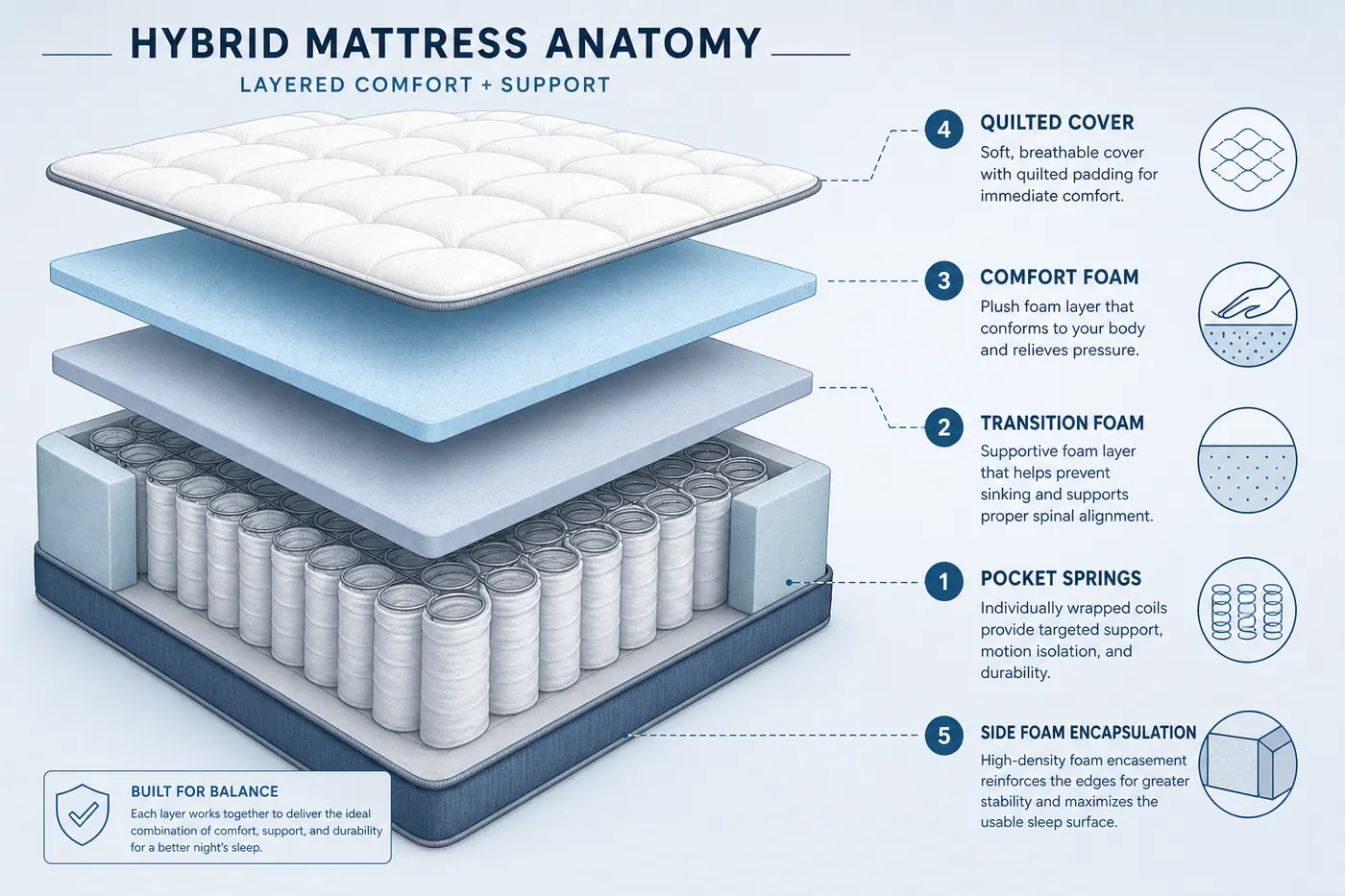
A hybrid is a mixed construction. Read the diagram from bottom to top, and identify which part provides the main support. A label such as “five layers” does not explain the depth or role of each layer.
Simba’s construction explainer describes springs combined with foam comfort layers. This is a manufacturer’s account of its approach. Other companies can use a different arrangement under the same broad word.
| Part of the build | What to look for in the specification |
|---|---|
| Main support | Full-height pocket springs, a linked spring unit, or a foam core supporting smaller spring layers |
| Transition layer | A layer between the core and surface; check whether its material and depth are disclosed |
| Comfort layers | Memory foam, other polyurethane foam, latex or a mix |
| Small springs | Where they sit in the stack and whether the advertised total adds several layers together |
| Edge | Firmer springs, foam rails or another construction; compare the actual edge feel |
| Cover | Whether it is removable and whether the care label permits washing |
The illustration on this page shows one possible stack. It is not a diagram of every hybrid.
Does every hybrid use pocket springs?
No. Always identify the spring system. Pocket springs sit in separate fabric pockets. Open coil and continuous spring systems connect springs into a unit. Foam on top does not turn a linked spring core into a pocket spring core.
For a real catalogue example, Starlight Beds’ 1117 model page describes continuous springs with a memory foam layer. That source shows why the core matters when comparing mixed spring-and-foam builds. It is not a BedGuide recommendation or test result.
Ask what size the spring count refers to. Also ask whether it counts the main core alone or adds several layers of small springs. Record those answers alongside the count. See spring counts explained.
Hybrid vs memory foam: what should I compare?
An all-foam mattress uses foam for its core as well as its upper layers. A hybrid adds springs somewhere in the construction. Both may use memory foam at the surface, so their names alone cannot tell you how quickly they respond when you turn over.
Try the models in the same way. Lie in your usual position, change position, and compare the middle and the edge. If two people share the mattress, test it together where possible. Make separate notes on surface softness, ease of movement and the space each person has.
Check the full memory foam guide for the material explanation. There is no universal firmness scale across every seller: use the model’s description as a starting point for a personal comparison.
Will a hybrid feel cooler?
The label cannot promise that. Space in a spring unit and the layers above it are different parts of the bed. Ask where a claimed cooling material sits and whether the seller has published a test for the complete model or only one ingredient.
Also consider what goes over the mattress. Record the protector, sheets and duvet used when comparing how a bed feels. Our heat and cooling guide explains the wider setup. Avoid assuming a product will solve a personal sleep problem from its material name.
Which base can support a hybrid mattress?
Use the exact maker’s instructions. Base requirements can specify the support surface, maximum slat gap, slat condition and centre support. There is no single slat-gap rule for all hybrids.
As a dated example, Simba’s base guidance states a maximum 7.5 cm slat gap. That is a brand-specific requirement checked on 8 September 2026. Do not apply it to another mattress without checking its instructions.
For an ottoman, compare the selected mattress’s weight with the lift mechanism’s permitted range. A sleeping load limit is a different measurement. For an adjustable bed, obtain approval for the exact mattress, because it needs to work with a moving platform. Start with our slatted base guide and ottoman guide.
What size, depth and weight do I need?
For common UK adult sizes, double is 135 × 190 cm, king is 150 × 200 cm, and super king is 180 × 200 cm. Confirm the actual dimensions on the selected product, especially for European or specialist frames.
Add mattress depth to the base height to estimate the finished sleeping surface. Check headboard visibility and fitted-sheet depth. Then plan the delivery and unpacking route. A rolled package and an expanded mattress have different handling needs. Follow the supplied instructions and arrange help appropriate to the stated weight.
Can I turn a hybrid mattress over?
Only if its instructions say it is double-sided. Turning over exposes the other face; rotating keeps the same face up while swapping head and foot. These are different actions.
Record the care schedule before purchase, especially if handling a heavy mattress is difficult. Do not remove a cover simply because it has a zip: check the care instructions first. See turning vs rotating for the distinction.
A checklist for comparing two hybrids
Write down each exact model, size and specification date. Then compare the main support, comfort layers, total depth, weight and approved base. Add the seller’s current delivery, trial and collection terms. Leave unknown details marked as unknown until the seller answers.
Browse companies with hybrid range examples to find manufacturer and retailer websites. BedGuide profiles explain the ranges and the questions to ask; they do not award a winning mattress.
How it works
Frequently asked questions
What is a hybrid mattress?
A hybrid combines springs with foam or latex layers. Read the full construction to identify the main support, spring format and comfort layers. Different models can use different arrangements.
Is a hybrid mattress better than memory foam?
Neither category is automatically better. Compare the exact models for comfort, ease of movement, edge feel, size, weight and approved base. Both can have memory foam at the surface.
What slat gap does a hybrid mattress need?
The permitted gap depends on the mattress maker. Read the current instructions for your exact model and check the bed’s support too. A figure from another brand is not a universal rule.
Where do these facts come from?
BedGuide is desk research. The numbers and rules on this page were checked against the official or primary sources below. We name the check date. We do not invent a figure when a source is missing.
- Simba: hybrid construction — Simba: hybrid construction. Supports the linked construction or practical fit example; other comparison questions are BedGuide editorial guidance. Checked 2026-09-08.
- Starlight Beds: continuous spring and foam example — Starlight Beds: continuous spring and foam example. Supports the linked construction or practical fit example; other comparison questions are BedGuide editorial guidance. Checked 2026-09-08.
- Simba: base compatibility — Simba: base compatibility. Supports the linked construction or practical fit example; other comparison questions are BedGuide editorial guidance. Checked 2026-09-08.