Mattress Protectors and Encasements
Published 2026-08-03. Last updated 2026-08-03. Desk research by Kaiser Khan — we have not product-tested mattress protector and encasement. This is not a shop review and not medical advice.
In short
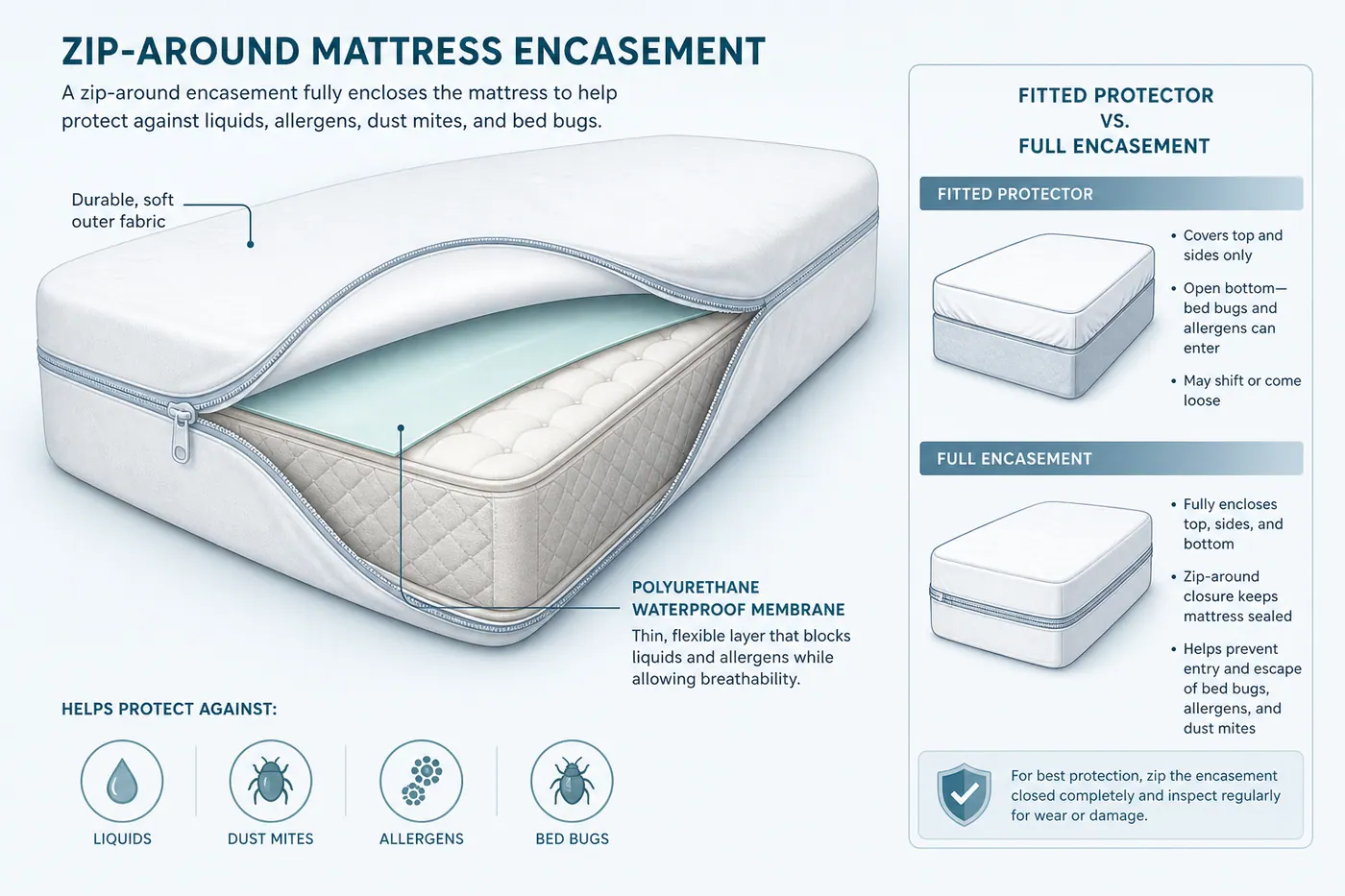
A mattress protector is a fitted cover that shields the mattress from spills while changing feel little. An encasement zips fully around for stronger allergen blocking. Waterproofing often uses thin plastic membranes. Breathable means air can pass through tiny holes. Waterproof does not always mean clammy, but thick layers can trap more heat.
About 1 minutes to read

Waterproof layers (plain explanation)
- Plastic membrane — thin film glued to fabric. Blocks liquid water while letting some vapour through when it has tiny holes.
- Coated fabrics — plastic coatings. How waterproof and how they feel varies with coat weight.
- Quilted padded protectors — add slight cushion. May soften the surface more than a thin shield.
Protector vs encasement
| Feature | Fitted protector | Full encasement |
|---|---|---|
| Coverage | Top + sides | All six faces |
| Closure | Elastic / fitted | Zip perimeter |
| Allergen strategy | Partial barrier | Stronger blocking |
| Mattress changes | Faster | Slower to remove |
Related ecology: dust mites. Feel-layer contrast: toppers and protector vs topper.
Related BedGuide entries
How it works
Frequently asked questions
What is the difference between a protector and an encasement?
Protectors usually fit like a deep sheet over the top and sides. Encasements zip fully around the mattress, including the underside, for stronger blocking of allergens and spills.
Do waterproof protectors make you hotter?
Some do. Thick vinyl-like barriers trap more heat than thin breathable plastic membranes. How airy it feels varies by how the product is built.
Do protectors stop dust mites?
Tightly woven or certified allergen-barrier covers reduce dust mite escape from the mattress. They do not clean a room. Washing bedding and controlling humidity still matter. See dust-mite ecology.