How to Read a Mattress Spec or Ticket
Published 2026-08-04. Last updated 2026-08-04. Desk research by Kaiser Khan — we have not product-tested mattress specification label. This is not a shop review and not medical advice.
In short
A useful mattress ticket lists UK size in centimetres, support type, spring count with size or tension band, foam densities, comfort fill weights or GSM, whether it is turnable, approved bases and fire label class. Soft, medium and firm alone are shop shorthand. Read the construction facts first, then the comfort grade, then trial and warranty small print.
About 2 minutes to read
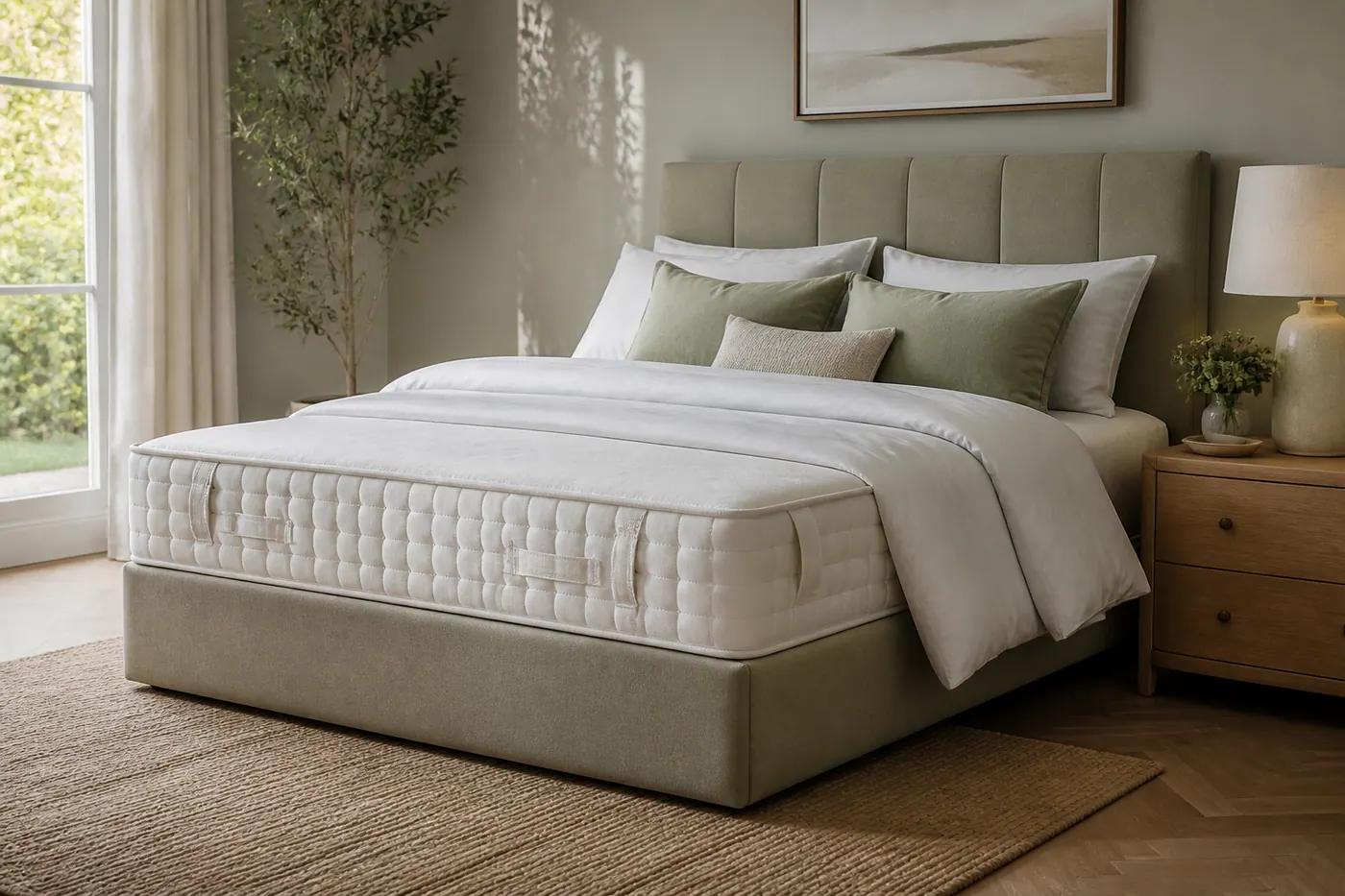
What materials go into this mattress?
Typical builds use pocket springs, open coil springs, foams and fillings, fire-retardant systems. Exact stacks vary by model. Read the spec, not the shop slogan.
- pocket springs
- open coil springs
- foams and fillings
- fire-retardant systems
How long does this mattress typically last?
A typical range is 6– 10 years. Body weight, base support and rotation change that. It is not a warranty promise.
6– 10 years
Ticket checklist (factory reading order)
Work down the list. If a shop cannot answer, treat the model as under-specified.
1. Size in centimetres
Names lie across borders. Confirm width × length — see UK sizes.
2. Support system
Pocket sprung, open coil / continuous coil, foam, latex or hybrid? Named systems still need a family — e.g. Miracoil.
3. Spring metrics (if sprung)
| Ask for | Why |
|---|---|
| Count and size | Count without size misleads |
| Tension band | Soft ticket ≠ soft springs — tension vs feel |
| Single or dual unit | Microcoils in the comfort layer are not the main unit |
4. Foam metrics (if foam / hybrid comfort)
Density (kg/m³) and feel (ILD) are different numbers — see foam density and ILD.
5. Comfort mass
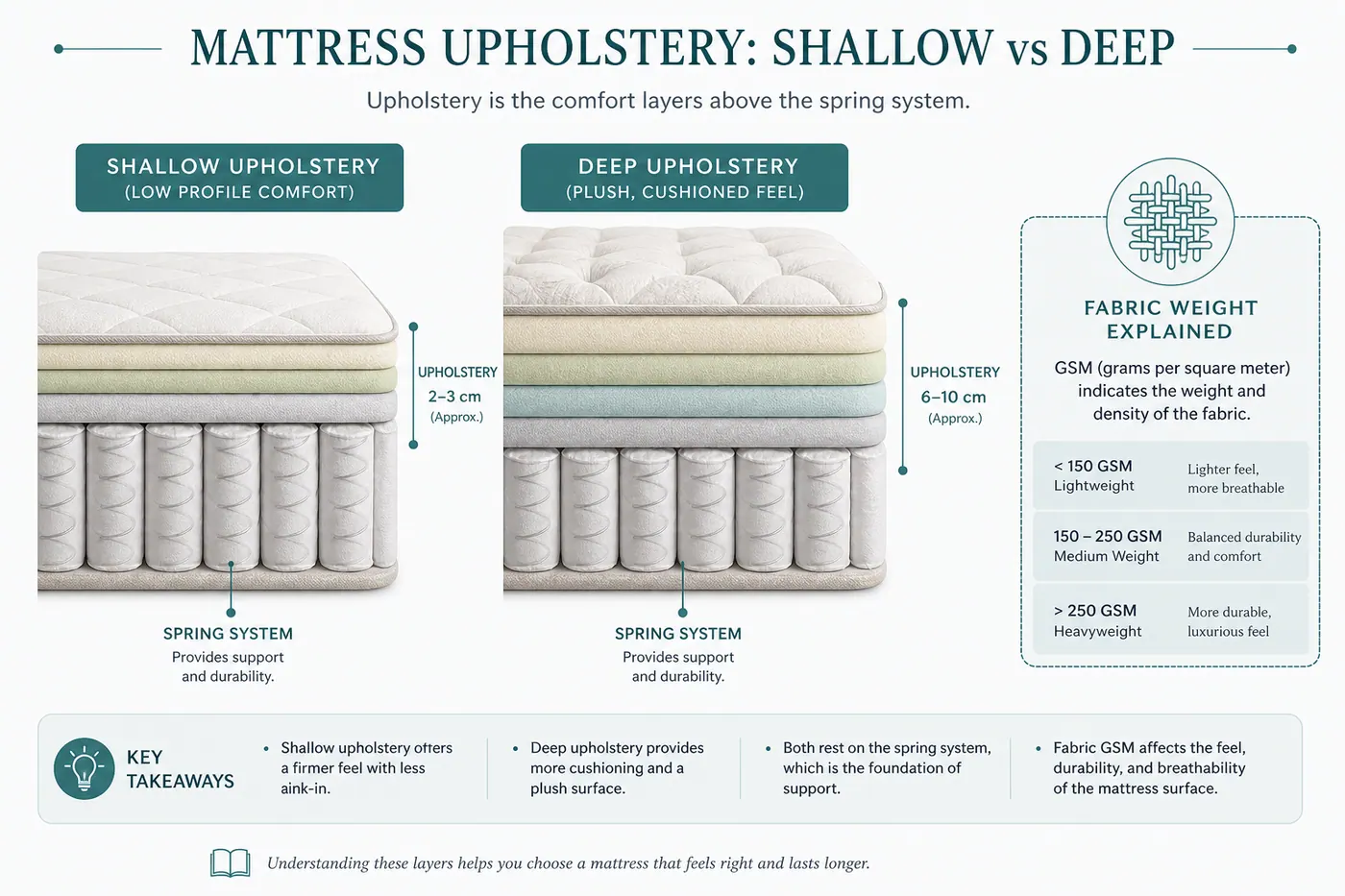
Upholstery depth or fill weight / GSM. This is where many “premium” builds actually spend money.
6. Turn or rotate only
One-sided pillow tops and most foams are rotate-only — see why no-turn mattresses and turning vs rotating.
7. Base rules
Max slat gap, platform required, adjustable allowed? Warranty depends on this — base compatibility.
8. Compliance marks
- Permanent fire label — BS 7177
- Optional chemistry marks — certifications
- “Orthopaedic” — label meaning, not a medical grade
9. Commercial terms (not construction)
Trial length, collection fees, body-impression depth for warranty — see trials, warranty and what voids cover.
A one-minute shop script
Use with questions to ask in a bed shop:
- Support type and tension / density for my weight?
- Spring count in this UK size?
- Comfort fill weight or GSM?
- Turnable or rotate-only?
- Exact base and slat gap for the warranty?
Related BedGuide entries
How it works
Frequently asked questions
What should a mattress specification include?
UK size in centimetres, support type, spring count with the size it refers to or spring tension, foam densities where relevant, comfort fill detail or GSM, turn or rotate instructions, approved base notes and the fire label class.
Why is soft, medium or firm not enough?
Those words mix spring support and top feel and mean different things in different shops. Ask for tension or density separately — see spring tension versus comfort feel.
Where is the fire label?
UK domestic mattresses must carry a permanent BS 7177-related label. Do not cut it off. See UK mattress fire regulations.