Mattress Firmness and Sleep Position
Published 2026-08-03. Last updated 2026-08-28. Desk research by Kaiser Khan — we have not product-tested mattress firmness and sleep position. This is not a shop review and not medical advice.
In short
Soft, medium and firm mean different things in different UK shops. Soft surfaces let shoulders and hips sink more — many side sleepers use that for pressure relief. Medium to firm surfaces limit sink for many back and stomach sleepers. Heavier sleepers sink further into the same build, so the useful firmness band shifts with body mass.
About 3 minutes to read
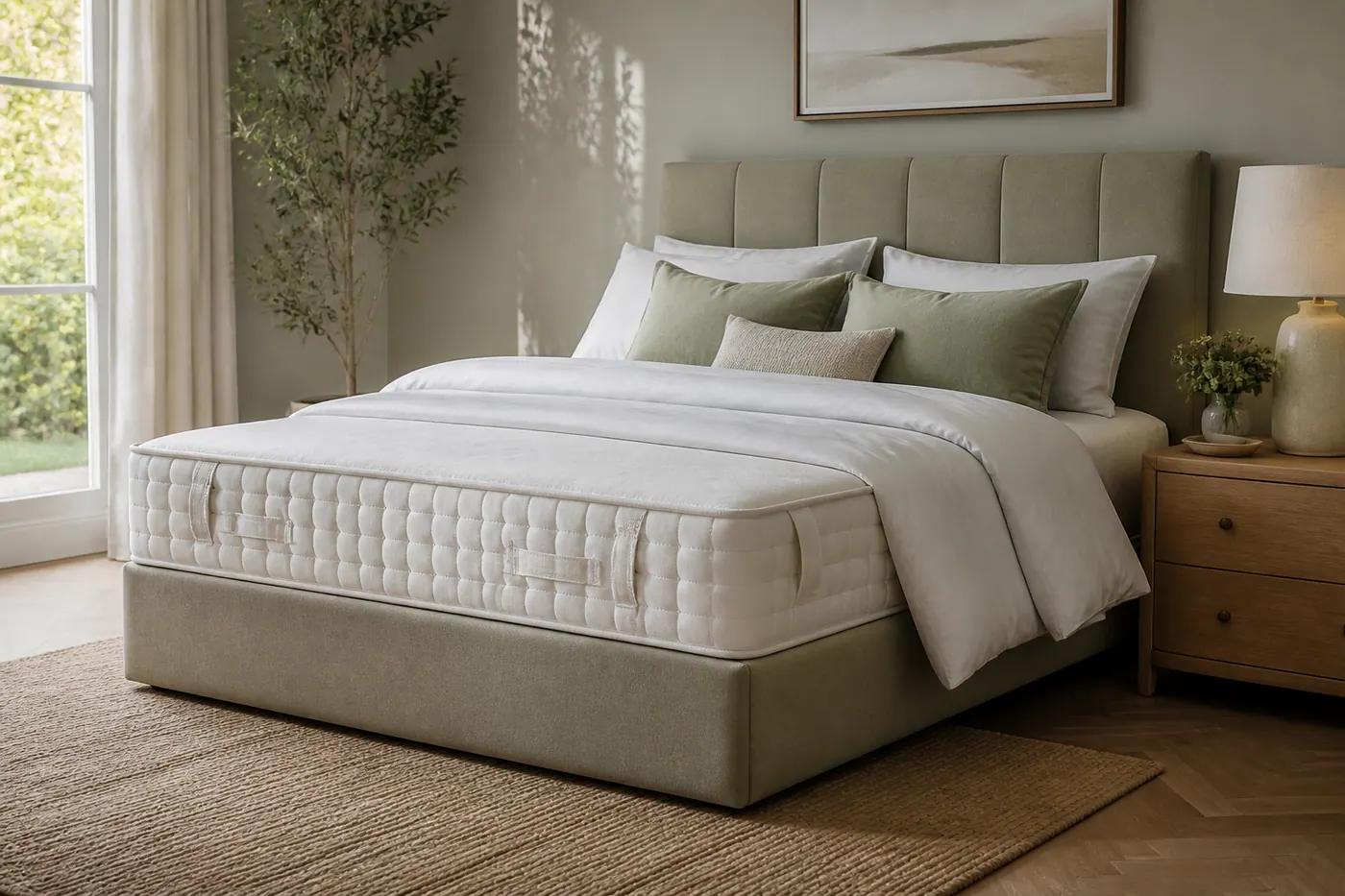
What materials go into this mattress?
Typical builds use pocket springs, memory foam, latex, hybrid stacks. Exact stacks vary by model. Read the spec, not the shop slogan.
- pocket springs
- memory foam
- latex
- hybrid stacks
How long does this mattress typically last?
A typical range is 6– 10 years. Body weight, base support and rotation change that. It is not a warranty promise.
6– 10 years
Why “soft / medium / firm” is not one shared scale
UK shops use comfort grades, but there is no single number shared across brands. A “medium” pocket sprung mattress and a “medium” memory foam mattress can feel very different because the materials yield differently under load.
Sleep position patterns
| Position | Pressure pattern | Common firmness starting point |
|---|---|---|
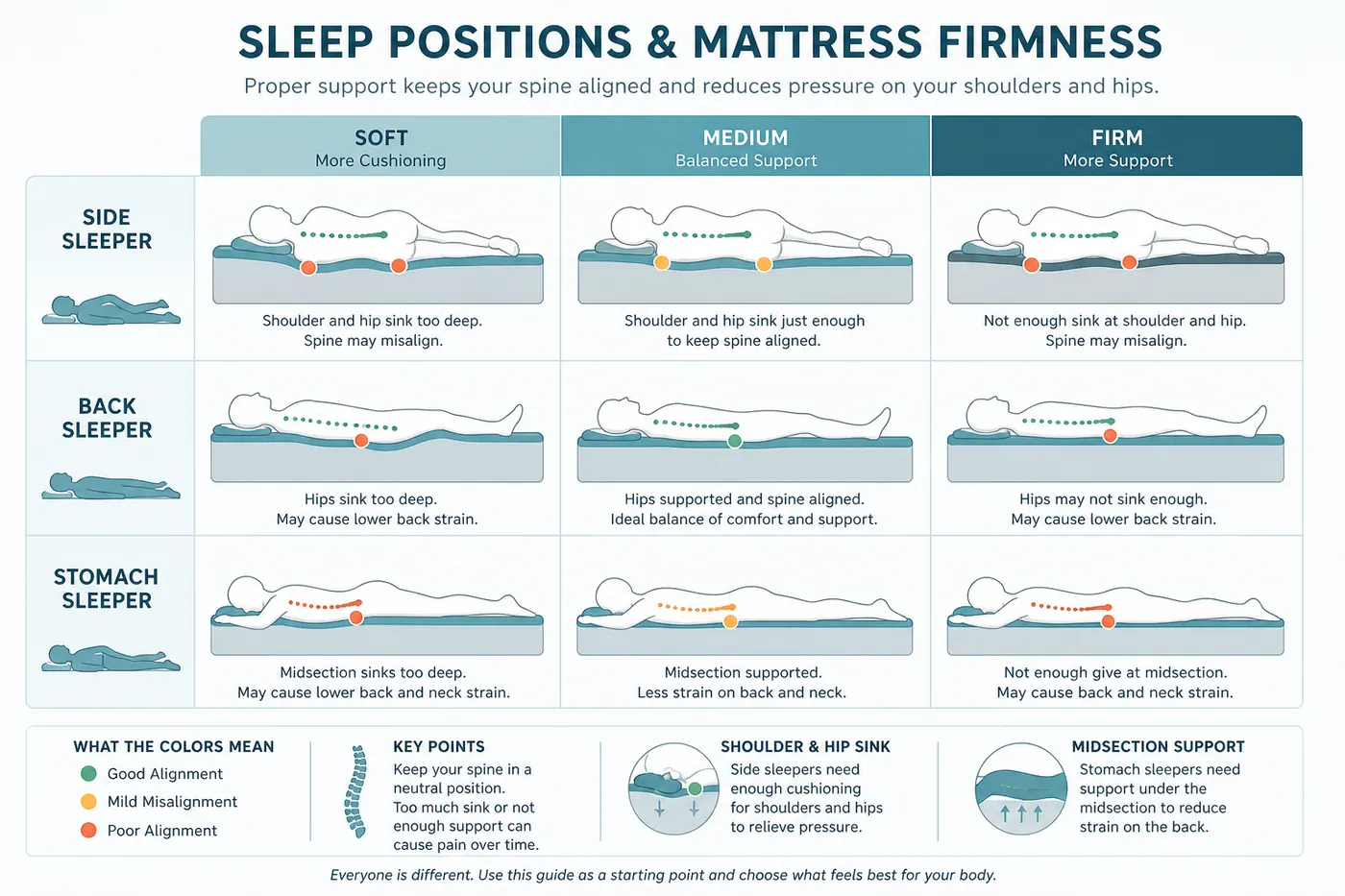
| Side | High load at shoulder and hip | Soft to medium |
| Back | Load along spine and sacrum | Medium-firm to firm |
| Stomach | Risk of lower-back sink if too soft | Firm |
| Combination | Changes through the night | Medium / hybrid stacks |
Combination sleepers change position through the night. A medium band or a hybrid is a common starting point because it is less specialised than a very soft side bed or a very firm stomach bed. It is still a starting point, not a score. See the combination sleeper guide.
These are common patterns in UK retail education, not medical prescriptions. Ongoing pain needs advice from a doctor.
Body weight shifts the useful band
Heavier sleepers push down harder. They sink deeper into the same foam or spring stack. A soft mattress that works for a lighter side sleeper may let a heavier sleeper’s hips drop too far. This is geometry and load, not a quality judgment.
Base type changes perceived firmness
The same mattress feels firmer on a platform-top divan than on a sprung-edge divan. Slat spacing that is too wide can also soften foam and hybrid comfort layers by allowing hammocking.
Construction × position (educational map)
- Side sleepers — side sleeper guide; often conforming foams, latex, or softer pocket / hybrid comfort layers.
- Back sleepers — back sleeper guide; medium-firm to firm cores that limit hip hammocking.
- Stomach sleepers — stomach sleeper guide; firmer surfaces so hips do not drop.
- Hot side sleepers may prefer pocket airflow or open-cell foams over dense memory foam stacks — see heat and cooling materials.
- Couples with different positions sometimes use zoned constructions or zip-and-link pairs rather than one compromise firmness.
Related BedGuide entries
How it works
Frequently asked questions
What mattress firmness do side sleepers usually need?
Side sleeping puts load on shoulders and hips. Soft to medium surfaces often let those joints sink enough to keep the spine nearer a straight line. Heavier side sleepers may need medium rather than soft so hips do not drop below the shoulders.
Are firm mattresses better for back sleepers?
Many back sleepers prefer medium-firm to firm surfaces that limit hammocking of the lower back. Soft beds can let the hips sink and increase spinal curve. Individual comfort still overrides general patterns.
Does spring count decide firmness?
No. Spring count mainly shows how densely springs are packed for a given size. Firmness depends more on wire gauge, comfort fillings and foam hardness (ILD) than on spring count alone.