Combination Sleeper Mattress Guide
Published 2026-08-28. Last updated 2026-08-28. Desk research by Kaiser Khan — we have not product-tested combination sleeper mattress. This is not a shop review and not medical advice.
In short
A combination sleeper changes position through the night. A restless sleeper turns often. A medium pocket-sprung or hybrid mattress is a common UK starting point. A very soft side bed or a very firm stomach bed can feel wrong when you roll. Shop firmness labels still vary. This is a starting map, not a ranking or medical advice.
- Common band
- Medium start
- Combination
- Two words
- Shop firmness
- Labels vary
- Then feel
- Weight first
Less specialised than a very soft side bed or a very firm stomach bed.
Sleeper = you turn. Mattress = often a hybrid build.
Soft, medium and firm are not a British Standard.
Match spring tension or foam density before a plush top.
About 4 minutes to read
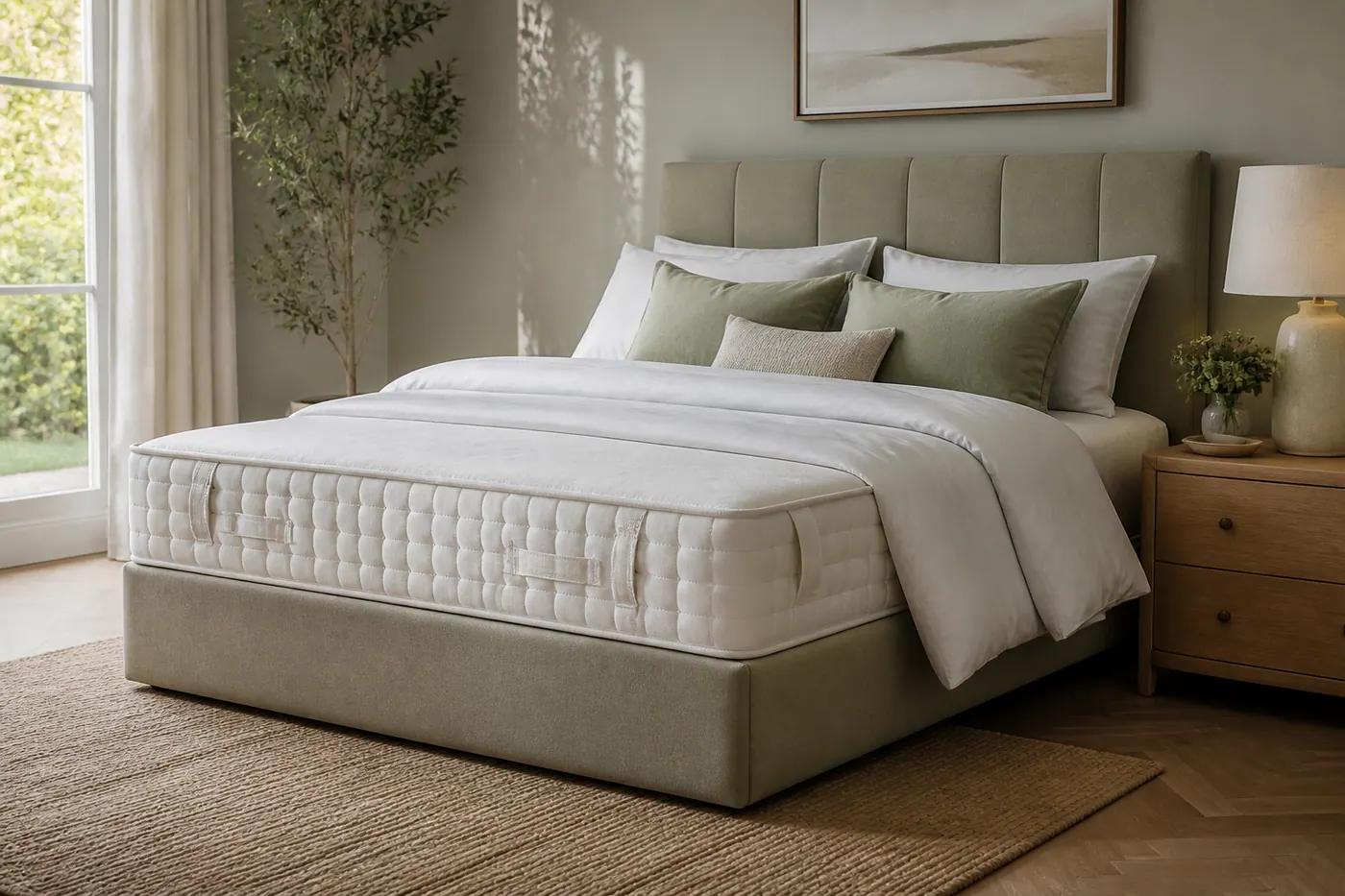
What materials go into this mattress?
Typical builds use pocket springs, hybrid stacks, latex, memory foam. Exact stacks vary by model. Read the spec, not the shop slogan.
- pocket springs
- hybrid stacks
- latex
- memory foam
How long does this mattress typically last?
A typical range is 6– 10 years. Body weight, base support and rotation change that. It is not a warranty promise.
6– 10 years
What is a combination sleeper?
A combination sleeper changes position through the night. You may start on your side and roll onto your back. You may spend time on your stomach. The mattress has to serve more than one pressure map.
A restless sleeper turns often. The words overlap. They are not the same. Restless can also mean you wake, or you feel a partner move. This page is furniture literacy. It is not a diagnosis. Ongoing pain or poor sleep needs a doctor or another qualified clinician.
In UK shops, combination mattress usually means a hybrid. Springs sit under foam or fibre. That is a build name. It is not a sleeper type. See combination mattress.
Why do combination sleepers start with a medium feel?
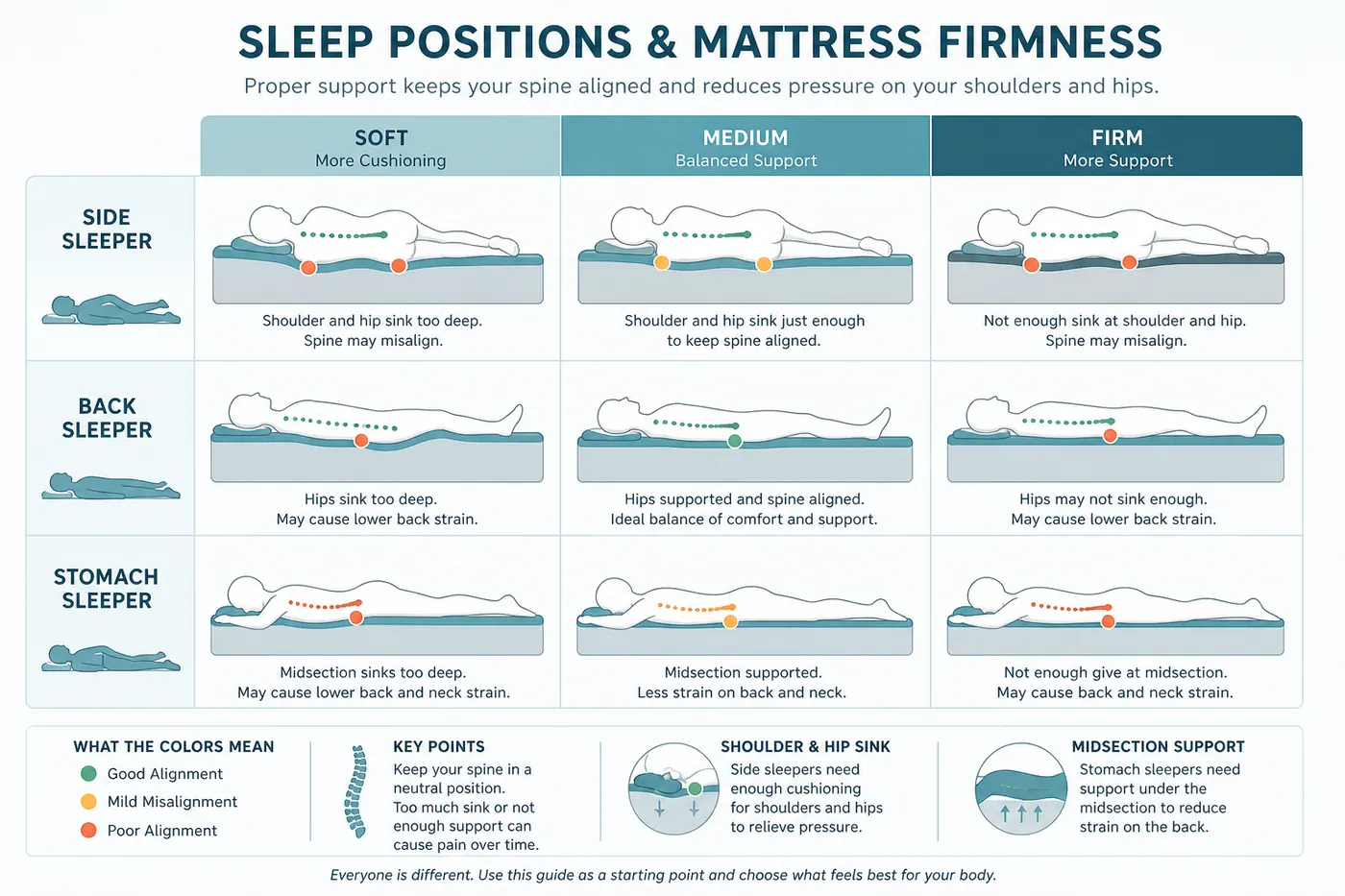
A very soft side bed lets the shoulder in. When you roll onto your back, the same surface can let the hips drop. A very firm stomach bed holds the hips. When you roll onto your side, the same surface can press the shoulder.
A medium band, or a hybrid with a yielding top and a support core, is a common starting point because it is less specialised. It is still a starting point. It is not a score.
Shop words like soft, medium and firm are not a British Standard. The National Bed Federation publishes size and fire rules. It does not publish one shared hardness number. That note was checked on 28 August 2026.
| If you spend most of the night… | Start nearer | Then check |
|---|---|---|
| On your side | Soft to medium | Side sleeper guide |
| On your back | Medium-firm | Back sleeper guide |
| On your stomach | Firmer | Stomach sleeper guide |
| In two or three poses | Medium / hybrid | This page |
Heavier sleepers sink further into the same build. A “medium” that works for a lighter person can feel soft under a heavier hip. Match spring tension or foam density to body weight first. Then pick the comfort layer.
What build types suit people who turn?
Pocket sprung recovers as you roll. Air can move between the pockets. Latex yields and bounces back faster than many memory foams. A hybrid stacks both ideas.
Memory foam can cushion a shoulder well. It can also feel slow when you turn. That is recovery speed, not a quality rank. If you dislike a “stuck” feel, try latex, pocket sprung, or a thinner comfort foam over springs.
Zoned support can put a firmer band under the waist. That is a layout. It is not a medical device. It will not “fix” turning.
If two people need different feels, one middle mattress may still fail. See split tension and zip-and-link.
What else should restless sleepers check?
Motion is a separate question. Foam and latex damp bounce in different ways. Pocket springs isolate better than linked open coils. See motion isolation. A middle firmness does not hide a bouncy open-coil core.
Pillow height changes as the shoulder sinks. A soft surface shortens the shoulder gap. A firm surface widens it. Test pillow and mattress together. See pillow height and mattress firmness.
Heat can make you turn more. The room and the duvet TOG come first. See bedroom temperature and hot sleeper setup. Do not buy a “cooling” badge before you drop the duvet.
What should I check before I buy?
- Which pose you actually wake in, not only the pose you fall asleep in.
- Body weight versus spring tension or foam density.
- Recovery speed — do you want to roll easily?
- Partner needs, if you share.
- A trial you can use after break-in.
- The full list on before you buy a mattress.
Lie down in more than one pose in the shop. See how to try a mattress in a shop. One minute on your back is not a combination test.
Bed Advice UK, the NBF consumer site, says fillings can settle and “mould” to a body. That FAQ was checked on 28 August 2026. Settlement is not the same as choosing a sleep-position band.
Related BedGuide entries
How it works
Frequently asked questions
What mattress do combination sleepers need?
A medium pocket-sprung or hybrid stack is a common starting point. It is less specialised than a very soft side bed or a very firm stomach bed. Shop labels still vary. Match support to body weight first.
Is a restless sleeper the same as a combination sleeper?
Not always. Combination means you change pose. Restless can also mean you turn often, wake, or feel a partner move. Motion isolation and pillow loft still matter. Neither word is a medical diagnosis.
Is a combination mattress for combination sleepers?
No. In UK shops, combination mattress usually means a hybrid — springs plus foam. Combination sleeper means you change position. Read the stack, not the shared word.
Should combination sleepers buy memory foam?
Only if you like slow moulding when you roll. Foam can hold a shoulder. It can also feel sticky when you turn. Latex and pocket sprung recover faster. Choose recovery speed, not a slogan.
What if I side-sleep and my partner sleeps on their back?
That is two people, not one combination sleeper. You may need split tension or zip-and-link rather than one middle feel. See the couples guides.
Where do these facts come from?
BedGuide is desk research. The numbers and rules on this page were checked against the official or primary sources below. We name the check date. We do not invent a figure when a source is missing.
- National Bed Federation — regulations and standards — Confirms industry size spread. It does not set a shared UK firmness number. Soft, medium and firm stay shop words. Checked 2026-08-28.
- Bed Advice UK — FAQs — NBF consumer advice. Settlement and fill “moulding” are normal wear words. They are not a sleep-position prescription. Checked 2026-08-28.