Mattress Guide for Back Sleepers (UK)
Published 2026-08-03. Last updated 2026-08-28. Desk research by Kaiser Khan — we have not product-tested back sleeper mattress. This is not a shop review and not medical advice.
In short
Back sleepers often prefer medium-firm to firm surfaces that limit hammocking of the lower back while still cushioning the shoulders lightly. Soft beds can let the hips sink and increase spinal curve. Match spring tension or foam density to body weight first. Soft, medium and firm shop labels are not a shared scale.
- Lower back
- Limit hammock
- Usual band
- Medium-firm start
- Shop firmness
- Labels vary
- Then feel
- Weight first
Hips should not sink so far that the lumbar curve increases.
A pattern, not a prescription. Weight still shifts the band.
Orthopaedic is a retail word, not a medical grade.
Match support to body mass before a thick soft top.
About 3 minutes to read
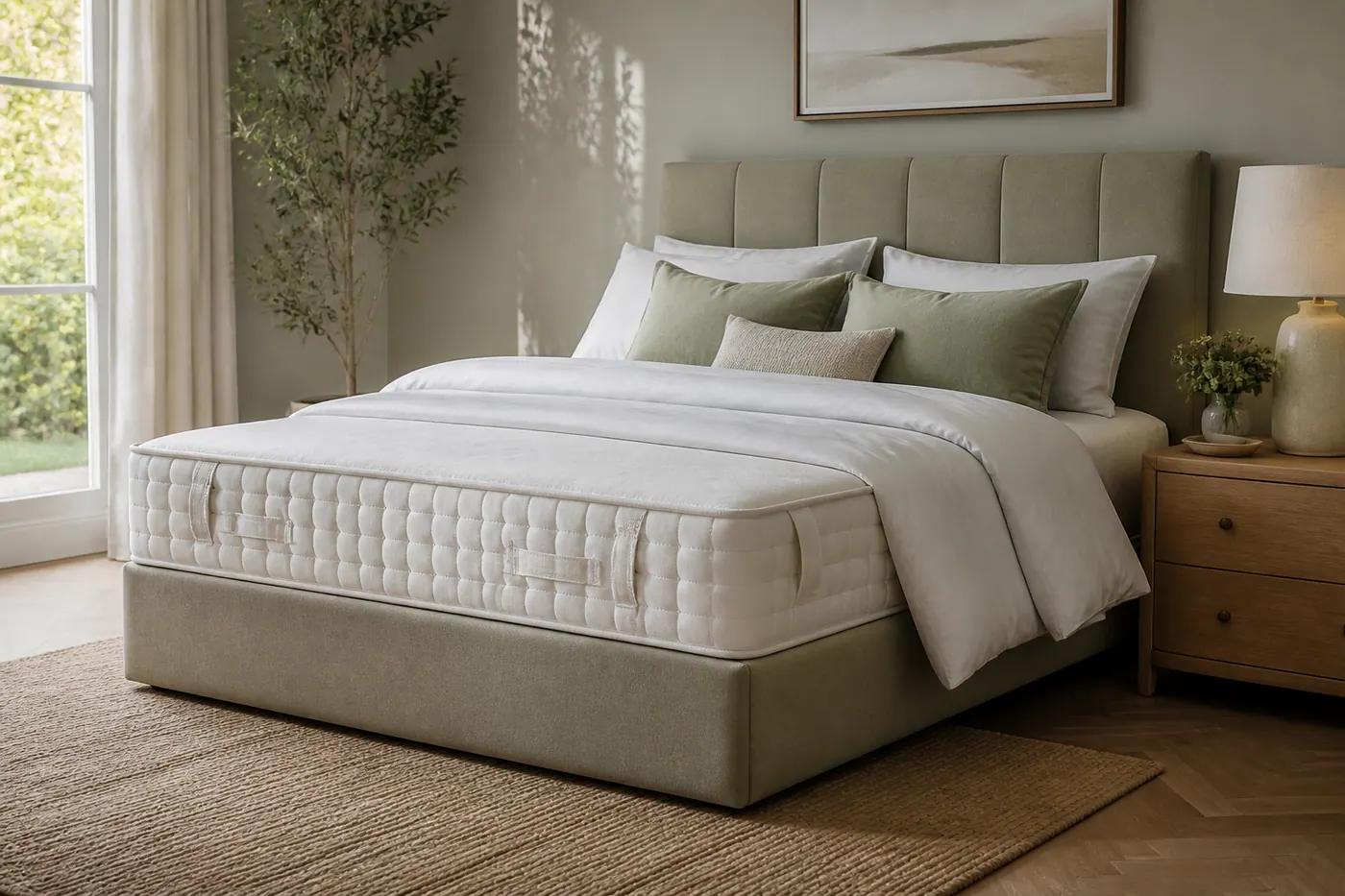
What materials go into this mattress?
Typical builds use pocket springs, memory foam, latex, hybrid stacks. Exact stacks vary by model. Read the spec, not the shop slogan.
- pocket springs
- memory foam
- latex
- hybrid stacks
How long does this mattress typically last?
A typical range is 6– 10 years. Body weight, base support and rotation change that. It is not a warranty promise.
6– 10 years
What does back sleeping need from a mattress?
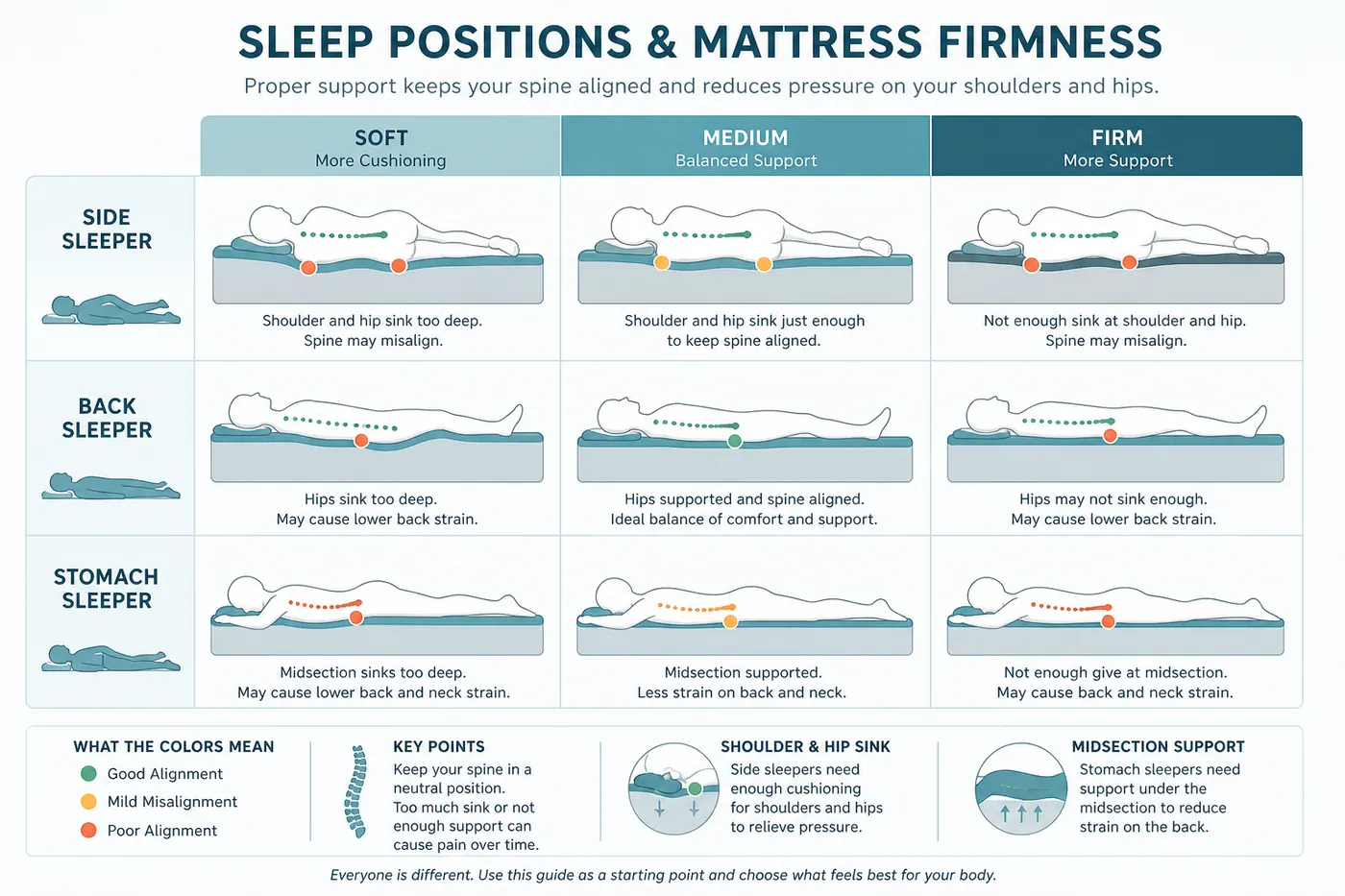
On your back, the mattress must support the hips and lumbar area so the spine does not sag into a hammock. The surface should still ease the shoulders a little. Too soft and the pelvis drops. Too board-like and the shoulders have nowhere to go. The useful band for many people is medium-firm to firm — as a pattern, not a prescription.
Match spring tension or foam density to body weight first. A heavier back sleeper sinks further into the same build than a lighter one. Soft, medium and firm tickets are not a shared UK scale.
What firmness should back sleepers start with?
Medium-firm to firm surfaces are the usual starting point. Very soft pillow tops can look kind in a shop and then hammock at home. That is a comfort-layer problem sitting on an otherwise decent core. Ask what sits above the springs or foam core, not only the word on the headboard ticket.
| Factor | Common back-sleeper pattern |
|---|---|
| Surface feel | Medium-firm to firm |
| Support core | Correct tension / density for weight |
| Builds to try | Pocket sprung, hybrid, latex; firmer foams if density suits |
| Pillow | Medium loft — pillow guide |
Read firmness and sleep position for how shop grades vary. Combination sleepers who roll to the side at night may need a little more surface give than a pure back sleeper.
Do I need an orthopaedic mattress?
No, not as a magic label. Orthopaedic in UK retail is a marketing word. It is not a regulated medical grade. Check the real construction: tension, density, zoning, edge. See orthopaedic mattress explained and support claims. Persistent pain needs clinical advice. BedGuide will not tell you a mattress treats a condition.
Zoning can put firmer pockets under the lumbar band. That may reduce hammocking for some back sleepers. It is still a layout, not a treatment. See zoned support.
What pillow height suits back sleepers?
Medium loft often keeps the neck nearer level with the spine. A very high pillow pushes the head forward. A pancake pillow can let the head drop back. The mattress surface changes this: a plush top raises the shoulders and can need a slightly higher pillow. Test them together. See pillow ergonomics.
What else should I check before I buy?
Use a base the warranty allows. A sagging slatted frame can fake a hammock that you then blame on the mattress. If you share the bed, check motion isolation. If body weights differ a lot, look at zip-and-link rather than one compromise tension.
Follow before you buy a mattress. Use a trial only after break-in, not after two nights.
Related BedGuide entries
How it works
Frequently asked questions
Are firm mattresses better for back sleepers?
Many back sleepers prefer medium-firm to firm surfaces that limit hip sink. Very soft beds can increase spinal curve. Individual comfort and body weight still matter more than a single firmness word on a ticket.
Do I need an orthopaedic mattress if I sleep on my back?
Orthopaedic is a retail label, not a regulated medical grade. Check the real construction and tension. See orthopaedic mattress explained and support claims literacy. Persistent pain needs clinical advice.
What pillow height suits back sleepers?
Medium loft often keeps the neck nearer level with the spine. Very high pillows can push the head forward. See how to choose a pillow.
Can a back sleeper use memory foam?
Yes if the core stays supportive at the hips. A thick, soft memory-foam comfort layer can still hammock. Read density and the full stack, not the word foam on its own.