How a Mattress Is Made (Factory Process)
Published 2026-08-04. Last updated 2026-08-04. Desk research by Kaiser Khan — we have not product-tested how a mattress is made. This is not a shop review and not medical advice.
In short
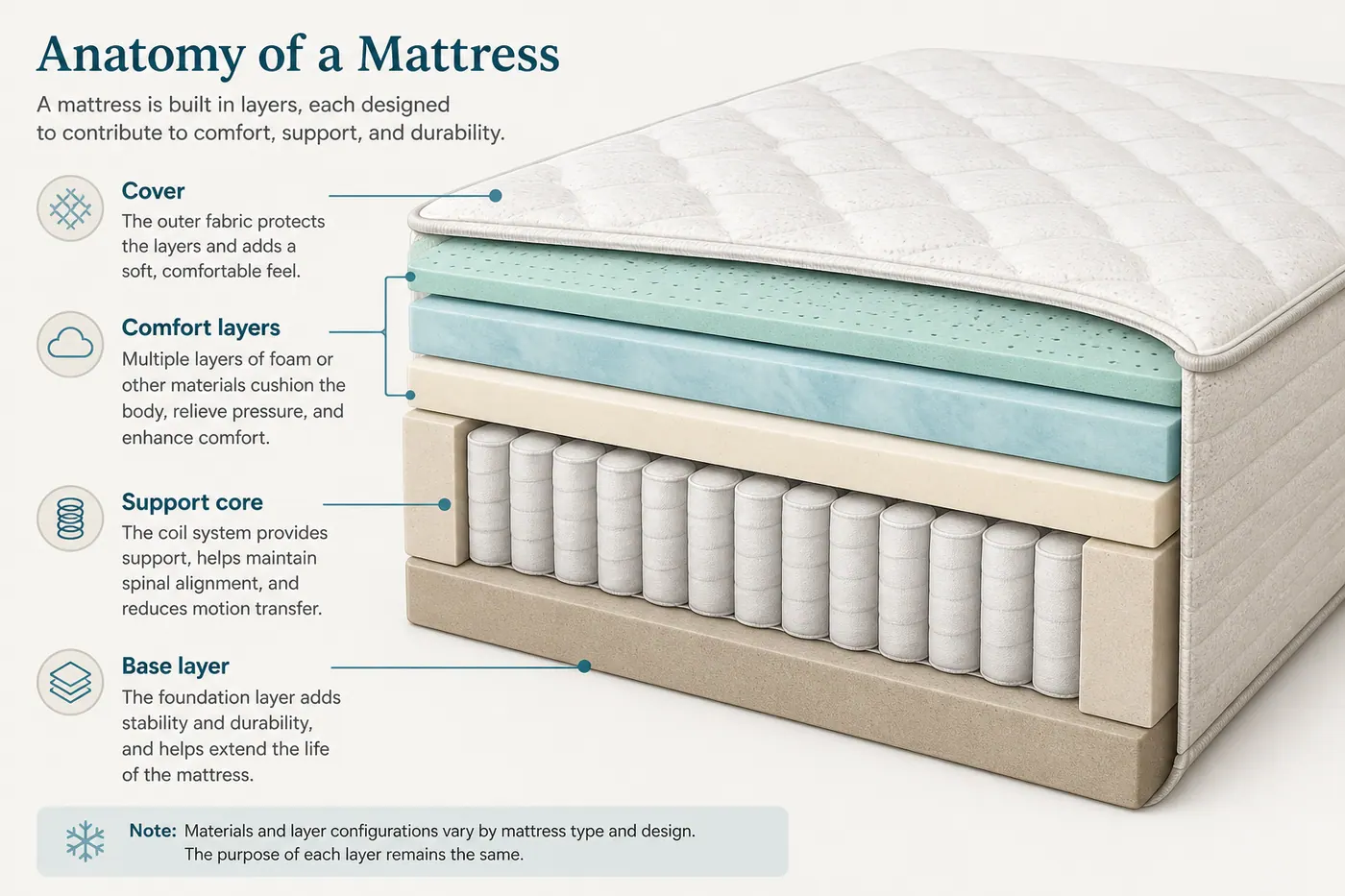
A typical UK mattress is built in stages: springs or foam cores are formed, then insulated, layered with comfort fillings, quilted or tufted, edged and labelled. Pocket units are coiled and pocketed first; foam stacks are cut and laminated. Knowing the order helps you read GSM, spring count and warranty rules as factory decisions, not shop slogans.
About 2 minutes to read
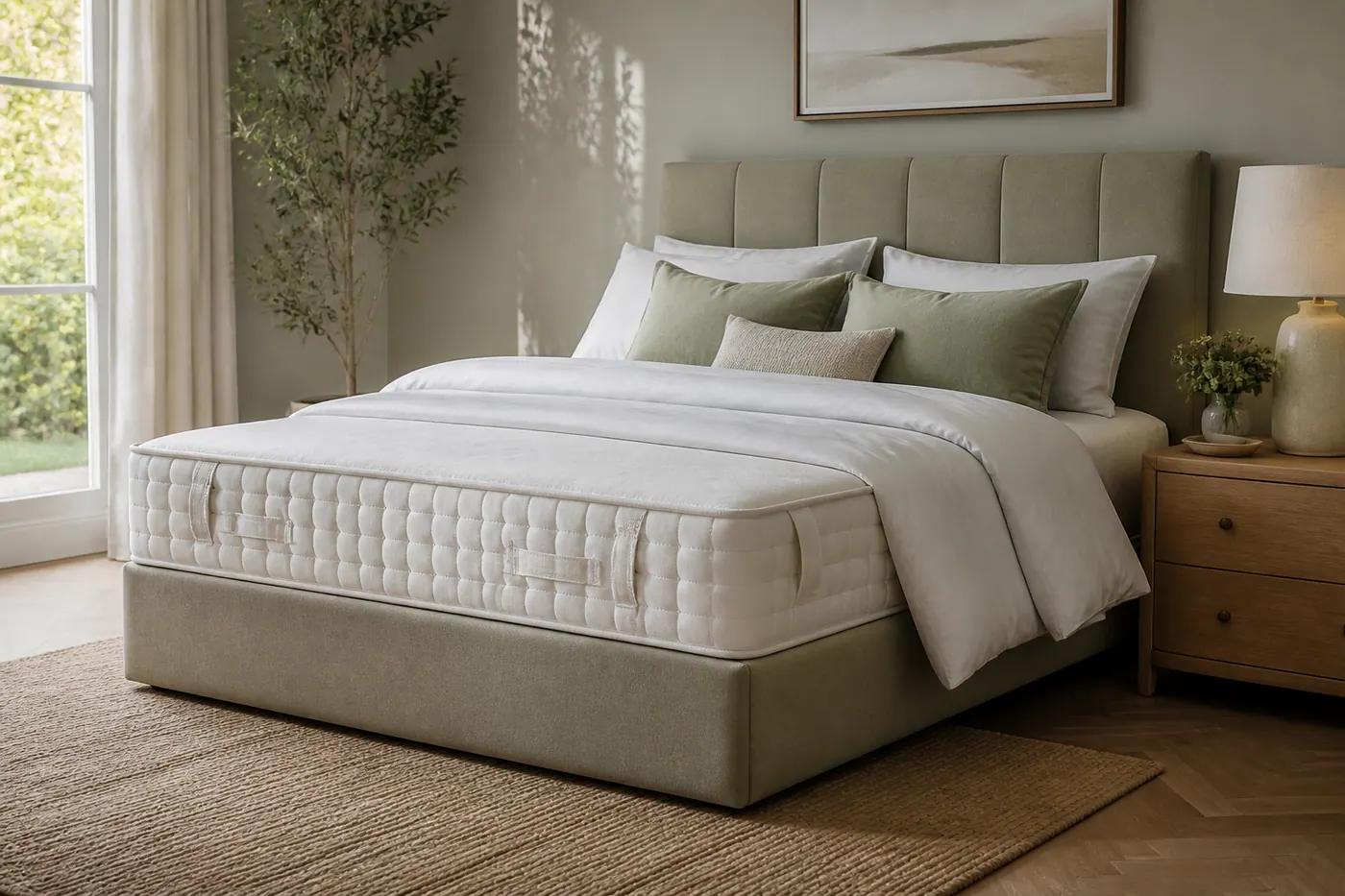
What materials go into this mattress?
Typical builds use steel pocket or open-coil spring units, polyurethane and memory foams, wool cotton fibre and other fillings, ticking and quilt panels. Exact stacks vary by model. Read the spec, not the shop slogan.
- steel pocket or open-coil spring units
- polyurethane and memory foams
- wool cotton fibre and other fillings
- ticking and quilt panels
How long does this mattress typically last?
A typical range is 6– 10 years. Body weight, base support and rotation change that. It is not a warranty promise.
6– 10 years
The factory order (most builds)
Factories rarely start with the pretty cover. They start with support, then comfort, then finish.
| Stage | What happens | Why it matters to you |
|---|---|---|
| 1. Core | Pocket unit, open coil, foam block or hybrid core | Support and lifespan |
| 2. Insulator | Fibre or foam pad over springs | Stops fillings falling into coils |
| 3. Comfort stack | Foams, wool, cotton, latex, fibre | Surface feel and GSM |
| 4. Close | Quilt or tuft | Holds layers; shapes the face |
| 5. Border | Side panels, handles, vents | Edge feel and handling |
| 6. Label & pack | Fire label, care marks, bag or roll | Legal and logistics |
Pocket sprung line (simplified)
- Coil — wire drawn and formed; gauge affects tension — see wire gauge.
- Pocket — each spring goes into its own fabric sock.
- Assemble unit — pockets glued or ultrasonically joined into a mattress-shaped panel.
- Insulate — pad stops fibre dropping into the unit.
- Upholster — comfort layers added to a planned weight.
- Quilt or tuft — closes the sandwich.
- Border and inspect — edges, handles, BS 7177 labels, final check.
Detail on the finished stack: what’s inside a mattress.
Foam and hybrid lines
Foam cores are cut from large blocks (or moulded), then laminated into layers of different densities. Hybrids add a pocket unit under or inside that stack, then follow the same close-and-border finish. Many are built as one-sided comfort stacks — see why no-turn mattresses.
Where “premium” usually appears on the line
- Heavier comfort mass (GSM / depth)
- Finer pocket units or better edge finishes
- Natural fillings in the comfort stack
- Turnable builds (two usable faces)
Price still includes brand and retail margin — see budget vs premium.
Related BedGuide entries
How it works
Frequently asked questions
How is a pocket sprung mattress made?
Wire is coiled and tempered, then each spring is enclosed in a fabric pocket. Pockets are joined into a unit, insulated, topped with comfort fillings, and closed by quilting or tufting before the border and labels go on.
What is the difference between quilting and tufting?
Quilting stitches the cover to comfort layers on a multi-needle machine. Tufting pulls cords or buttons through the whole depth to lock fillings in place. Both control how fillings move — neither is a medical feature.
Does knowing the process help when buying?
Yes. Spring count, GSM, turnability and foam density are decisions made on the line. Ask for those facts — see how to read a mattress spec and questions to ask in a bed shop.