Why Most Mattresses Are No-Turn Now
Published 2026-08-04. Last updated 2026-08-04. Desk research by Kaiser Khan — we have not product-tested no-turn single-sided mattress. This is not a shop review and not medical advice.
In short
Most modern UK mattresses are single-sided: a thick comfort stack sits on one face only, so you rotate head-to-foot but do not flip. Factories favour this for foam and pillow-top builds, lighter shipping and simpler lines. Turnable beds still exist and can share wear across two faces. Match care rules to the build — neither design wins automatically.
About 2 minutes to read
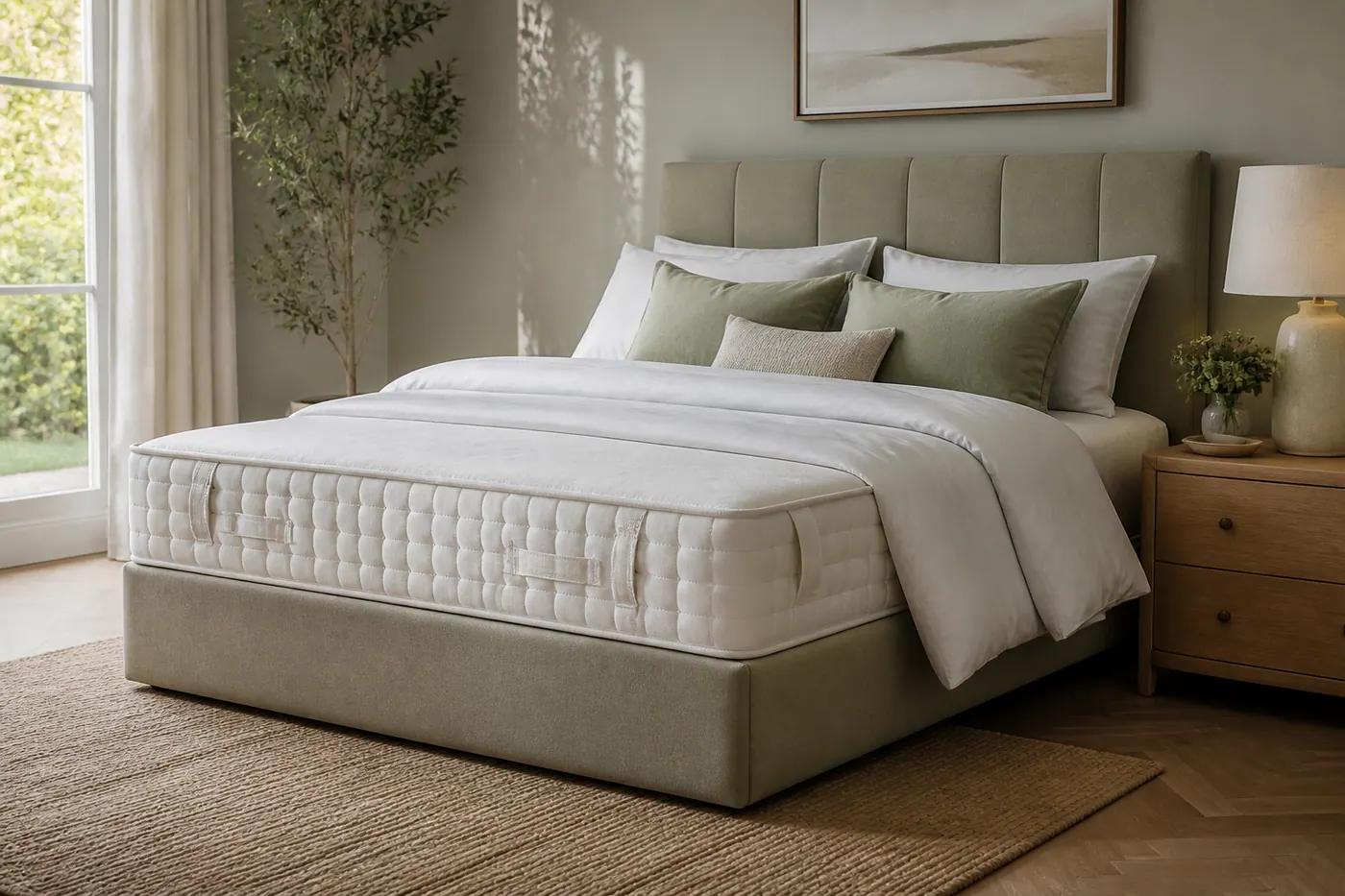
What materials go into this mattress?
Typical builds use one-sided comfort foams, pillow-top panels, pocket spring units, quilted covers. Exact stacks vary by model. Read the spec, not the shop slogan.
- one-sided comfort foams
- pillow-top panels
- pocket spring units
- quilted covers
How long does this mattress typically last?
A typical range is 6– 10 years. Body weight, base support and rotation change that. It is not a warranty promise.
6– 10 years
What “no-turn” means on the line
| Build | Sleep faces | Usual care |
|---|---|---|
| No-turn / single-sided | One | Rotate only |
| Turnable / double-sided | Two | Rotate and turn |
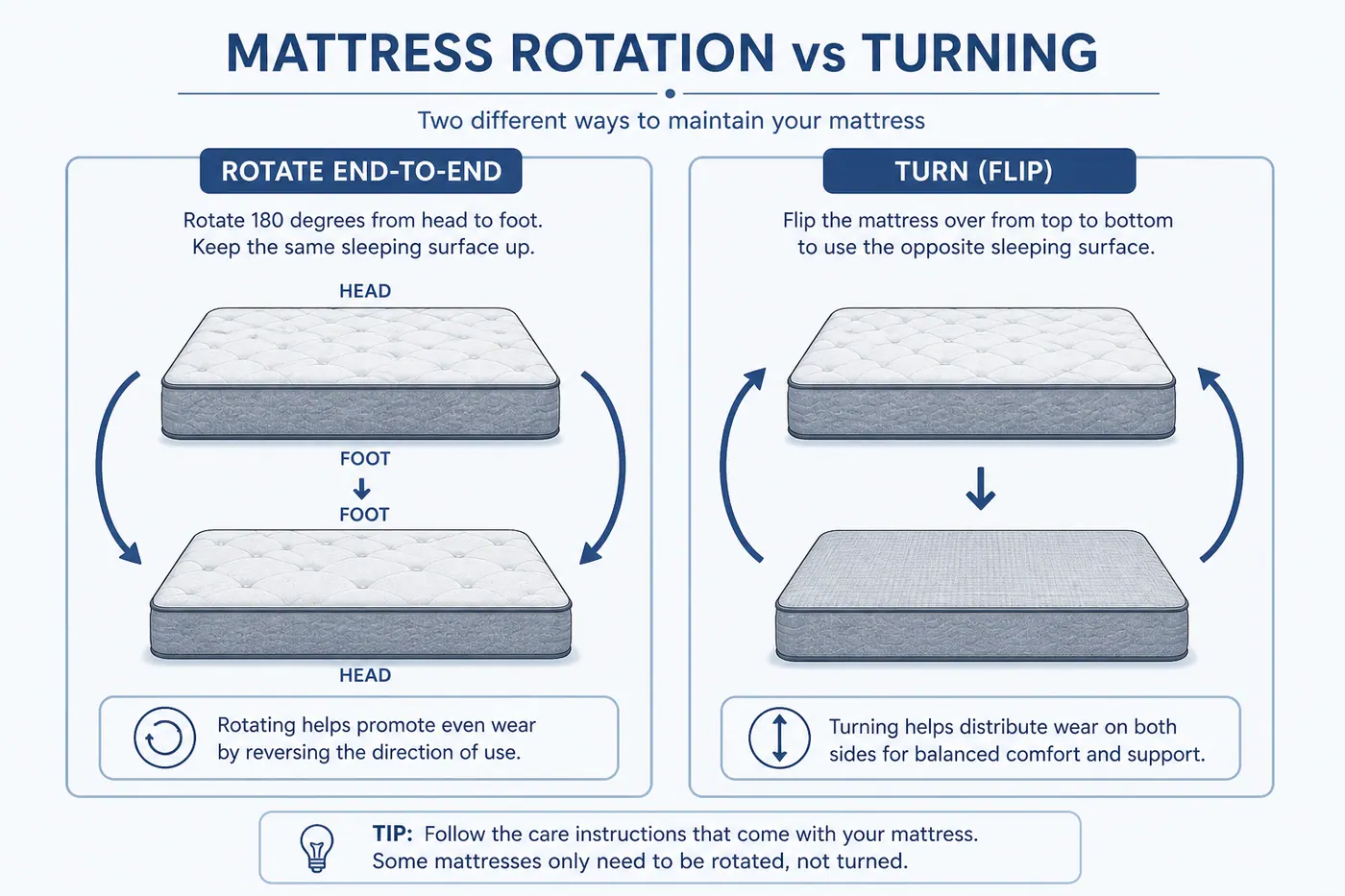
Mechanics: turning vs rotating.
Why factories shifted this way
- Foam and pillow-top stacks — comfort layers are thick, glued and quilted for one face; mirroring them doubles cost.
- Hybrids and bed-in-a-box — roll packing favours a defined top and flat underside — see rolled mattresses.
- Weight and logistics — less fill on the reverse means lighter cartons.
- Retail feel theatre — deep quilted tops photograph and showroom well on one face.
None of that means turnable mattresses are “outdated.” Many traditional pocket and natural-fill builds are still two-sided.
What you should still check
- Is the care label rotate only or turn and rotate?
- Is there enough comfort mass on the sleep face for your position?
- Will you actually rotate it every few months? No-turn beds still need rotation.
- Warranty rules often require following the care schedule — see what voids a warranty.
Related BedGuide entries
How it works
Frequently asked questions
Why are most new mattresses no-turn?
Factories put thick foam or pillow-top comfort on one face for feel and cost. A second mirrored face adds fill, weight and process time. Many foam and hybrid lines are also designed for roll packing as one-sided stacks.
Are turnable mattresses better?
Turnable builds can share wear across two faces if you turn them on schedule. They are not automatically more supportive. Judge the core, fill mass and your weight match — then follow the care label.
What care does a no-turn mattress need?
Rotate head-to-foot on the maker’s schedule so wear spreads along the length. Do not flip it. See turning versus rotating for the difference.