Foam Density Explained (kg/m³)
Published 2026-08-03. Last updated 2026-08-03. Desk research by Kaiser Khan — we have not product-tested foam density. This is not a shop review and not medical advice.
In short
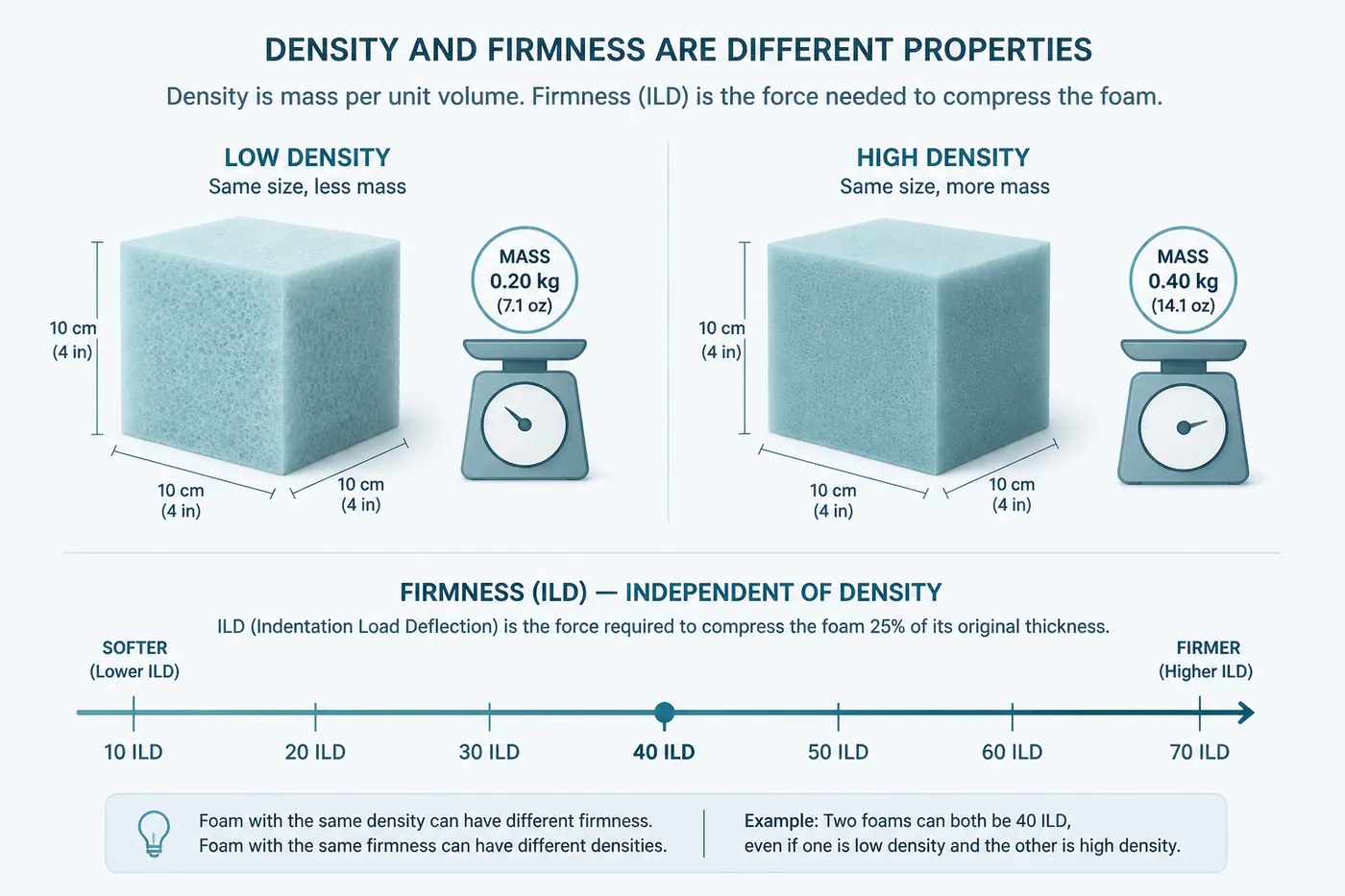
Foam density is how much foam mass fits in one cubic metre (kg/m³). It is not the same as firmness. Higher density usually means more material in the same space. That often resists permanent dips better. Soft high-density foam and firm low-density foam both exist. Read density together with ILD hardness, layer thickness and the bed base underneath.
About 1 minutes to read
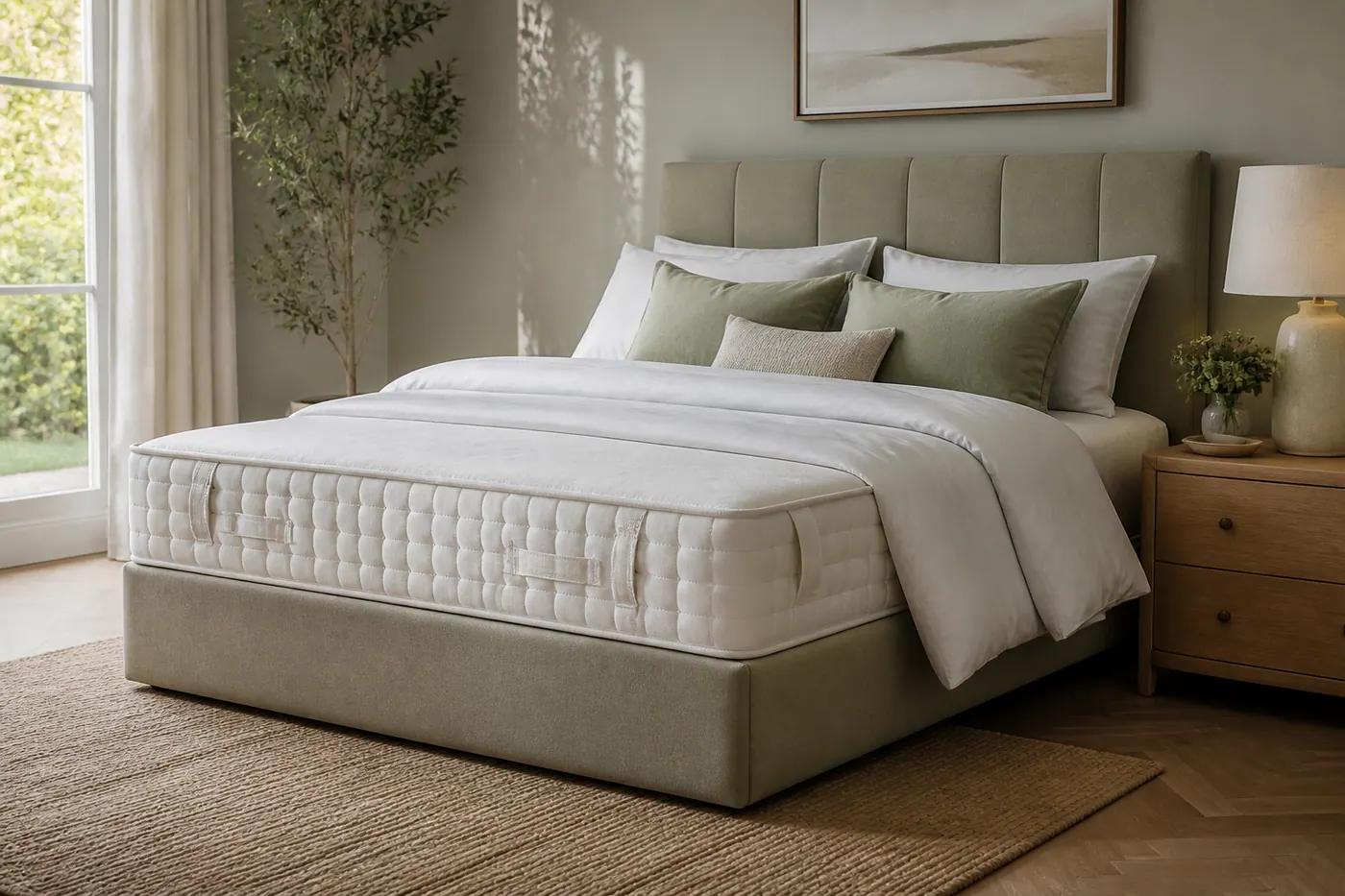
What materials go into this mattress?
Typical builds use polyurethane foam, viscoelastic memory foam, high-resilience polyfoam. Exact stacks vary by model. Read the spec, not the shop slogan.
- polyurethane foam
- viscoelastic memory foam
- high-resilience polyfoam
How long does this mattress typically last?
A typical range is 6– 10 years. Body weight, base support and rotation change that. It is not a warranty promise.
6– 10 years
Density vs hardness vs feel
| Metric | Unit / test | What it answers |
|---|---|---|
| Density | kg/m³ | How much material per volume |
| ILD / IFD | Indentation force | Soft vs firm |
| Thickness | mm / cm | How much material can compress |
| Base | Platform / slats | Whether foam hammocks |
Typical density bands (for learning, not shopping)
| Role | Typical band | Notes |
|---|---|---|
| Light comfort / quilt foam | Lower kg/m³ | Can soften sooner under load |
| Memory foam comfort | Mid to higher kg/m³ | Durability often improves with density |
| Support / HR foam | Mid to high kg/m³ | Holds alignment under the comfort stack |
Exact numbers vary by chemistry. Treat bands as literacy, not a shopping rule.
Why base support still matters
Even dense foam can sag over wide slat gaps. See mattress–base compatibility.
Related BedGuide entries
How it works
Frequently asked questions
Is higher density foam always firmer?
No. Density measures mass per volume. Firmness is measured by ILD or IFD — the force needed to indent the foam. A soft high-density comfort foam and a firm low-density foam can both exist.
What density should memory foam be?
As a rough guide, roughly 40–50+ kg/m³ is often more durable for comfort layers than very light foams. There is no single magic number. Thickness, ILD and base support still matter.
Does density equal quality?
Higher density often correlates with slower permanent set, but chemistry, cell structure and use load also decide lifespan. Density alone is not a quality score.