What Voids a Mattress Warranty (Maker View)
Published 2026-08-04. Last updated 2026-08-28. Desk research by Kaiser Khan — we have not product-tested what voids a mattress warranty. This is not a shop review and not medical advice.
In short
From a maker’s side, warranties usually fail when the base is wrong, the mattress was folded or abused, stains or burns are present, care labels were ignored, or the claim is only about comfort dislike. Normal shallow body impressions below the written depth are often excluded. Keep proof of purchase, photos of the base and the permanent fire label attached.
- Usual void
- Wrong base
- Usually not a warranty
- Comfort dislike
- Sewn-in fire mark
- Keep the label
Wide slats or a hammocking foundation wear the core early.
That is what a trial is for, if one exists.
Hang-tags can come off. The permanent label should stay.
About 5 minutes to read
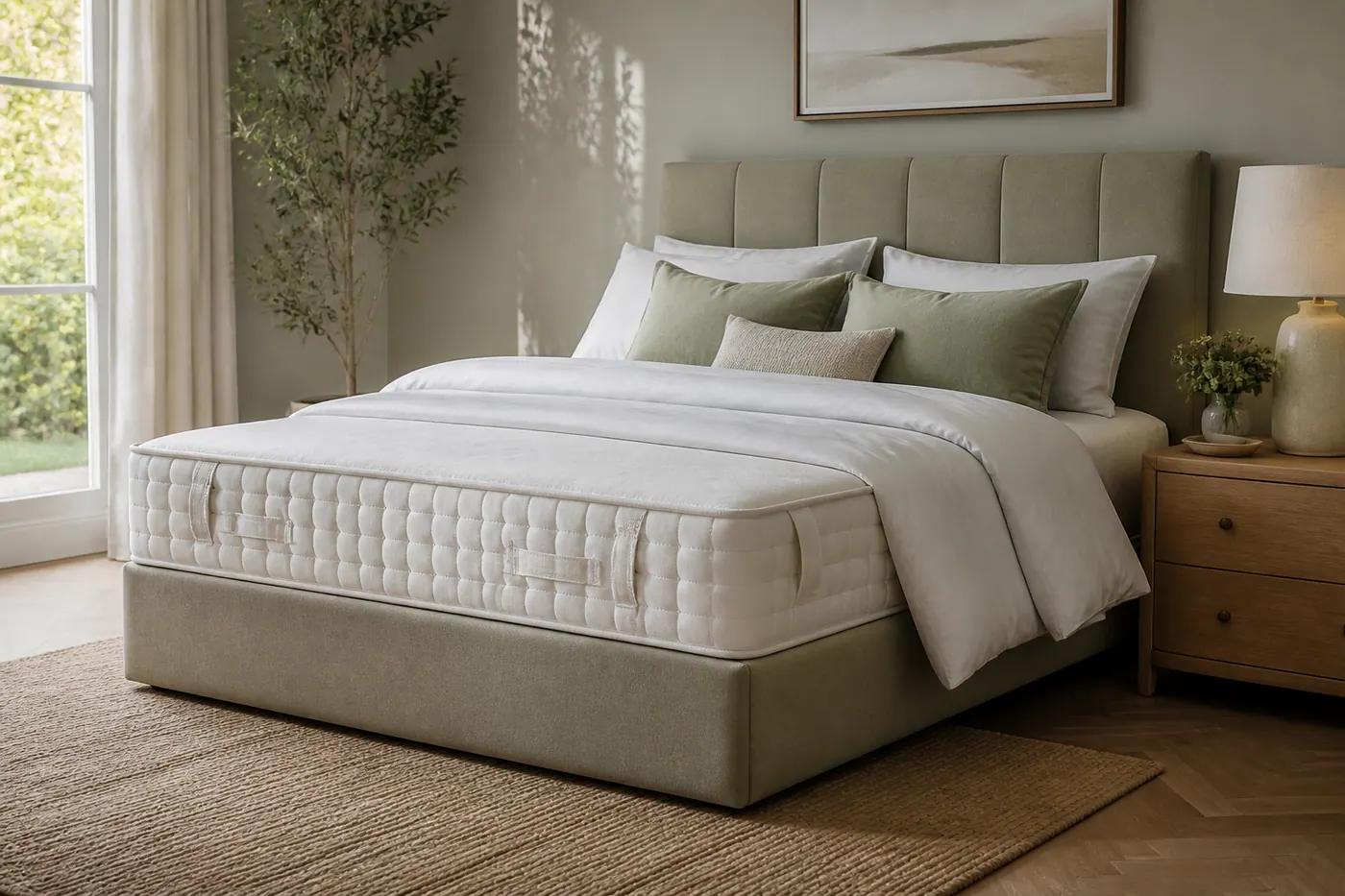
What usually voids a mattress warranty?
From a maker’s side, cover usually fails when the base is wrong, the mattress was folded or abused, stains or burns are present, care labels were ignored, or the claim is only about comfort dislike. Shallow body marks below the written depth are often excluded. Keep the receipt, base photos and the sewn-in fire label.
This page is education. It is not your contract. It is not legal advice. The leaflet that came with the bed wins over this encyclopedia.
Full overview of what a warranty is: mattress warranty explained.
Why do makers write these rules?
Warranties price in manufacturing faults and abnormal structural failure. They do not price in a change of mind about firmness. They do not price in normal softening of comfort fibres. They do not price in damage from a hammocking base.
A hammocking base is a foundation that sags in the middle. The mattress then sags with it. The maker will say the core failed because the floor under it failed. That is why base compatibility sits next to this page.
What is on the common exclusion list?
| Issue | Why makers exclude it |
|---|---|
| Wrong base / wide slats | Core and foam fail early — compatibility |
| Folded spring mattress | Bent coils and broken glue lines |
| Stains, moisture, mould | Hygiene and unknown damage |
| Burns, cuts, tears | Physical abuse |
| Jumping / standing regularly | Overload beyond design |
| Missing fire label | Legal and product identity |
| No rotation when required | Uneven wear blamed on the unit |
| Commercial use | Higher duty cycle than domestic rating |
| Comfort change of mind | Not a defect — use a trial |
None of these lines is a court verdict. They are the usual factory view. Your document can add more. Your document can be kinder. Read it.
What usually is reviewed?
Sag or a body impression deeper than the written millimetre threshold. Broken spring units with evidence of a proper base. Clear manufacturing defects found early with proof of purchase.
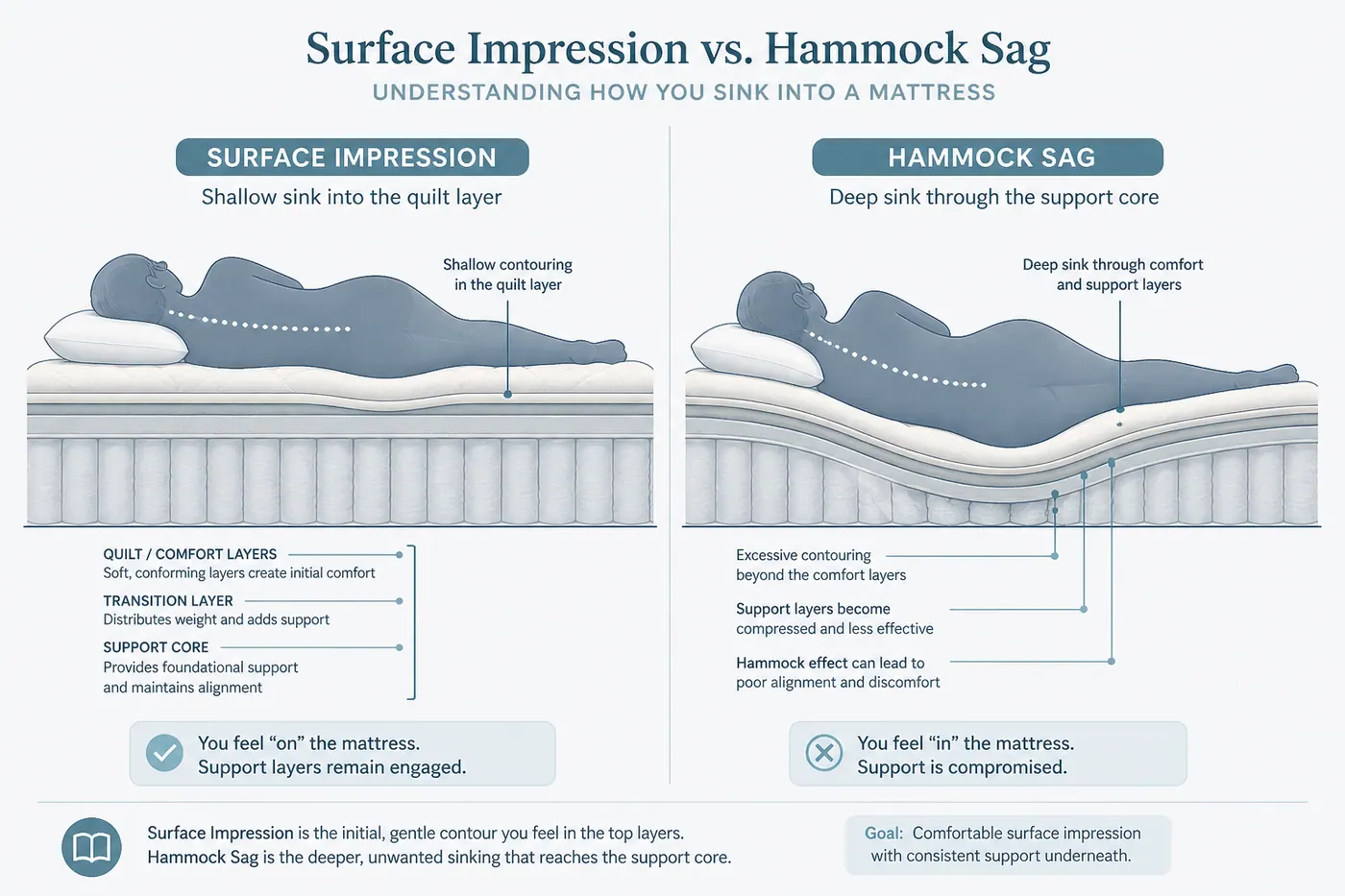
Shallow impressions are often treated as normal softening. Measure against the maker’s depth rule. How to tell a dip from a failure: body impressions and sag.
We do not invent a “standard” millimetre. Makers pick different depths. The number on your card is the only number that counts for that claim.
Is comfort dislike a warranty claim?
Usually no. Comfort dislike is a trial issue, if a trial exists. A warranty is for faults and for sag beyond a stated depth. Soft, medium and firm labels are not a shared scale. Changing your mind is not a manufacturing fault.
If you are still inside a trial, read trial periods before you open a warranty file. Mixing the two tracks wastes time.
| Track | What it is for | What it is not for |
|---|---|---|
| Trial | Comfort dislike, under the seller’s rules | A hidden extra year of “I do not like it” |
| Warranty | Stated faults and abnormal sag | A softer top after six weeks |
| Consumer law | Statutory rights on goods | A substitute for reading the leaflet |
GOV.UK explains consumer protection rights as a separate official track. That page was checked on 28 August 2026. A maker warranty does not delete those rights. This encyclopedia still cannot give you legal advice.
Does cutting off the fire label void cover?
Often yes. The sewn-in fire label names the tested product. Many UK warranties treat a missing permanent label as a problem. Hang-tags can come off after you have read them. The sewn-in label should stay.
The label sits in the UK furniture fire-safety framework. The Furniture and Furnishings (Fire) (Safety) Regulations 1988 are on legislation.gov.uk. That text was checked on 28 August 2026. Cutting the label also breaks the paper trail. See UK mattress fire regulations.
This is not a reason to panic about a lost hang-tag. It is a reason to leave the sewn-in mark alone.
How do I keep cover intact?
- Photo the base and the slat gaps on install day.
- Fit a protector if the warranty asks for one. Stains are the usual fight.
- Follow rotate or turn rules — turning vs rotating and why no-turn.
- Keep the permanent fire label on.
- Store the receipt and the care card.
- Do not fold a non-roll spring mattress to get it up the stairs.
- Do not use a domestic mattress as a hotel or rental bed unless the leaflet allows it.
Write the slat gap in centimetres. Makers often quote a maximum near 7 cm for foam-heavy beds. The warranty leaflet still wins over that habit.
What should I send if I make a claim?
Send proof of purchase. Send photos of the whole mattress from above. Send a photo of the deepest dip with a straight edge and a ruler. Send a photo of the base and the slat gaps. Send a photo of the sewn-in fire label.
Do not wash a stain “to make it look nicer” if the leaflet forbids it. Do not strip the cover if the maker must see the original ticking. Ask the claims desk what they need before you cut anything.
Who should skip this page?
Skip it if you need a solicitor to read a named contract. Skip it if you want a ranked list of “best warranties”. We will not write that list. Skip it if your only question is King centimetres — use the UK sizes guide.
Related BedGuide entries
How it works
Frequently asked questions
What most often voids a mattress warranty?
Unsupported bases or oversize slat gaps, folding a non-roll mattress for stairs, stains or burns, removing the fire label, skipping required rotation, and commercial use on a domestic warranty. Exact rules are in your document.
Does comfort dislike void a warranty?
Comfort dislike is usually not a warranty claim at all. That is what a sleep trial is for, if one exists. Warranties target faults and sag beyond a stated depth.
Can a body impression void cover?
Shallow impressions below the written threshold are often treated as normal softening. Deeper sag may be reviewed. Measure against the maker’s depth rule — see body impressions and sag.
Does cutting off the fire label void a mattress warranty?
Often yes. The sewn-in fire label identifies the tested product. Many UK warranties treat a missing permanent label as a problem. Hang-tags can come off. The sewn-in label should stay. This is not legal advice.
Is a warranty the same as my legal consumer rights?
No. A maker warranty is a private promise in a leaflet. UK consumer law is a separate track. This page explains common maker rules. It is not legal advice. Read your contract and official guidance if you need a rights decision.
Where do these facts come from?
BedGuide is desk research. The numbers and rules on this page were checked against the official or primary sources below. We name the check date. We do not invent a figure when a source is missing.
- Furniture and Furnishings (Fire) (Safety) Regulations 1988 — The UK fire-safety framework many mattress labels sit in. A cut-off permanent label also breaks the paper trail makers use in a claim. Checked 2026-08-28.
- GOV.UK — consumer protection rights — Official overview that consumer rights sit beside, and are not replaced by, a shop or maker warranty leaflet. Checked 2026-08-28.