Mattress Support and Health Claims Literacy
Published 2026-08-03. Last updated 2026-08-03. Desk research by Kaiser Khan — we have not product-tested mattress health claims literacy. This is not a shop review and not medical advice.
In short
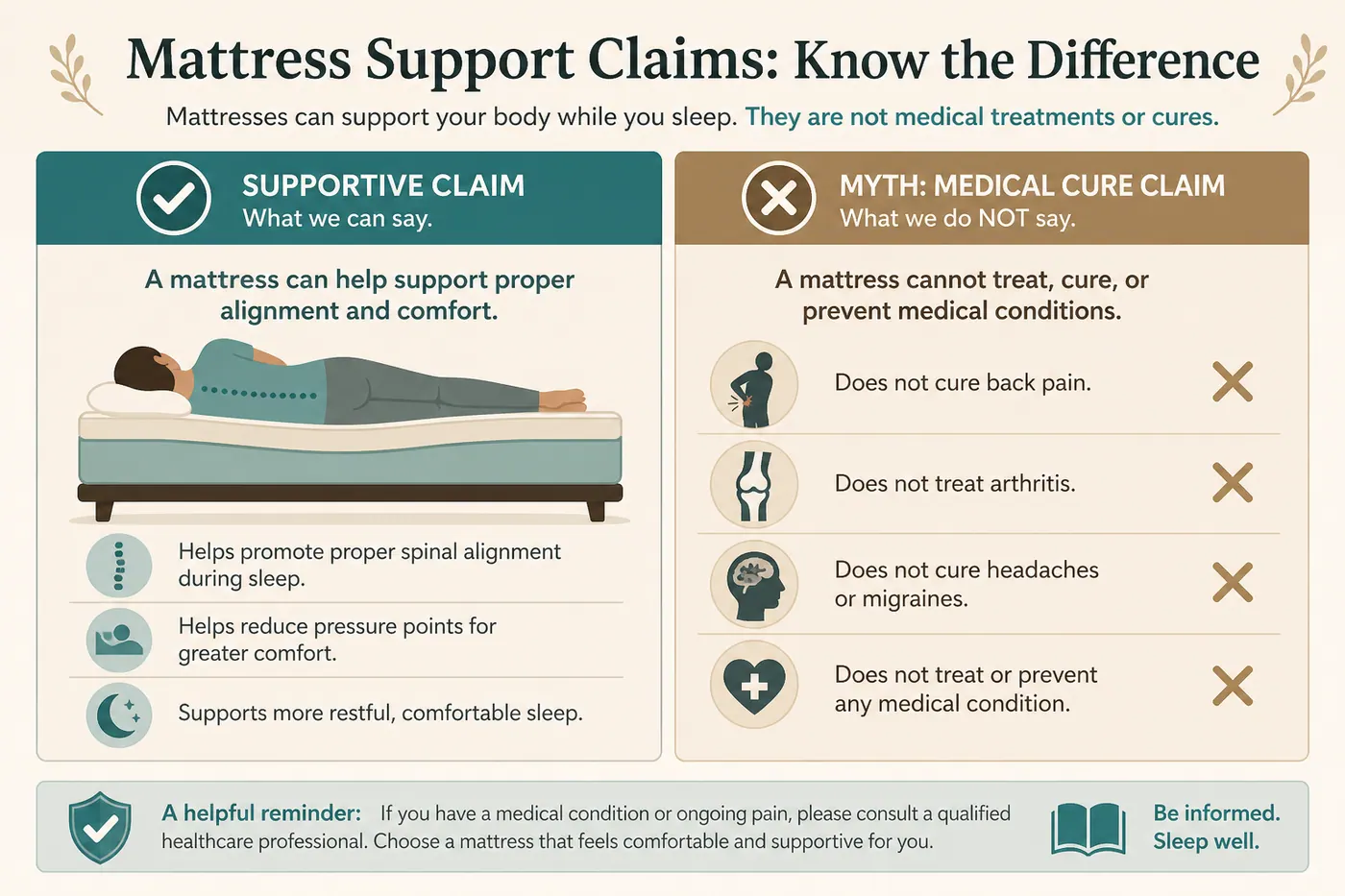
Words like orthopaedic, bad-back, posture, and pressure-relief are shop phrases. They describe marketing ideas or general comfort — not personal medical prescriptions. Spinal comfort depends on body weight, sleep position, and the whole sleep system. Medium-firm support helps some people with general back discomfort. Firm is not always better. Ongoing pain needs a qualified clinician, not a label.
About 1 minutes to read

How to read claims
| Claim style | What it usually means |
|---|---|
| Orthopaedic | Label guide |
| Pressure relief | Contouring materials — foam, latex, or fillings |
| Posture support | Alignment via tension, zoning, and position |
| Doctor recommended | Ask what was tested and for whom |
Better decision inputs
Related BedGuide entries
How it works
Frequently asked questions
Is a firm mattress better for back pain?
Not always. Some research favours medium-firm feel for many people with general low back discomfort. But everyone differs. Match construction and tension to your body and position. Seek clinical advice for ongoing pain.
Do orthopaedic mattresses treat back problems?
The word orthopaedic on a mattress is not a treatment licence. It usually signals firmer or zoned marketing. See the orthopaedic explained guide.