Reflex Foam Explained
Published 2026-08-03. Last updated 2026-08-03. Desk research by Kaiser Khan — we have not product-tested reflex foam mattress. This is not a shop review and not medical advice.
In short
Reflex foam is a UK retail name for firm, high-resilience polyurethane foam used in sofa beds, guest mattresses and some cheaper sleep surfaces. It bounces back faster than classic memory foam. It is not a medical grade. Density and thickness still decide how long it lasts. Treat the word as a foam style, not a quality score.
About 1 minutes to read
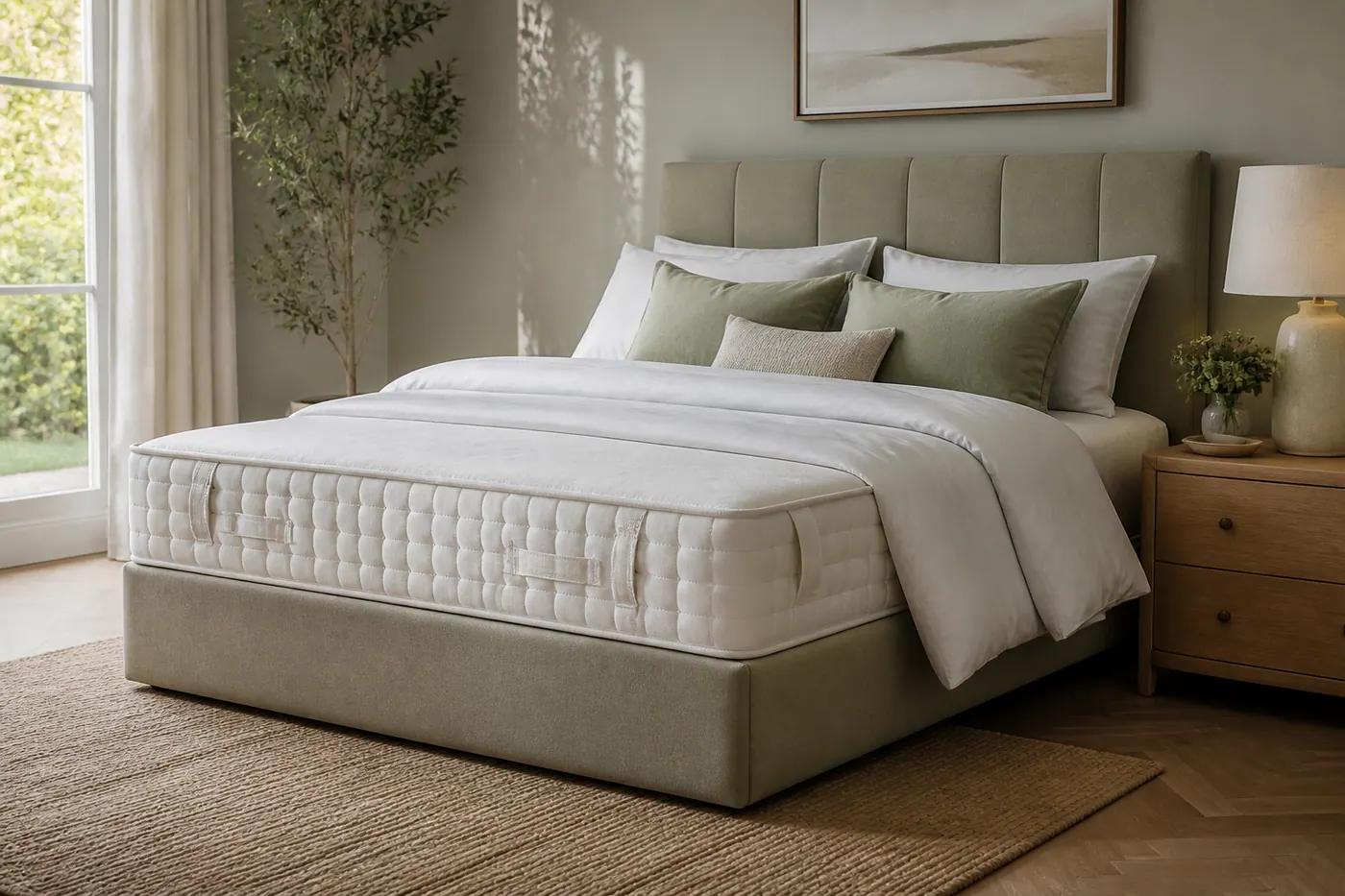
What materials go into this mattress?
Typical builds use high-resilience polyurethane foam, cover fabric. Exact stacks vary by model. Read the spec, not the shop slogan.
- high-resilience polyurethane foam
- cover fabric
How long does this mattress typically last?
A typical range is 3– 7 years. Body weight, base support and rotation change that. It is not a warranty promise.
3– 7 years
What shops mean by “reflex foam”
In short: a firmer, springier foam than soft seat foam or classic memory foam.
It is popular in:
- Sofa beds and guest beds
- Budget foam mattresses
- Some toppers and seat pads
What to check instead of the name
| Check | Why it matters |
|---|---|
| Thickness | Thin foam folds easily but may feel hard on a frame |
| Density | Higher density usually lasts longer under load |
| Base | Slats or solid deck change how firm it feels |
| Use | Guest nights versus every night |
Related BedGuide entries
How it works
Frequently asked questions
Is reflex foam the same as memory foam?
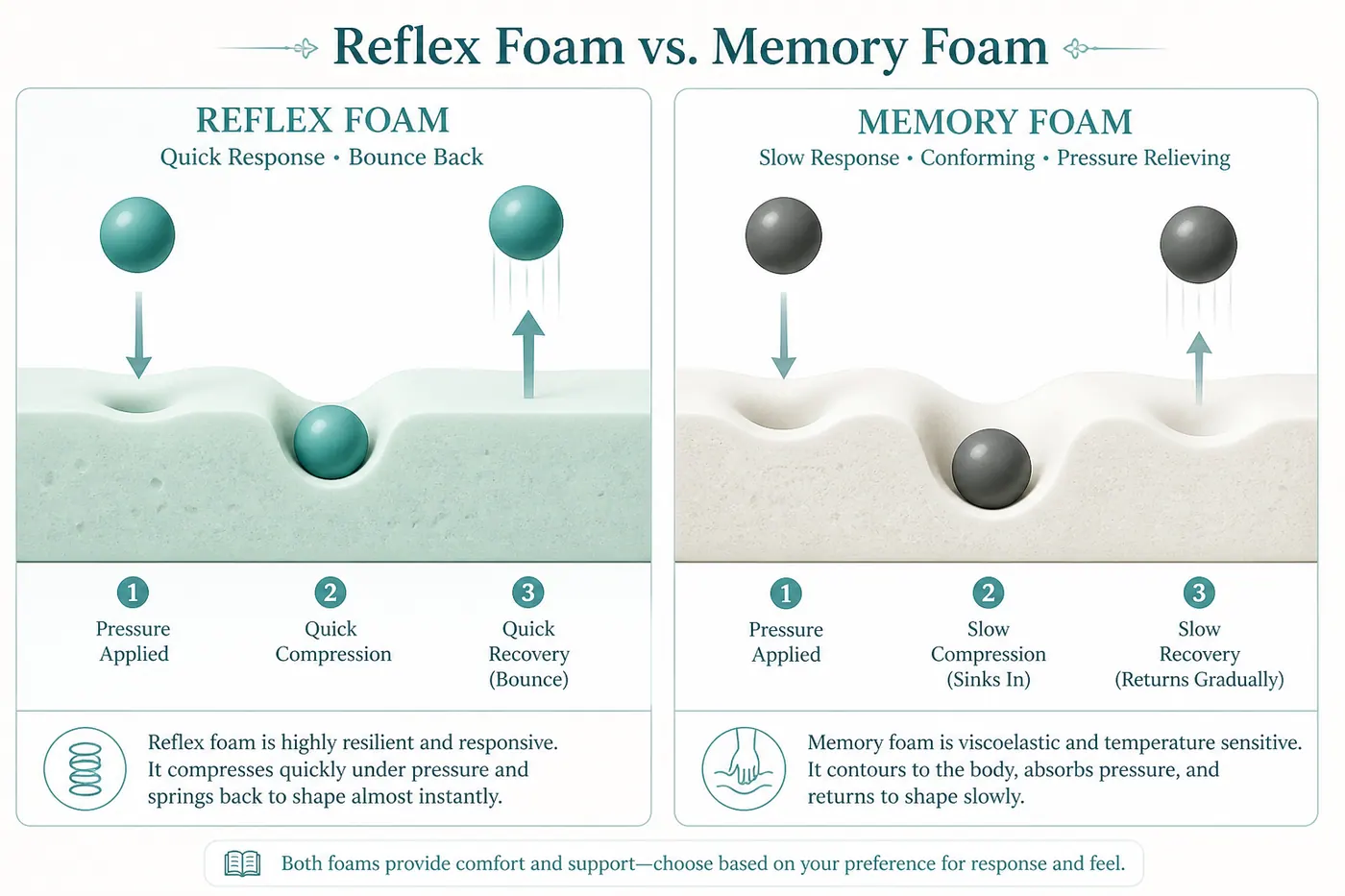
No. Memory foam softens with heat and recovers slowly. Reflex foam is usually firmer and more bouncey. Both can be polyurethane, but they feel different and suit different uses.
Is reflex foam good for everyday sleep?
Thin reflex foam is common in sofa beds for folding space. For every-night sleep, check density, thickness and base support. A short guest mattress is not automatically a long-term main bed.