Damp and Mould Under a Mattress
Published 2026-08-28. Last updated 2026-08-28. Desk research by Kaiser Khan — we have not product-tested damp and mould under mattress. This is not a shop review and not medical advice.
In short
Damp and mould under a mattress mean moisture cannot leave the bed. Sweat, a cold wall, sealed plastic or a solid base can trap it. Air the mattress. Leave a gap at the wall. Use a breathable base. Airing does not fix a leak. If you rent, the landlord must look at the cause. This is furniture care, not medicine.
- Daily habit
- Air first
- Cold walls
- Gap at wall
- Not sealed plastic
- Breathable base
- Then the bed
- Room first
Pull covers back. Moisture needs a way out.
A bed tight to an external wall can sweat underneath.
Slats or a vented platform beat a bag on the floor.
Airing cannot fix a leak or a home that cannot vent.
About 4 minutes to read
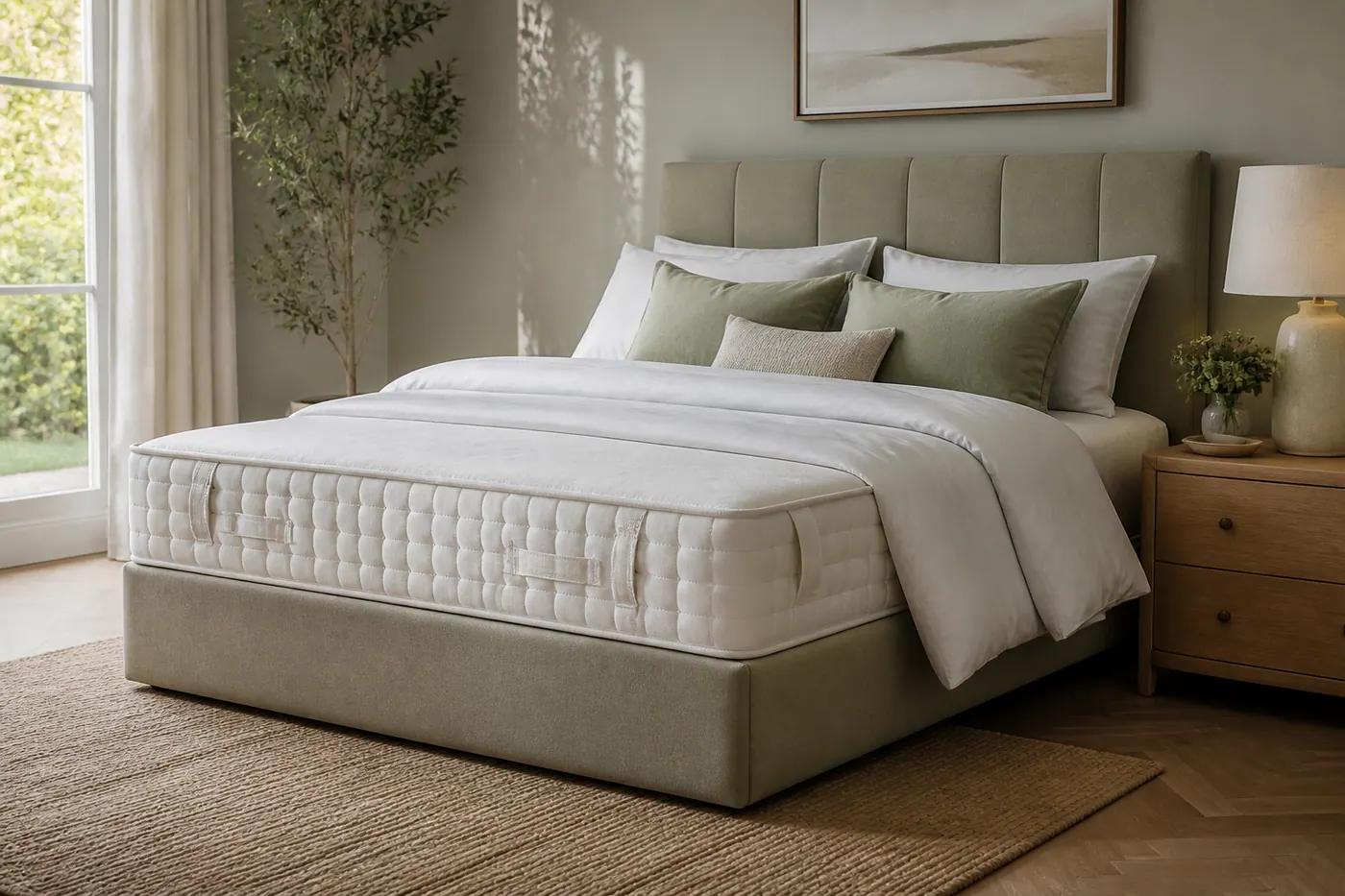
Why does a mattress go damp underneath?
A mattress goes damp when moisture cannot leave. You add water every night as sweat. A cold wall or a cold floor can make that water condense under the bed. A sealed plastic sheet or a solid base with no air path traps it.
Mould needs moisture and a surface. The underside of a mattress, the slats, and the wall behind a tight headboard are common spots. This page is furniture and room care. It is not medical advice. Breathing trouble needs a clinician.
GOV.UK housing guidance says poor ventilation lets moisture stay in the air. That page was checked on 28 August 2026. It is written for homes and landlords. It is not a shop care card. Airing a mattress helps a dry, vented room. It cannot fix a leak, a broken extractor, or a wall that is wet from outside.
How do I air a mattress?
Bed Advice UK, the National Bed Federation consumer site, says to air a new mattress before use and to air it regularly. Pull the covers back. Strip the bed when you go away. Vacuum the top now and then. That advice was checked on 28 August 2026.
| Habit | What it does | What it cannot do |
|---|---|---|
| Pull covers back each morning | Lets overnight moisture leave the ticking | Dry a leaking wall |
| Gap at an external wall | Lets air move behind the headboard | Insulate a cold home |
| Breathable base | Lets the underside dry | Turn a soaked foam core into a new bed |
| Breathable protector | Keeps sweat and spills off the cover | Replace a vent or a working extractor |
| Open the bedroom window a little | Changes the room air | Fix a landlord repair |
Do not bake a foam mattress on a radiator. Do not put a spring mattress in a sealed vacuum bag to “dry” it. Heat and crush can damage cores and worry a warranty.
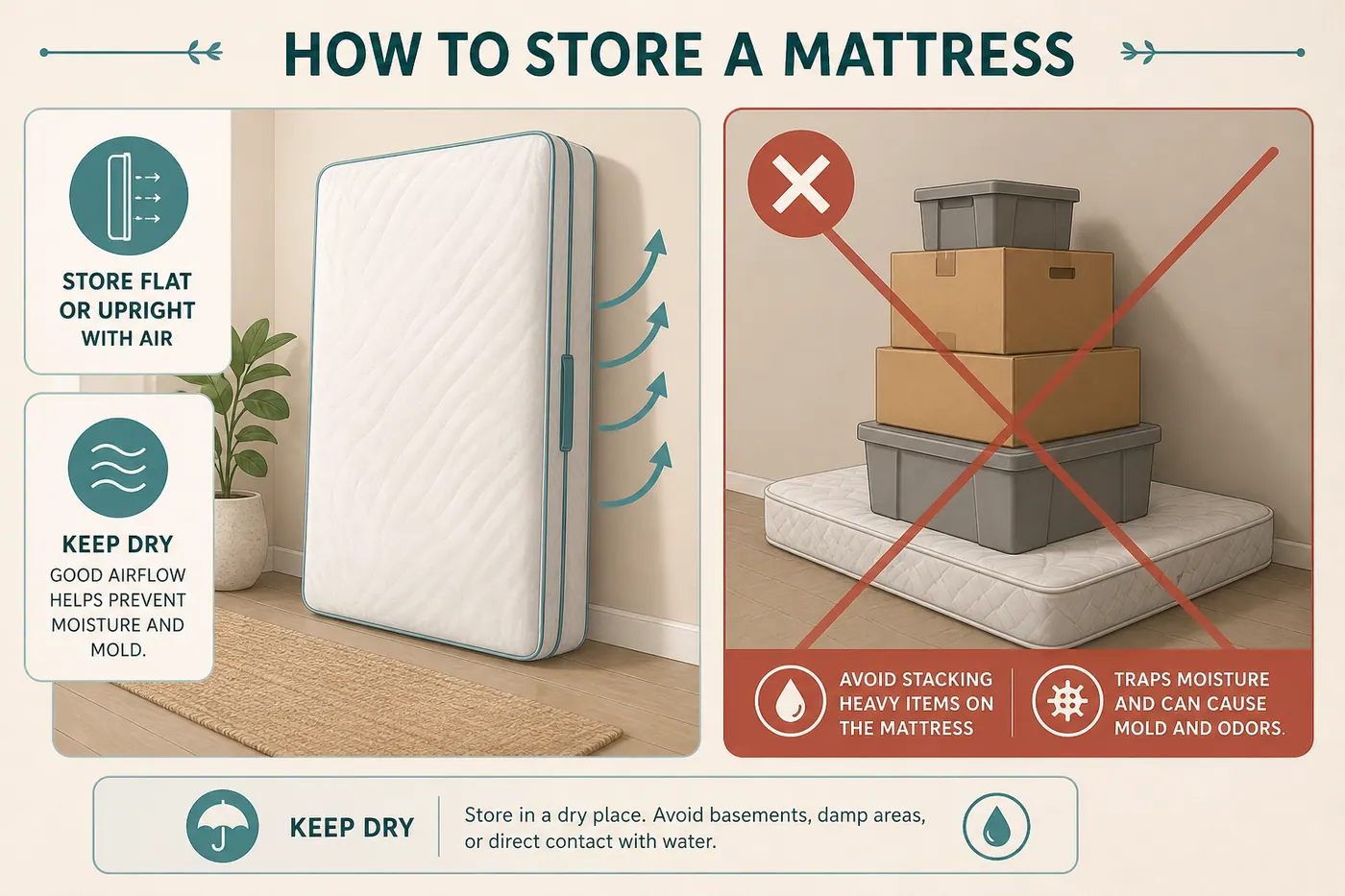
See how to store a mattress if the bed will sit unused. A damp shed is the wrong store.
What base and room checks come first?
- Is the bed tight to a cold external wall? Leave a small gap if you can.
- Is the mattress on the floor or on sealed plastic? Raise it on slats or a vented platform if the maker allows that.
- Are slats so close they act like a sealed board, or so wide that foam hammocks and traps a dip? See base compatibility.
- Does the room stay wet after showers or indoor drying? The extractor and the clothes line matter more than a “anti-mould” mattress badge.
- Is there a leak, a wet patch, or mould on the wall itself? That is a building job.
If you rent, GOV.UK says landlords should find the cause. Do not accept “you should just open a window” as the only answer when the structure is wet. This is not legal advice. Citizens Advice and your council can help with rented homes.
Bedroom temperature and humidity set the baseline. High humidity also favours dust mites. Airing and covers reduce load. They do not treat asthma.
When is the mattress the wrong tool?
When the fillings are wet through. When you can see mould in the quilt or on the underside after the room is dry. When the smell stays after a full air. A replace decision can be a hygiene call, not a comfort call.
Do not scrub live mould as a health treatment. Do not pour bleach into a foam core. Follow the maker’s clean note for a small surface mark — see cleaning by type. If you feel unwell, speak to a clinician.
A topper can hide a damp face and add another slip plane. Fix the moisture path first. See toppers.
Related BedGuide entries
How it works
Frequently asked questions
Why is there mould under my mattress?
Moisture is trapped under or inside the bed. Sweat, a cold external wall, a sealed plastic sheet, or a solid base with no air path can do it. Airing helps a dry room. It cannot fix a leak or a home that cannot vent.
How do I air a mattress to stop damp?
Pull the covers back each morning. Strip the bed now and then. Leave a gap between the bed and a cold wall. Use a base that lets air through. Bed Advice UK, the NBF consumer site, also says to air a new mattress before use.
Can I put a mattress on the floor in the UK?
You can, but cold floors and no air path raise the damp risk. Raise it on a breathable base if you can. Do not store one in a damp shed. See how to store a mattress.
Does a mattress protector stop mould?
A breathable protector can keep sweat and spills off the ticking. A sealed plastic sheet can trap moisture underneath. Follow the maker. A protector does not dry a wet room.
Should I throw away a mouldy mattress?
A mattress that is wet through or has mould in the fillings is a hygiene and structure problem. Do not sleep on active mould. Ask a clinician if you feel unwell. This page does not tell you how to treat mould illness.
Where do these facts come from?
BedGuide is desk research. The numbers and rules on this page were checked against the official or primary sources below. We name the check date. We do not invent a figure when a source is missing.
- GOV.UK — damp and mould in the home — Official housing guidance. Poor ventilation lets moisture stay in the air. Landlords must look at the cause. Not a mattress-care leaflet. Checked 2026-08-28.
- Bed Advice UK — how to care for your bed — NBF consumer advice. Air a new mattress. Air it regularly. Pull bedclothes back. Vacuum the surface. Do not seal the bed in a damp room. Checked 2026-08-28.
- Bed Advice UK — FAQs — Regular cleaning, airing and protective covers reduce dust-mite load. That is hygiene advice, not a medical treatment. Checked 2026-08-28.