Dust Mites in the Mattress Environment
Published 2026-08-03. Last updated 2026-08-03. Desk research by Kaiser Khan — we have not product-tested mattress dust mite ecology. This is not a shop review and not medical advice.
In short
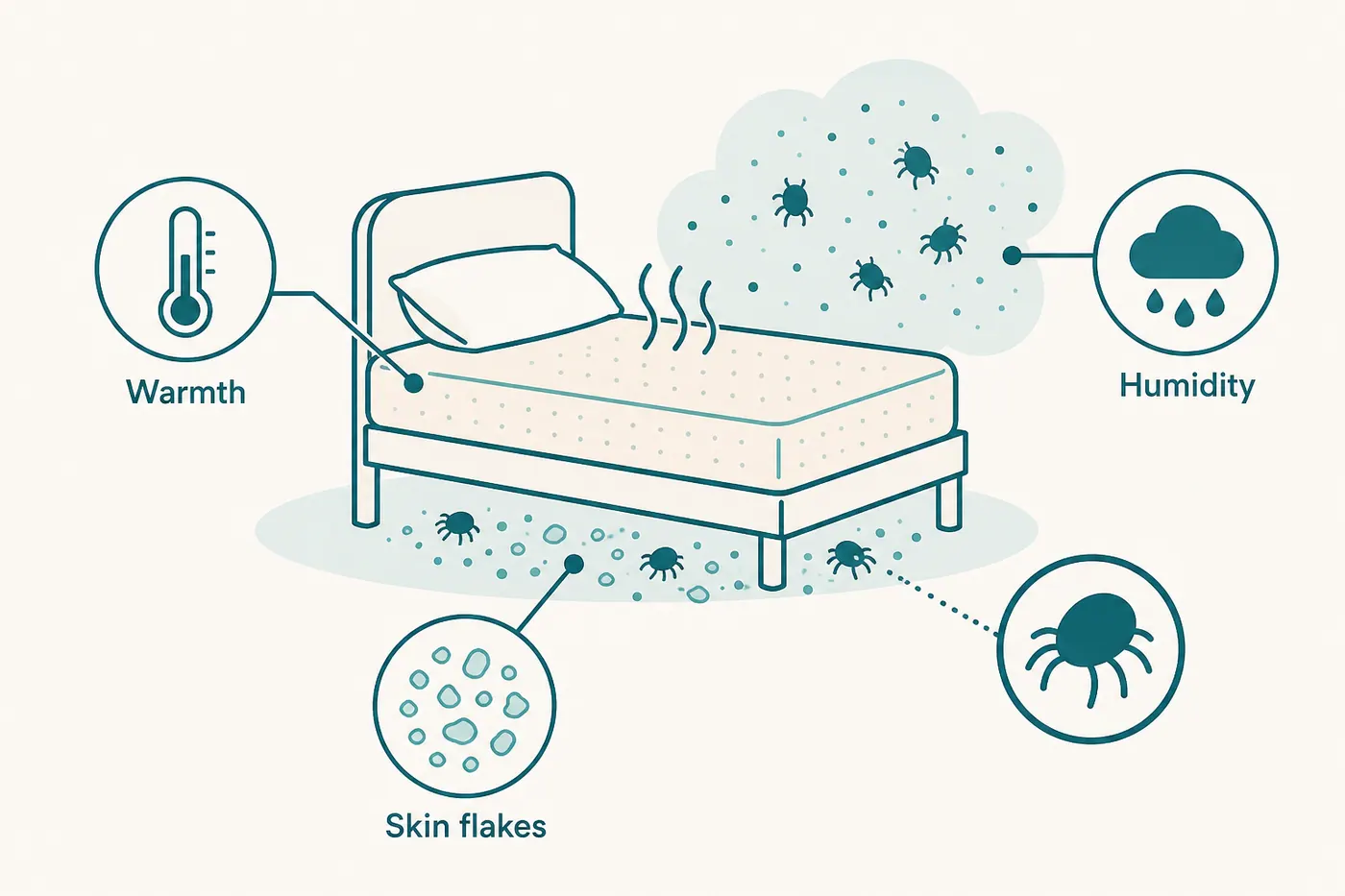
House dust mites thrive where warmth, humidity, and shed skin scales meet. That mix is common in mattresses and bedding. Hypoallergenic materials and covers rarely sterilise a mattress. They reduce allergen exposure through barrier pore size, washability, or fewer fibre pockets. Moisture control targets the habitat itself.
About 1 minutes to read
Habitat variables
Dust mites need enough humidity and a microclimate buffered by bedding. Lower humidity and tightly woven encasements change how well the mattress habitat supports mite populations and their faecal allergens.
Controls that change exposure
| Control | How it helps |
|---|---|
| Zip encasement | Physical barrier to allergen escape |
| Washable bedding | Removes allergen load from sheets and duvet covers |
| Lower bedroom humidity | Makes the habitat harder for mites |
| Hot wash where fabric allows | Reduces live mites and allergens on textiles |
Related BedGuide entries
How it works
Frequently asked questions
Do mattresses always have dust mites?
Mattresses commonly harbour dust mites in ordinary homes. They provide warmth, humidity, and food from shed skin. Population levels vary with climate, cleaning, and encasement use.
Do allergen covers kill mites?
Barrier covers mainly contain allergens and limit mite movement between mattress and breathing zone. They do not sterilise a room. Washing bedding hot enough for the care label and controlling humidity still matter.