Does a Mattress Double in Weight From Dust Mites?
By Kaiser Khan, Editor Updated First published
Desk research from official sources. Not a product test or medical advice. How we check facts.
Saved on this browser only. How saving works
In short
No. There is no study showing a mattress doubles in weight from dust mites in ten years. The claim seems to come from a 2000 Wall Street Journal article that gave no evidence for it. Mattresses do collect skin flakes, sweat, moisture and mites over time, so keeping them covered and clean still makes sense.
- Shows a mattress doubling in weight from dust mites
- No study
- Year the doubling claim appeared in the Wall Street Journal
- 2000
- Year a scientist behind a similar claim withdrew it
- 2011
- What mattresses do gain over time
- Some weight
An Ohio State entomologist told Live Science in 2011 there is no scientific answer.
It did not quote the mite researcher it mentioned on this point, GoodBed reports.
Dr Philip Tierno told Fox 13 Tampa Bay he knew of no study, GoodBed reports.
Skin flakes, body oils, moisture and dust mites, says Live Science.
About 4 minutes to read
How it works
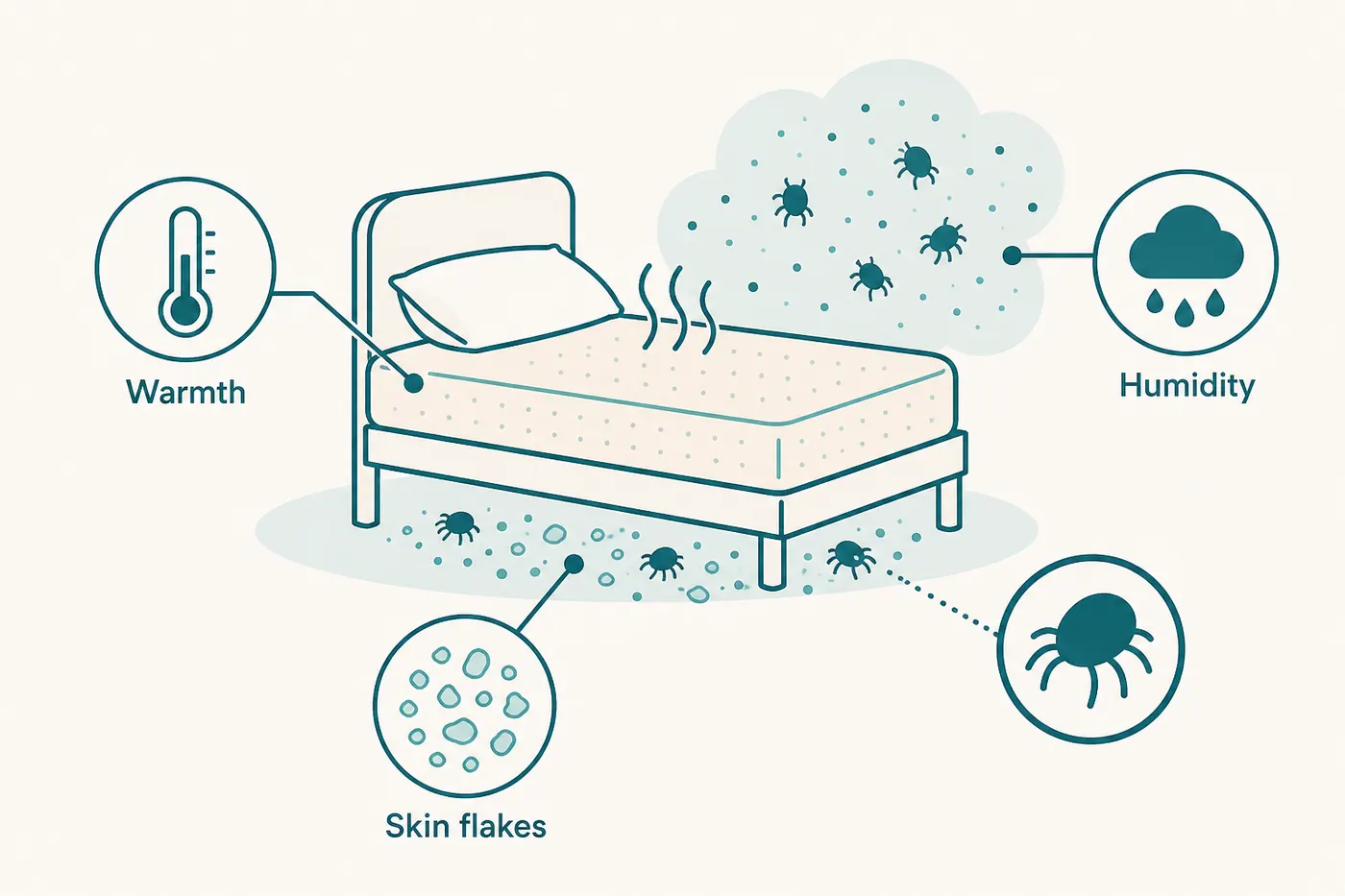
Does a mattress really double in weight from dust mites?
No evidence shows that it does. The claim says a mattress doubles in weight in about ten years because it fills with dust mites and their waste. Nobody has published a study that weighed mattresses and found this.
Dust mites are real, and they do live in mattresses. But the famous weight figure is a myth.
Key figures
| Claim or figure | What is known | Year | Source |
|---|---|---|---|
| “Doubles in weight in 10 years” | Printed without evidence | 2000 | Wall Street Journal, as reported by GoodBed |
| Similar TV claim | Repeated, then withdrawn | 2005, withdrawn 2011 | GoodBed |
| Scientific answer | None known | 2011 | Ohio State entomologist, via Live Science |
| Mattress weight gain | Some, from skin, oils, moisture and mites | 2011 | Live Science |
Where does the number come from?
The claim seems to start with a Wall Street Journal article in February 2000. It said the average mattress would double its weight in ten years from dead dust mites and their waste. It mentioned an Ohio State University mite researcher. But it did not quote him saying this, according to a later investigation by GoodBed.
In 2005, a CBS news story quoted a microbiologist, Dr Philip Tierno, making a similar claim. In 2011, a Fox 13 Tampa Bay report asked him about it again. He withdrew it and said he knew of no study behind it, GoodBed reports.
Also in 2011, Live Science asked an Ohio State entomologist, Glen Needham, about the claim. An entomologist is a scientist who studies insects and similar small creatures. He said there was no scientific answer to the question. A spokesperson for the US sleep products trade body said she knew of no study that backed it.
The claim spread anyway. It is still used in adverts to suggest people should buy a new mattress.
What the claim does not mean
- It does not mean mattresses stay clean. Mattresses do collect skin flakes, body oils, sweat and moisture. Dust mites live there.
- It does not mean mites are harmless for everyone. Some people react to dust mite allergens. This page is not medical advice.
- It does not mean your mattress needs replacing. A new mattress can gain mites over time too. Covers and cleaning manage them.
Is there a better figure?
Not a reliable one for weight. We found no published measurement of how much weight a mattress gains from mites over its life.
Other numbers about mites in bedding are also passed from article to article. For example, Live Science repeated a figure about pillows that it credited to Ohio State University materials. We could not find the original study, so we do not repeat it here. Treat any exact mite figure with care unless it links to a study.
What should you do instead?
Focus on what you can control:
- Cover the mattress. A washable protector or allergen encasement keeps skin flakes and moisture off the mattress. See mattress protectors and encasements.
- Wash bedding regularly. Use the hottest temperature the care label allows.
- Vacuum and air the mattress. See cleaning a mattress by type.
- Keep the bedroom dry. Mites need humid air. Open a window and do not dry washing in the bedroom.
- Replace the mattress for the right reasons. Sagging, lumps and damage matter. See when to replace a mattress.
For how mites live in a bed and how barrier covers work, read dust mites in the mattress environment.
Frequently asked questions
Does a mattress double in weight in 10 years?
There is no evidence that it does. The claim was printed in 2000 without a source. Scientists asked by reporters since then have said they know of no study that measured it.
Where did the dust mite weight myth come from?
It appears to come from a February 2000 Wall Street Journal article. It mentioned an Ohio State mite researcher but did not quote him on the figure. A 2005 TV report repeated a similar claim, which was later withdrawn.
Do mattresses get heavier over time?
Probably a little. Mattresses absorb skin flakes, body oils and moisture, and dust mites live inside them. No one has published a measurement of how much weight that adds over the years.
Are there dust mites in my mattress?
Very likely. House dust mites live where people sleep. They feed on shed skin and need humid air. That is normal in UK homes and does not mean your mattress is unusually dirty.
How can I reduce dust mites in my mattress?
Use a washable mattress protector or allergen encasement. Wash bedding regularly at the hottest temperature its care label allows. Vacuum the mattress and keep bedroom humidity down. If you have symptoms, ask a pharmacist or GP.
Should I replace my mattress because of dust mites?
Mites alone are not usually a reason, because a new mattress can be colonised over time too. Replace a mattress when it sags, no longer supports you evenly, or is damaged. Covers and cleaning manage mites.
Where do these facts come from?
BedGuide is desk research. The numbers and rules on this page were checked against the official or primary sources below. We name the check date. We do not invent a figure when a source is missing.
- Live Science — does your mattress really gain weight over time? — 2011 article. Ohio State entomologist Glen Needham says there is no scientific answer to the weight question; a sleep products association spokesperson knew of no study backing it. Checked 2026-10-21.
- GoodBed — does your mattress really double in weight? — Traces the claim to a 2000 Wall Street Journal article and reports that Dr Philip Tierno withdrew a similar claim in 2011. A mattress-shopping site, so read with that in mind. Checked 2026-10-21.
- Washington State University — house dust mites — University fact sheet. Mites feed on shed skin and dander, favour humid conditions and live in mattresses; control by washing bedding, encasements, vacuuming and lower humidity. Checked 2026-10-21.