mattresses comparison
Spring tension vs Surface comfort feel
Evergreen URL: /compare/spring-tension-vs-surface-firmness
In short
Spring tension is how hard the support unit resists compression and should suit body mass. Surface firmness is the softness of fillings and foams above the springs. Soft/medium/firm retail labels often blur these two specs. A mattress can have firm springs with a soft quilt — or the reverse.
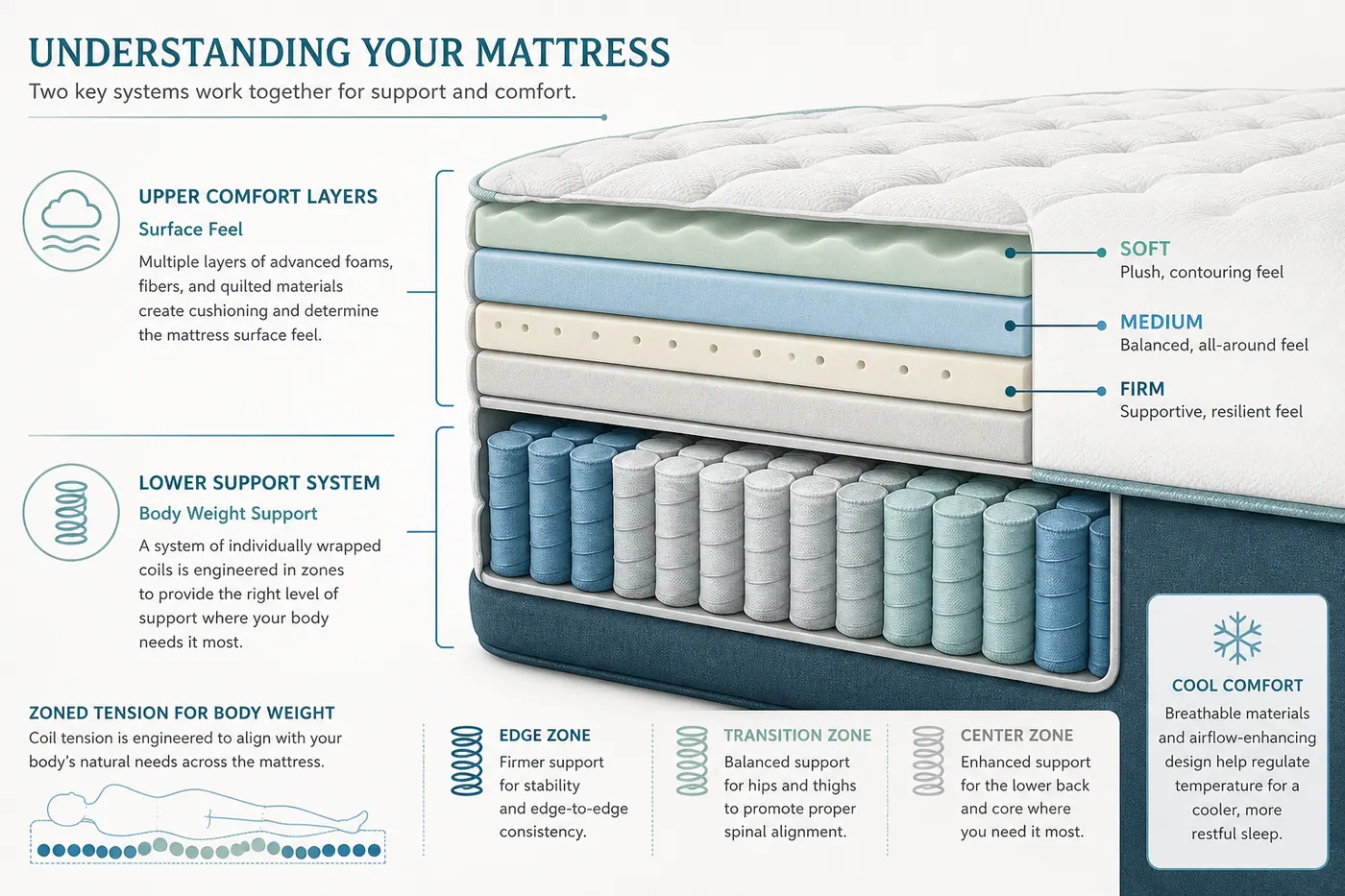
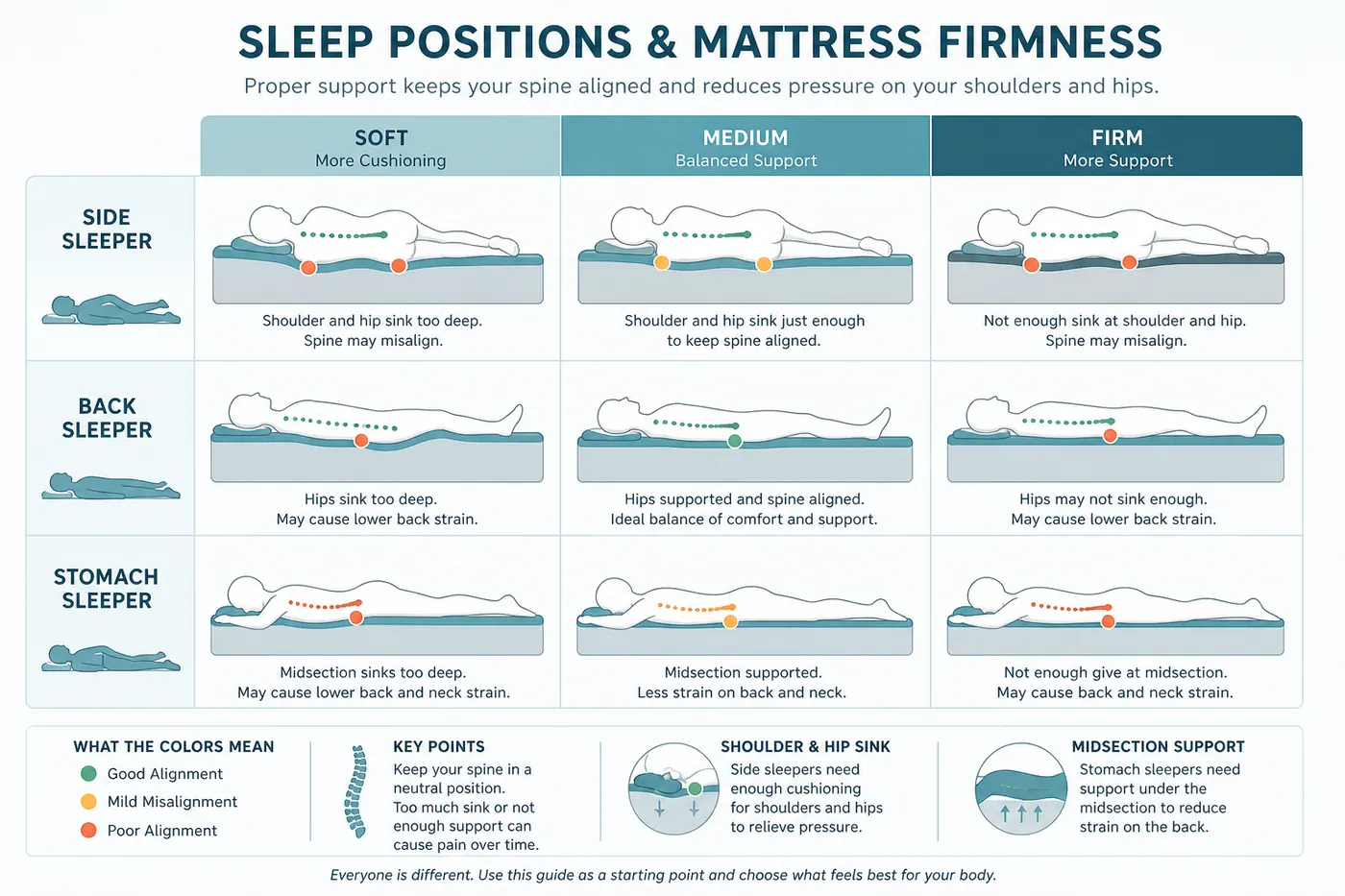
This is the distinction most confused shoppers need before comparing products. Full guide: spring tension versus comfort feel.
What is the difference between Spring tension and Surface comfort feel?
Spring tension is how hard the support unit resists compression and should suit body mass. Surface firmness is the softness of fillings and foams above the springs. Soft/medium/firm retail labels often blur these two specs. A mattress can have firm springs with a soft quilt — or the reverse.
| Criterion | Spring tension | Surface comfort feel |
|---|---|---|
| What it measures | Support unit resistance to load | softness of comfort layers |
| Main drivers | Wire gauge, coil design, tempering | Foam ILD, fibre loft, quilt depth |
| Choose mainly by | Body mass / load | Sleep position & preference |
| Fixed by a topper? | No — tension stays the same | Yes — surface can soften |
Who is Spring tension for — and who should skip it?
- You are matching pocket/hybrid support to body weight
- You feel you are bottoming out or floating on top of the bed
Who is Surface comfort feel for — and who should skip it?
- Support feels OK but the surface is too hard or too flat
- You want to tune softness without changing the core
Frequently asked questions
Why does my “firm” mattress feel soft?
It may have firm springs under deep soft upholstery — or soft springs under a thin quilt. Ask which spec the label refers to.