Sleep Masks — Blackout and Contour Design
Published 2026-08-03. Last updated 2026-08-03. Desk research by Kaiser Khan — we have not product-tested sleep mask. This is not a shop review and not medical advice.
In short
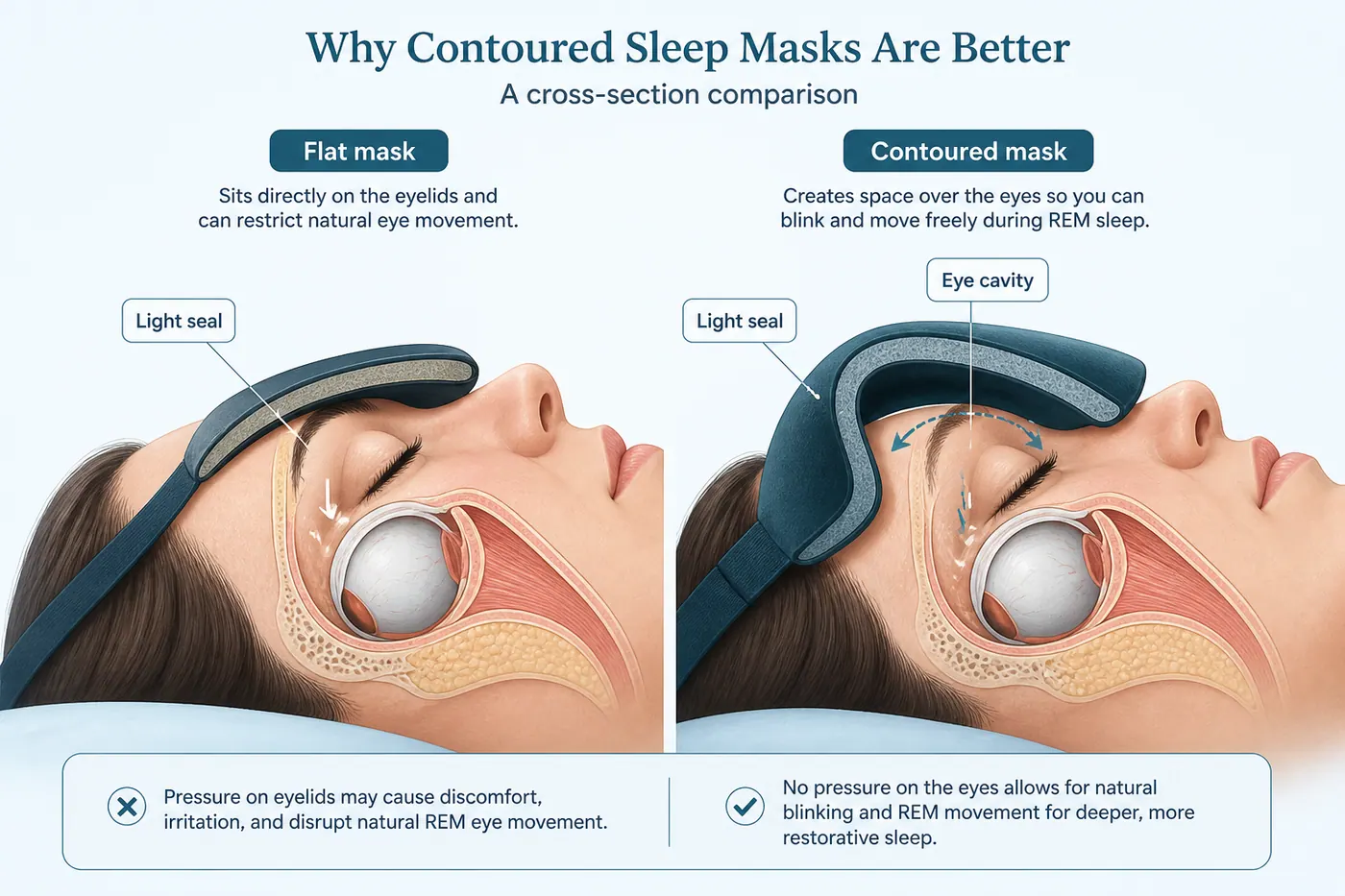
Sleep masks reduce light reaching the eyes to support darkness cues for sleep. Blackout performance depends on fabric opacity, edge seal, and nose-bridge fit. Contoured masks hold fabric off the eyelids so eyes can move during REM without lid pressure. Silk faces feel smoother. Cotton is breathable and easy to wash.
About 1 minutes to read
Light-blocking factors
- Opacity of the core material.
- Edge seal at nose, temples, and cheeks.
- Strap tension — too tight causes pressure; too loose leaks light.
Flat vs contoured
| Design | Eyelid contact | Typical use case |
|---|---|---|
| Flat panel | Higher | Simple travel blackout |
| Contoured / 3D | Lower | Wearers sensitive to lid pressure in REM |
Related BedGuide entries
How it works
Frequently asked questions
Why use a contoured sleep mask?
Contoured masks keep material off the eyelids so the eyes can move during REM sleep with less pressure. Flat masks can feel restrictive for some wearers even when they block light well.
Is silk better than cotton for sleep masks?
Silk is smoother and lower-friction against skin and lashes. Cotton is breathable and usually simpler to wash. Blackout performance still depends on the opaque core and edge fit, not the face fabric alone.