Cooling Pads and Active Temperature Systems
Published 2026-08-03. Last updated 2026-08-03. Desk research by Kaiser Khan — we have not product-tested mattress cooling pad. This is not a shop review and not medical advice.
In short
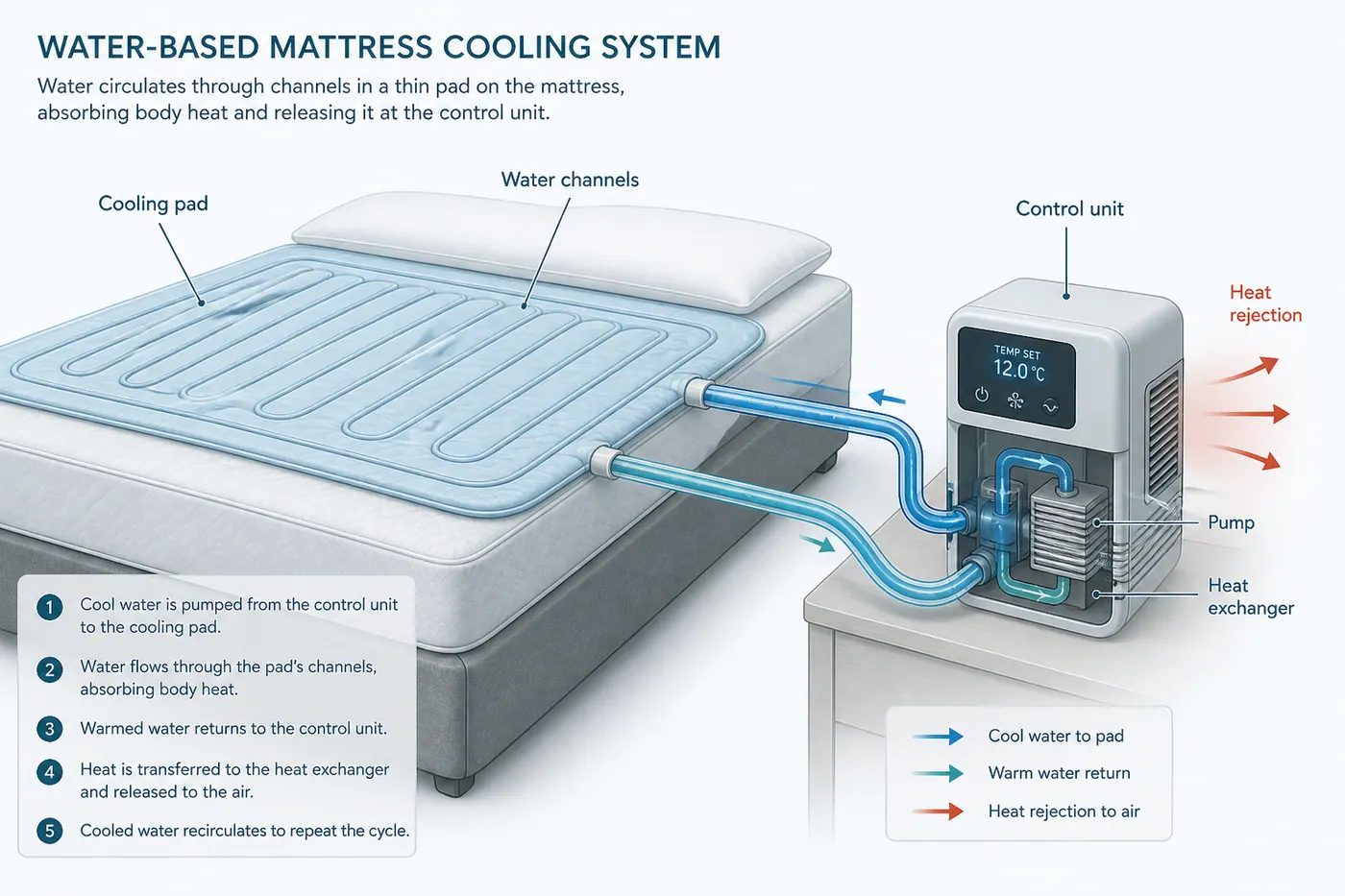
Active cooling systems move temperature-controlled water through a thin pad on the mattress. They carry heat away from the sleep surface. Passive gel pads absorb limited heat without a pump. Water systems need a control unit and clear tubing paths. They change microclimate at the sheet layer and work with mattress airflow and duvet TOG choices.
About 1 minutes to read
Active vs passive cooling
| Type | Energy path | Typical traits |
|---|---|---|
| Water-based active pad | Circulating fluid + control unit | Adjustable set-points; needs power |
| Passive gel / PCM pad | Absorption / phase change | No pump; finite heat capacity |
System placement in the sleep stack
Sheet → cooling pad → protector (if used) → mattress — follow product layering rules. Avoid trapping heat with heavy electric blankets against active coolers unless the makers allow it.
Related BedGuide entries
How it works
Frequently asked questions
How do water-based mattress coolers work?
A control unit conditions water and a pump sends it through channels in a pad on the mattress. Heat moves from the sleeper into the fluid and is rejected at the unit, lowering surface temperature when set to cool.
Can cooling pads fix a hot memory foam mattress?
They can change the sheet-level microclimate even on warmer foam. Core foam chemistry still affects contact feel. Pairing with lighter TOG bedding and breathable sheets helps as a system.
Do cooling pads work with adjustable beds?
Only if tubing and pad can flex with the platform without kinking. Check maker guidance for articulating bases.