bedding comparison
Wool duvet vs Synthetic duvet
Evergreen URL: /compare/wool-vs-synthetic-duvet
In short
A wool duvet uses wool fill that can buffer moisture; a synthetic duvet uses polyester hollowfibre or similar fills that are often easier to wash at home. TOG still sets insulation. Choose by care, moisture feel and washing practicality — not by which sounds more premium.
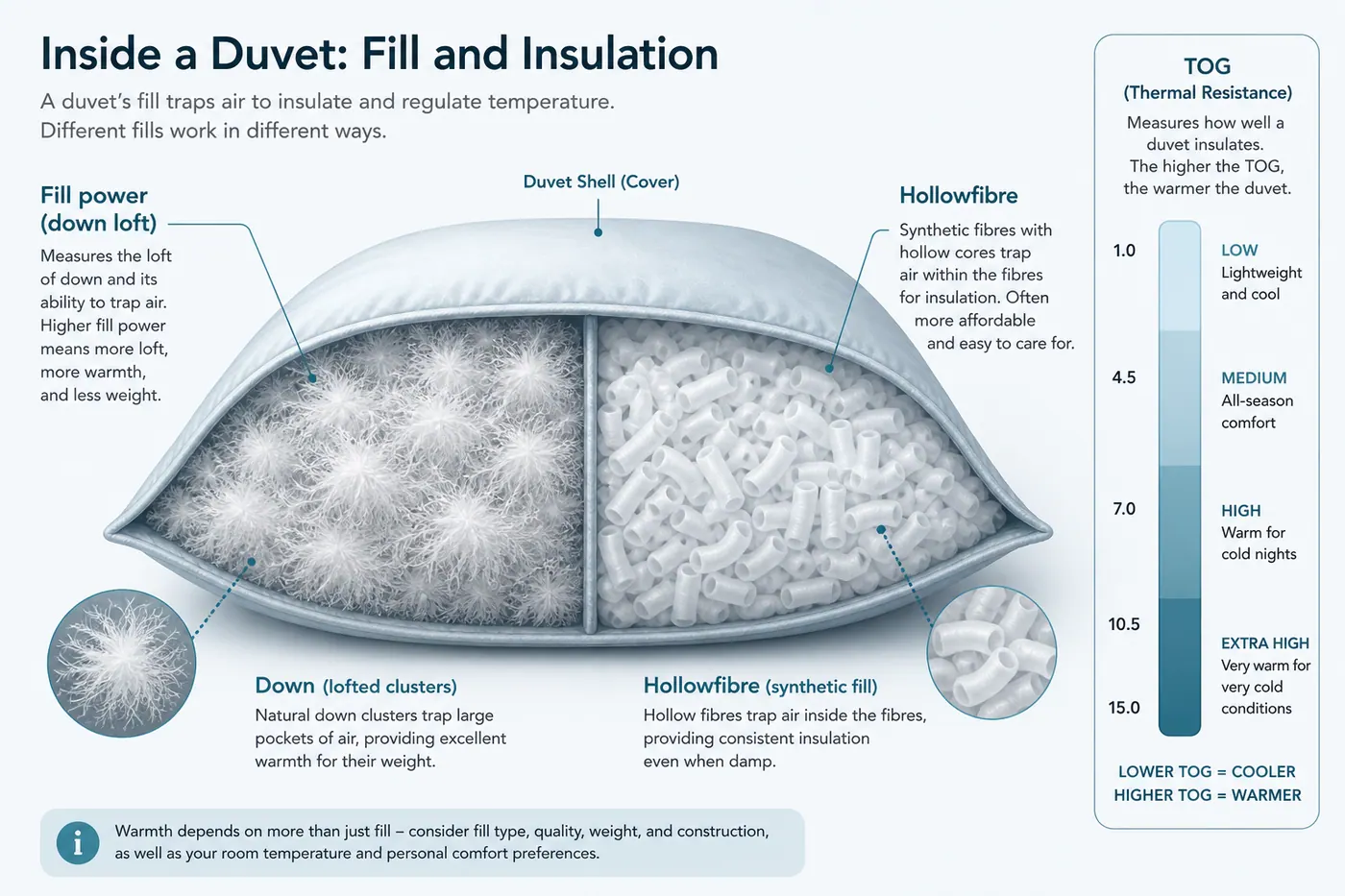
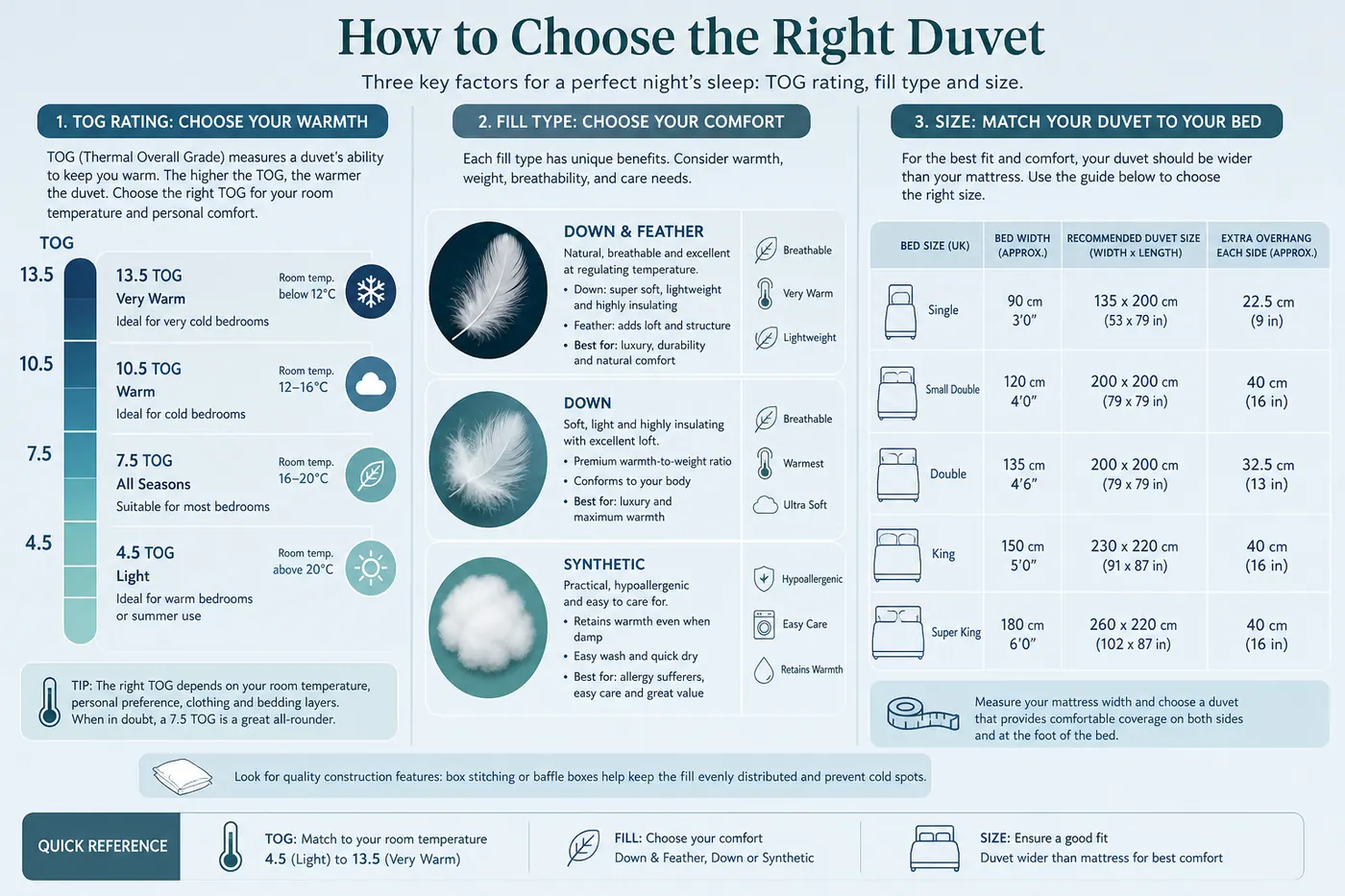
Both fills can be warm or light depending on TOG and construction. Care labels decide what you can wash hot for mite control.
What is the difference between Wool duvet and Synthetic duvet?
A wool duvet uses wool fill that can buffer moisture; a synthetic duvet uses polyester hollowfibre or similar fills that are often easier to wash at home. TOG still sets insulation. Choose by care, moisture feel and washing practicality — not by which sounds more premium.
| Criterion | Wool duvet | Synthetic duvet |
|---|---|---|
| Fill | Wool fibres | Polyester hollowfibre / synthetic clusters |
| Moisture behaviour | Wool can absorb and release moisture vapour | Synthetics usually hold less moisture in the fibre |
| Home washing | Often gentler rules; check label | Often more machine-wash friendly |
| TOG role | Insulation still rated in TOG | Insulation still rated in TOG |
Who is Wool duvet for — and who should skip it?
- You want wool’s moisture-buffering character and accept care rules
- You like natural fibre fills
Who is Synthetic duvet for — and who should skip it?
- You want easier frequent washing
- You need a simple guest or kids duvet care routine
Frequently asked questions
Does wool always sleep cooler?
Not always. High TOG wool is still insulating. Room temperature and sheet choice matter as much as fill type.