beds comparison
Bunk bed vs High sleeper
Evergreen URL: /compare/bunk-vs-high-sleeper
In short
A bunk bed stacks two sleep surfaces. A high sleeper lifts one mattress to free floor space for a desk, sofa or storage underneath. Both need guardrails, ladder clearance and strict age/weight rules. Choose by whether you need two beds or one bed plus under-space.
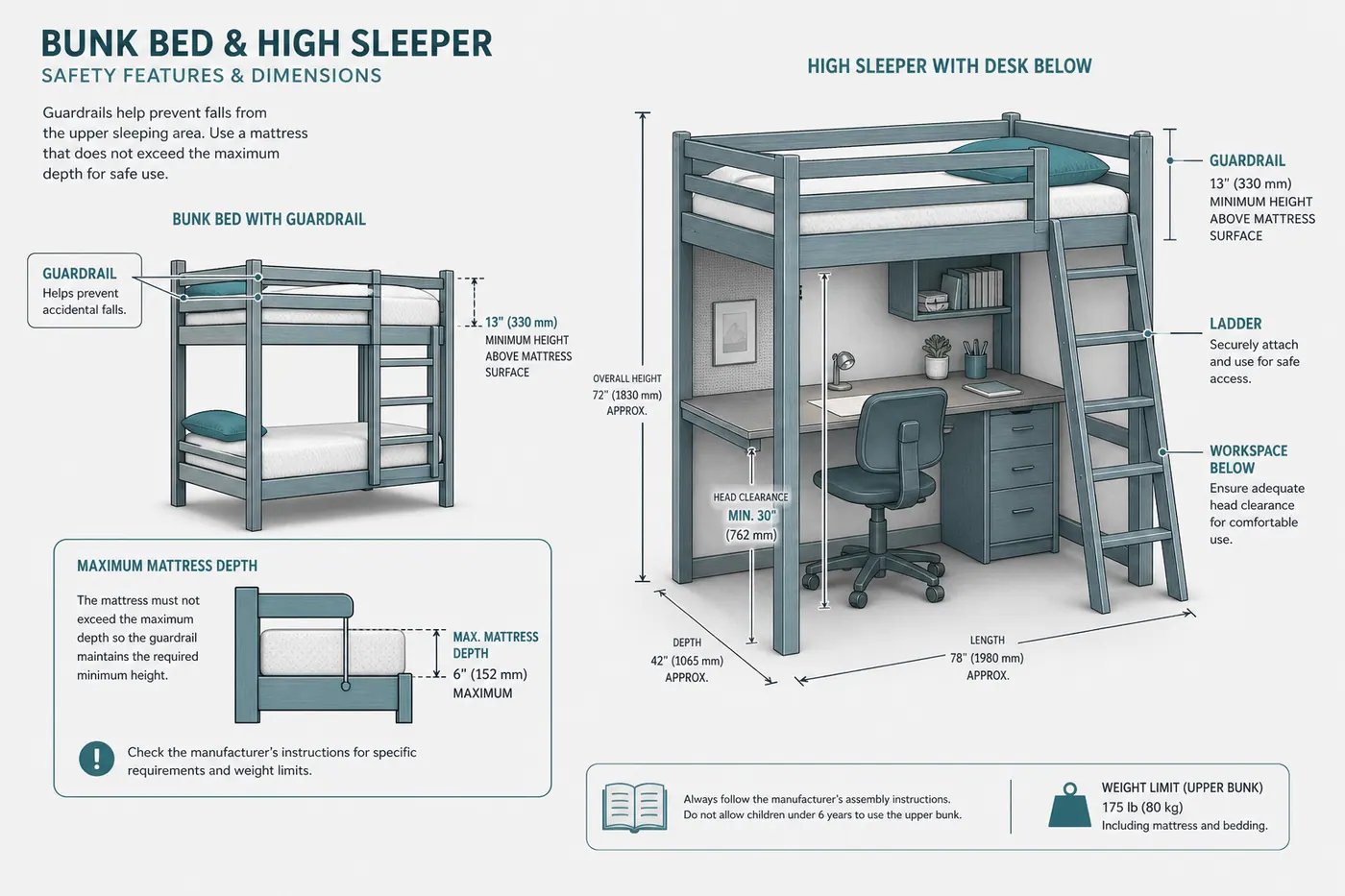
These are space strategies, not mattress types. Mattress width is often still a UK Single — measure centimetres and follow the frame’s safety sheet.
What is the difference between Bunk bed and High sleeper?
A bunk bed stacks two sleep surfaces. A high sleeper lifts one mattress to free floor space for a desk, sofa or storage underneath. Both need guardrails, ladder clearance and strict age/weight rules. Choose by whether you need two beds or one bed plus under-space.
| Criterion | Bunk bed | High sleeper |
|---|---|---|
| Sleep places | Usually two mattresses | Usually one raised mattress |
| Under-space use | Lower bunk is a bed | Desk, seating or storage zone |
| Best when | Two children share a room | One sleeper needs floor space below |
| Safety focus | Top and bottom bunk rules | Height, rail and ladder rules |
Who is Bunk bed for — and who should skip it?
- You need two regular sleep surfaces in one footprint
- Siblings sharing is the main goal
Who is High sleeper for — and who should skip it?
- One child needs a bed plus study or lounge space
- You do not need a second everyday mattress
Frequently asked questions
Can toddlers use the top bunk or high sleeper?
Product age guidance usually says no for very young children on raised beds. Always follow the manufacturer’s age and weight limits.