Wire Gauge, Coil Types and Microcoils
Entity: mattress wire gauge and coil types

In short
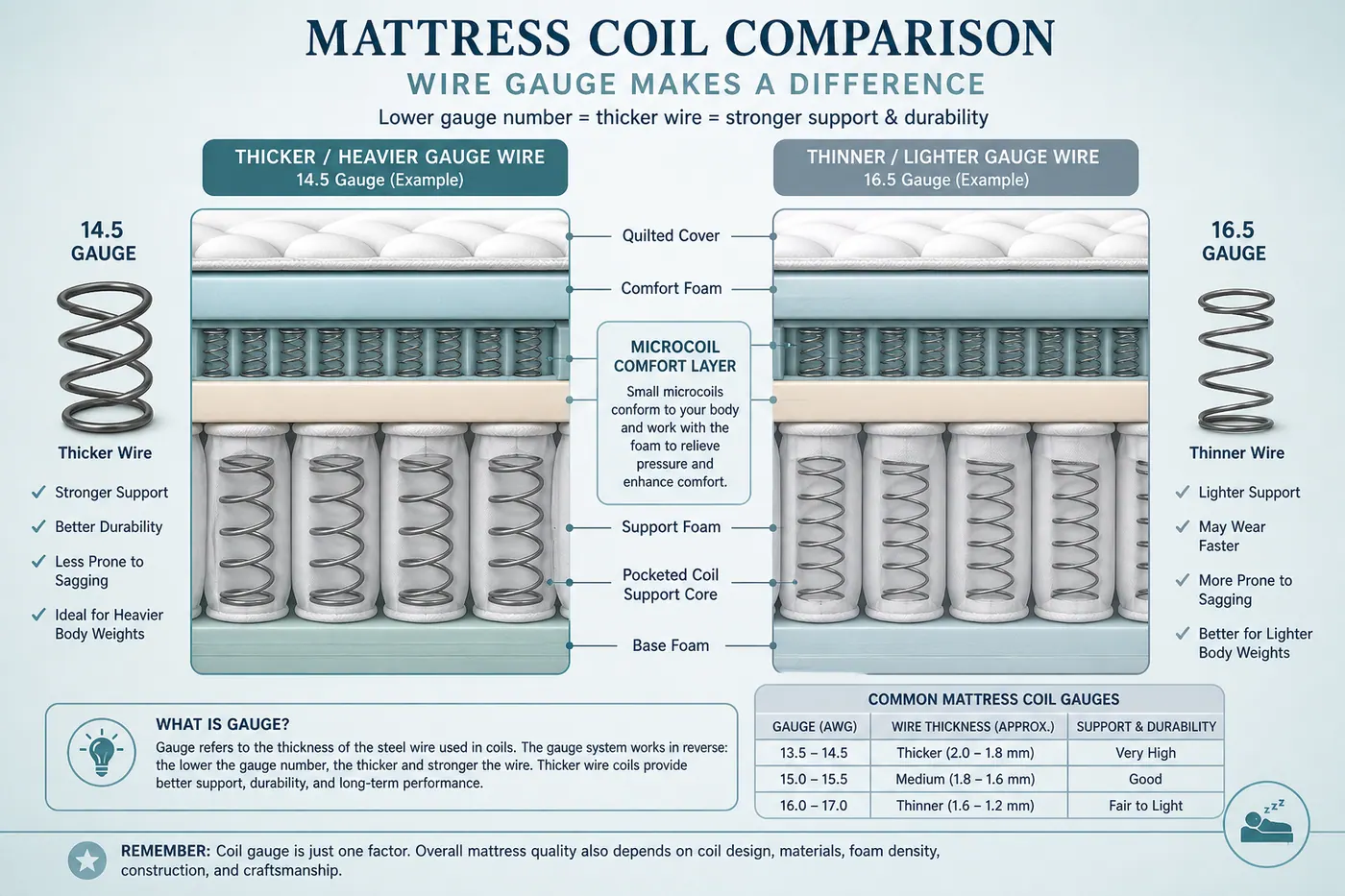
Wire gauge means spring-wire thickness. Thicker wire usually holds more load and feels firmer. Coil size and shape change contouring. Microcoils are tiny springs in comfort layers that raise the headline spring count. They are not the same as the main support unit below. Read gauge and where springs sit, not the count alone.
How it works
Materials used
- tempered steel wire
- fabric pockets
- microcoil units
Average lifespan
7– 10 years
What gauge means
Wire gauge tells you how thick the spring wire is. Thicker wire usually holds more weight and feels firmer. Pair this with spring tension vs comfort feel.
Coil roles in the stack
| Coil role | Job |
|---|---|
| Primary pocket / open-coil unit | Main support |
| Microcoil layer | Surface moulding / count on the label |
| Edge coils or foam rails | Edge support |
Related BedGuide entries
Frequently asked questions
- What wire gauge is best?
- There is no single best gauge. Thicker wire suits heavier people and firmer spring tension. Thinner wire suits lighter people and softer tension. Match gauge to your body weight using the maker's guide.
- Are more microcoils always better?
- Not always. Microcoils can help the surface mould to your body. A very high total count may mostly be tiny comfort-layer springs, not more main support springs. Ask where the springs sit in the stack.