Mattress Edge Support Explained
Entity: mattress edge support
In short
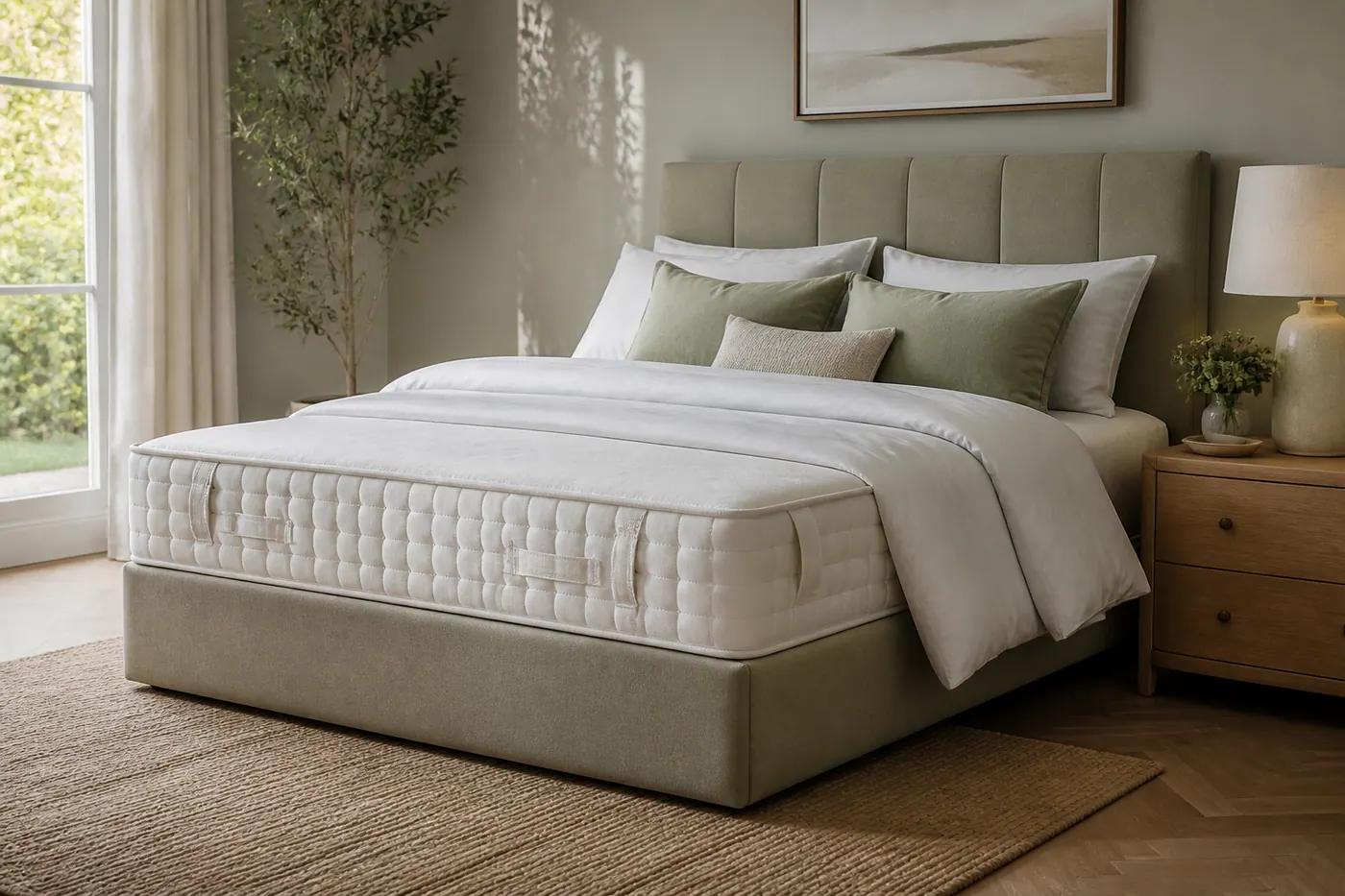
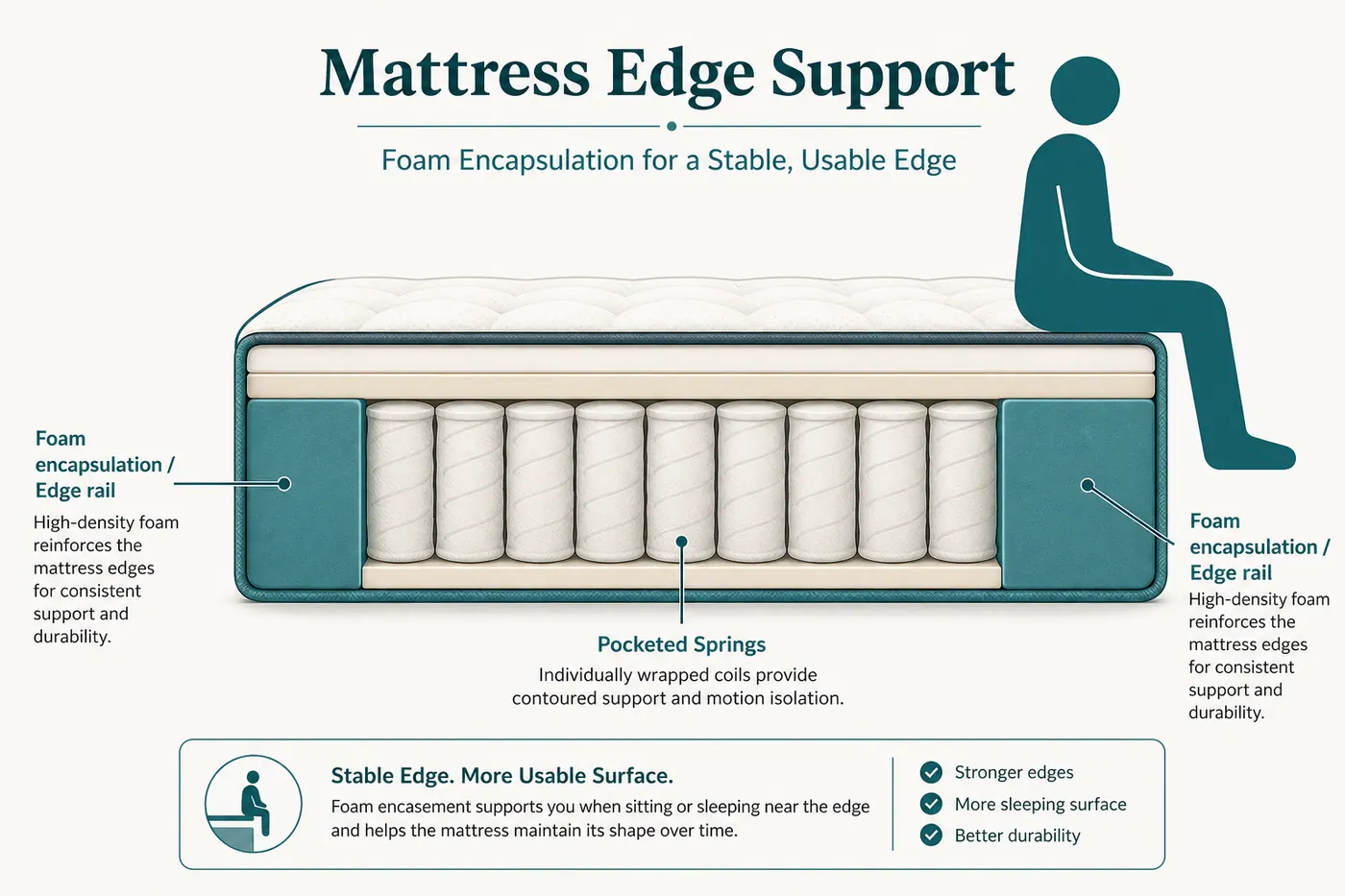
Edge support means how well the side of the mattress holds up when you sit or sleep near the edge. Foam rails, firmer edge coils, steel border rods and strong stitching all stiffen the rim. Weak edges shrink the usable sleep width. They also make getting in and out harder. Edge design is separate from how firm the middle feels.
How it works
Materials used
- high-density edge foam
- border rods
- edge coils
- tape-edge textiles
Average lifespan
7– 10 years
How edges are built
| Method | What it does |
|---|---|
| Foam encapsulation | Dense foam rail around the unit |
| Firmer edge coils | Stiffer springs at the perimeter |
| Steel border rod | Frames the spring unit |
| Tape edge | Strong stitched finish around the rim |
Why edges matter for couples
Usable width shrinks if both sleepers avoid a soft rim. Pair with motion isolation when evaluating couples’ beds.
Related BedGuide entries
Frequently asked questions
- What is foam encapsulation?
- Foam encapsulation is a dense foam border wrapped around the spring unit. It stiffens the edge so the side does not collapse when you sit on it. See the glossary for a short definition.
- Why does my mattress edge collapse?
- Sitting on the edge repeatedly can wear it down. Weak border design or worn edge foam or coils also cause collapse. The middle may still feel fine. Severe collapse is a wear or design limit signal.