Mattress Lifespan by Material
Entity: mattress lifespan by material
In short
Mattress lifespan varies by core material because each type wears differently. Polyurethane foams mainly soften through cell fatigue and oxidation. Steel spring units lose support when coils take a permanent set. Latex often resists dipping longer than basic polyfoam. It still ages through compression set under repeated load.
How it works
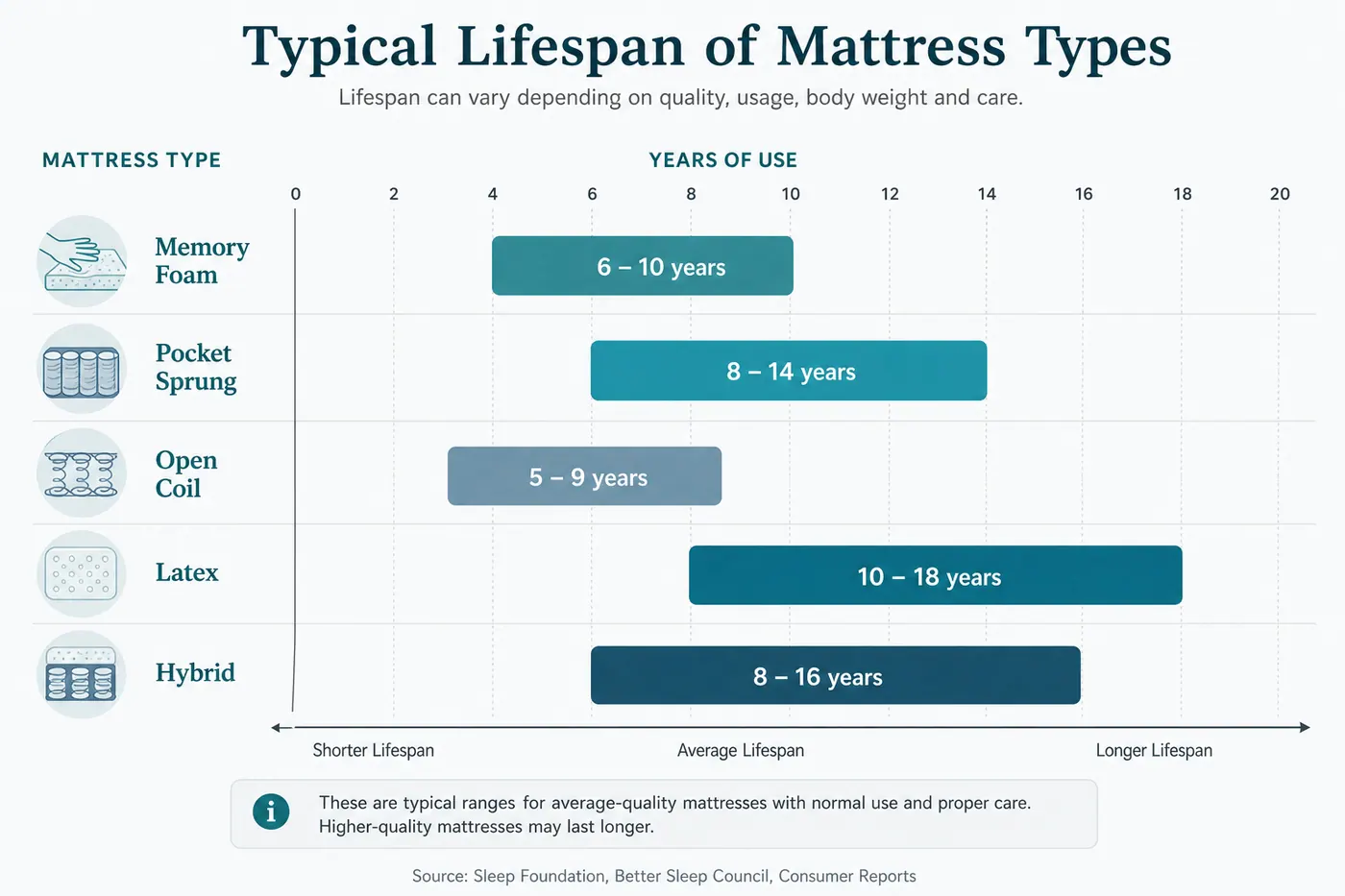
| Material | Typical years | Primary degradation |
|---|---|---|
| Memory foam (typical consumer grade) | 6–8 | Viscoelastic cell fatigue and softening |
| Pocket sprung | 7–10 | Coil set and comfort-layer breakdown |
| Open coil / Bonnell | 5–8 | Interconnected coil fatigue and sagging |
| Latex core | 8–12 | Gradual compression set |
| Hybrid (springs + foam) | 7–10 | Comfort foam wear above intact spring unit |
Why materials age differently
Foam oxidation and repeated compression change cell shape. Steel fatigue and permanent set change coil height. Comparing “years of use” without naming the core material mixes different failure modes.
Replacement signals (any material)
- Support loss: hips sink into a hammock relative to shoulders
- Springs or base boards felt through the surface
- Edges collapse when sitting
- Persistent sleep discomfort that improves away from home
- Age beyond the typical band for that core — a clue, not a rule
Early softness in the first weeks may be break-in, not end of life.
What extends realised life
- Correct base support and slat gaps
- Rotate / turn on schedule
- Protector against fluids
- Matching sleeper load to construction class
Related BedGuide entries
Frequently asked questions
- How long should a pocket sprung mattress last?
- Many consumer pocket sprung mattresses are in a roughly 7–10 year band under normal home use. Coil set and comfort-layer wear usually decide replacement sooner than a calendar alone.
- Do memory foam mattresses last as long as latex?
- Typical consumer memory foam often sits around 6–8 years. Latex cores are often quoted longer, about 8–12 years, when support stays even. Density, load and base quality matter for both.
- Does a warranty equal lifespan?
- No. Warranties cover faults and abnormal sag rules. Comfort life can end earlier. See mattress warranty explained.