Turning vs Rotating a Mattress
Entity: mattress turning versus rotating
In short
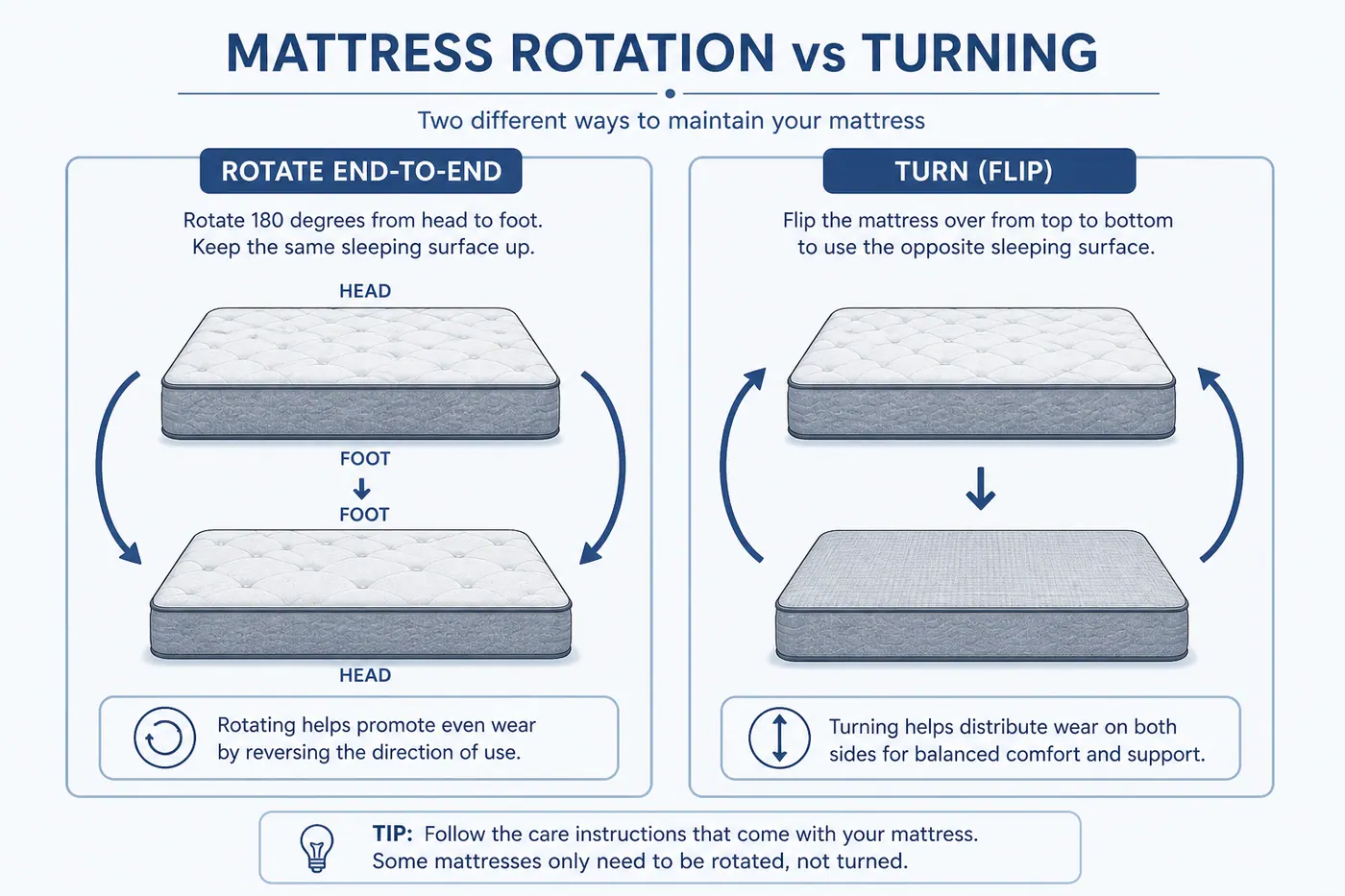
Rotating a mattress spins it 180 degrees so head and foot swap while the sleep surface stays on top. Turning flips the mattress upside down. Double-sided mattresses support both actions. Many single-sided pillow-top and foam hybrids are rotate-only because the comfort stack is asymmetric.
How it works
Why maintenance moves matter
Body impressions — sometimes called settlement — form where load is highest. Regular rotation moves those zones relative to a sleeper’s habitual position. Turning only helps when both faces are engineered as sleep surfaces.
Single-sided vs double-sided
| Construction | Rotate (end-to-end) | Turn (flip) |
|---|---|---|
| No-turn / single-sided | Yes | No |
| Traditional double-sided | Yes | Yes |
Pillow-top and many foam or hybrid mattresses are single-sided. Traditional tufted pocket sprung units may still be double-sided — check the label.
Practical care schedule (when the label is silent)
- Weeks 1–12: rotate weekly (and alternate a turn if double-sided).
- After 3 months: rotate monthly (continue alternating turns if allowed).
- Use a washable protector to reduce stains and allergen load — see dust mite ecology.
- Never place a rigid board between mattress and base to “fix” sag. That symptom usually means the sleep system needs replacement assessment — see lifespan by material.
Related BedGuide entries
Frequently asked questions
- What is the difference between turning and rotating a mattress?
- Rotation keeps the same face upward and swaps head and foot ends by 180 degrees. Turning flips the mattress over so the bottom face becomes the new top. Rotation redistributes wear along the length. Turning redistributes wear between faces on double-sided designs.
- Why must many modern mattresses only be rotated, not turned?
- Single-sided (no-turn / non-turn) mattresses place comfort foams, pillow tops, or quilted panels only on the upward face. Turning such a mattress puts the comfort layers against the base. That can void warranties and produce an incorrect sleep surface.
- How often should a UK mattress be rotated?
- Follow the manufacturer label first. In the absence of instructions, a common UK care pattern is weekly rotation for the first three months, then monthly thereafter for single-sided mattresses. Double-sided mattresses often alternate rotate and turn on a similar early-then-monthly cadence.