Duvets, Fill Power and TOG Ratings
Entity: duvet fill and TOG
In short
TOG measures how warm a duvet is: higher TOG means more insulation. Fill power describes how much loft down gives per weight — a quality score for natural fills, not a TOG substitute. Natural fills use down and feather. Synthetics use hollowfibre or microfibre. Pick TOG for room climate and fill type for loft, weight and allergy needs.
How it works
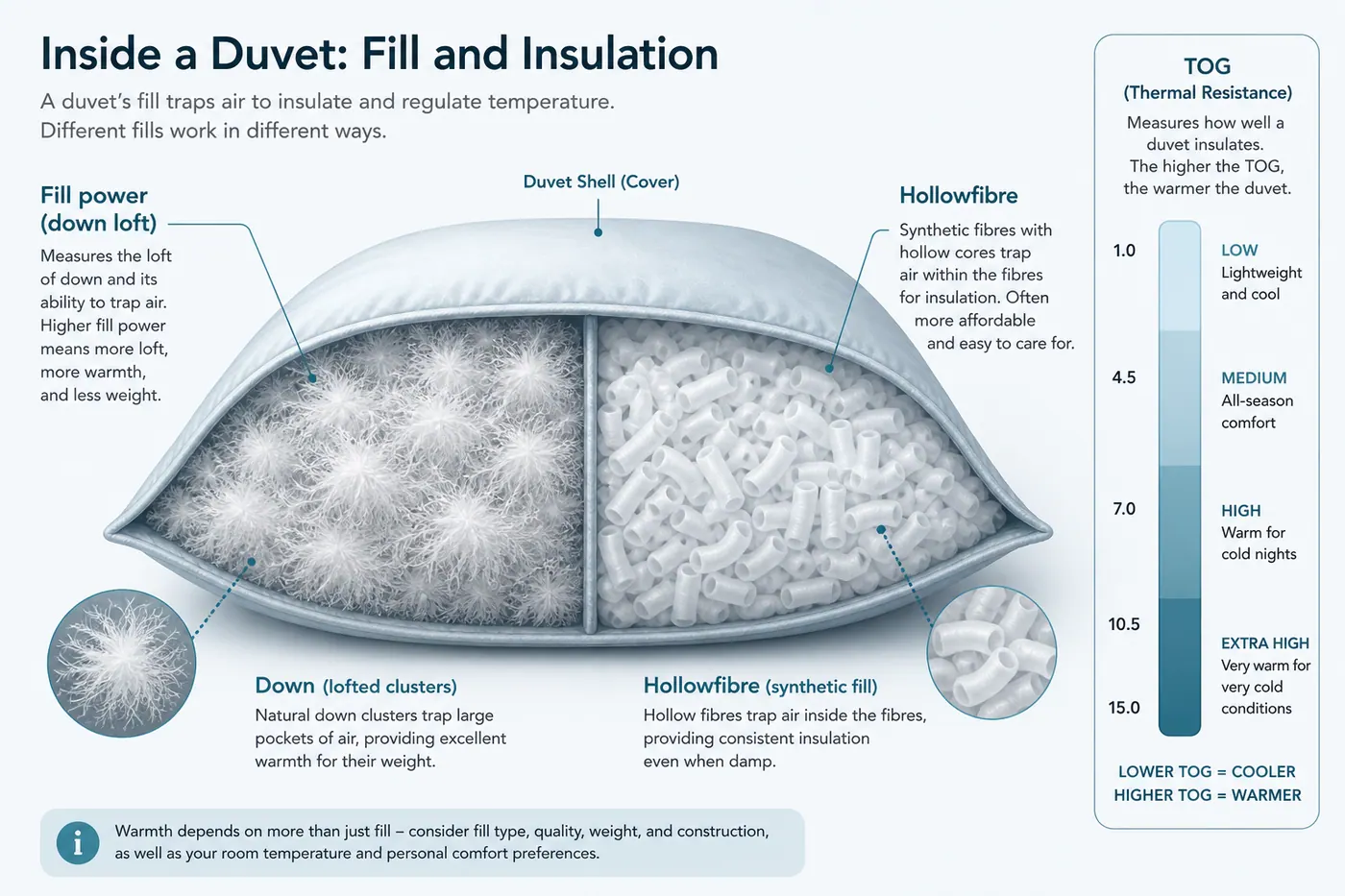
TOG bands commonly used in UK shops
| Approx. TOG | Typical seasonal use |
|---|---|
| ~1–4.5 | Warm rooms / summer |
| ~7–10.5 | Mid-season / many year-round uses |
| ~13.5+ | Cold rooms / winter |
See the scientific unit in TOG rating.
Natural vs synthetic fills
| Fill class | Structure idea | Plain notes |
|---|---|---|
| Down | Soft clusters under feathers | Loft efficiency via fill power |
| Feather | Quills with vane | Heavier; often blended with down |
| Hollowfibre | Tubular synthetic fibres | Washable loft; no fill power rating |
| Microfibre | Fine synthetic fibres | Soft feel; denser packs possible |
Comforter vs duvet (terminology)
In UK usage a duvet sits inside a cover. “Comforter” is more common in US shops for a finished quilted top layer — always check whether a cover is needed.
Related BedGuide entries
Frequently asked questions
- What is the best TOG rating for winter?
- Many UK households use about 13.5 TOG or higher for cold bedrooms. 10.5 TOG is a common all-season middle. 4.5 TOG suits warmer rooms. Room temperature and personal preference matter more than one fixed winter number.
- Is fill power the same as TOG?
- No. Fill power measures how lofted a mass of down is. TOG measures the finished duvet's warmth. A high fill-power down duvet can reach high TOG with less fill weight.
- Down versus hollowfibre — what differs?
- Down clusters trap air well and squash small. Hollowfibre and microfibre use synthetic fibre shapes for loft and are often easier to wash. Allergy and care needs drive many choices.