Mattress Break-In Period Explained
Entity: mattress break-in period

In short
A break-in period is the first weeks when comfort layers and quilting settle under body weight. The mattress stops feeling unusually firm or stiff. Foam and fibre compress slightly. Pocket units may soften at the surface as fillings settle. Mild early change is normal. Progressive deep sag or broken support is wear or a defect, not break-in.
How it works
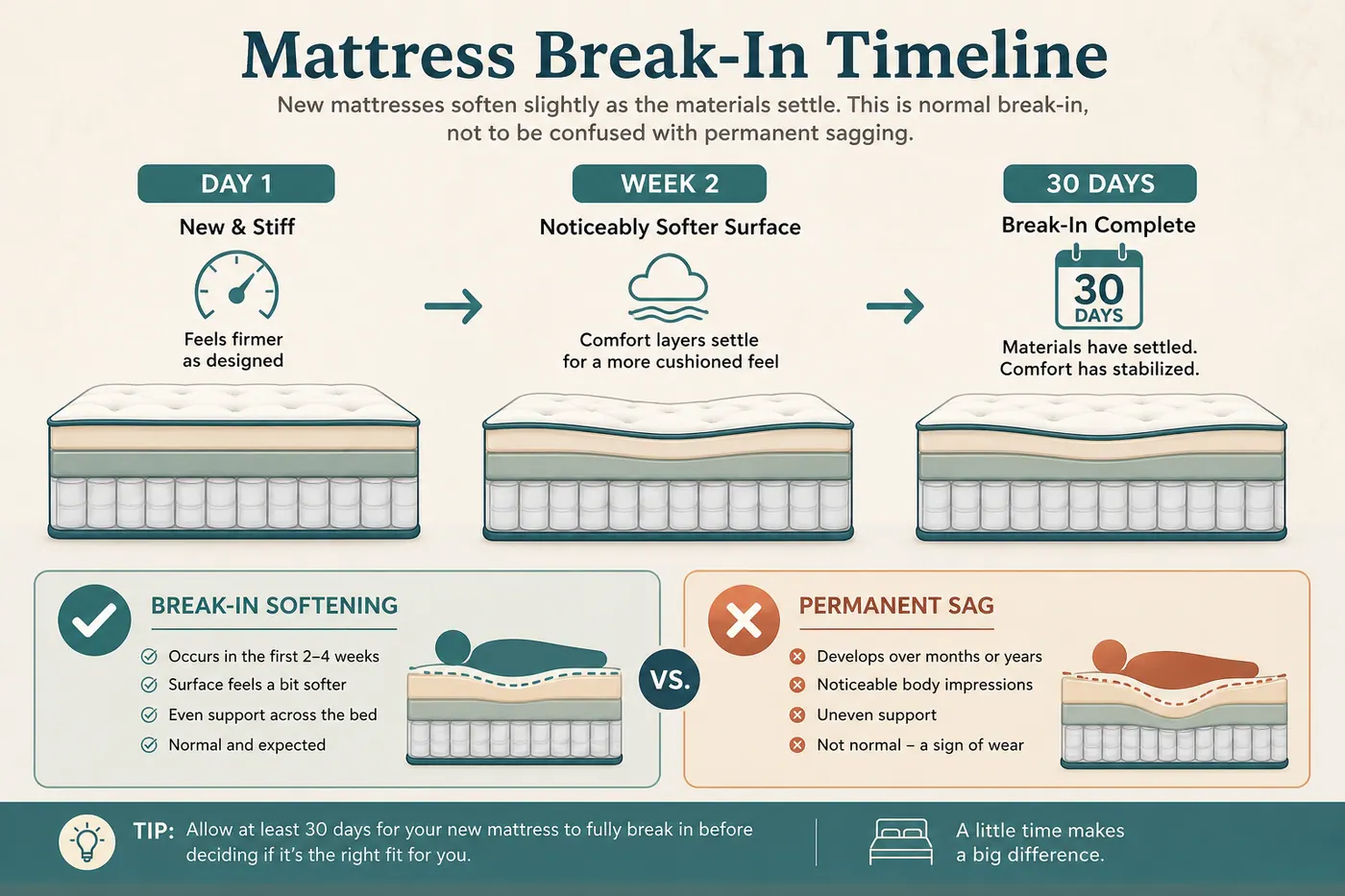
What is settling?
New comfort layers contain lofted fibres and foam that have not yet taken a stable compressed shape under nightly load. Heat-sensitive memory foam also feels firmer when cold and softer after body warmth builds. That temperature effect is separate from permanent set.
Normal vs problem signals
| Observation | Likely class |
|---|---|
| Slightly softer surface after 2–6 weeks | Normal break-in |
| Mild quilt dimples without deep sink | Settlement |
| Progressive centre hammock | Support loss |
| Springs or boards felt through surface | Construction / wear issue |
Care during the first months
- Use a suitable protector.
- Rotate on the label schedule (often weekly at first).
- Confirm the base meets gap and support rules.
- Avoid judging foam feel in a cold room on day one alone.
Related BedGuide entries
Frequently asked questions
- How long does a mattress take to break in?
- Many UK care guides describe noticeable settling over about two to eight weeks of regular use. It depends on foam thickness, fibre loft, and sleeper weight. Follow the manufacturer’s trial and care notes when they differ.
- Should I rotate during break-in?
- Yes if the mattress is rotate-capable. Early rotation slows uneven settlement. See turning versus rotating for the difference between rotate and flip.
- Is a body impression always a fault?
- Light surface impressions in quilting can be normal settlement. Deep hammocking where hips sit below shoulders, or springs felt through the surface, are support-loss signals — see lifespan by material.