Pocket Sprung Mattress Construction
Entity: pocket sprung mattress
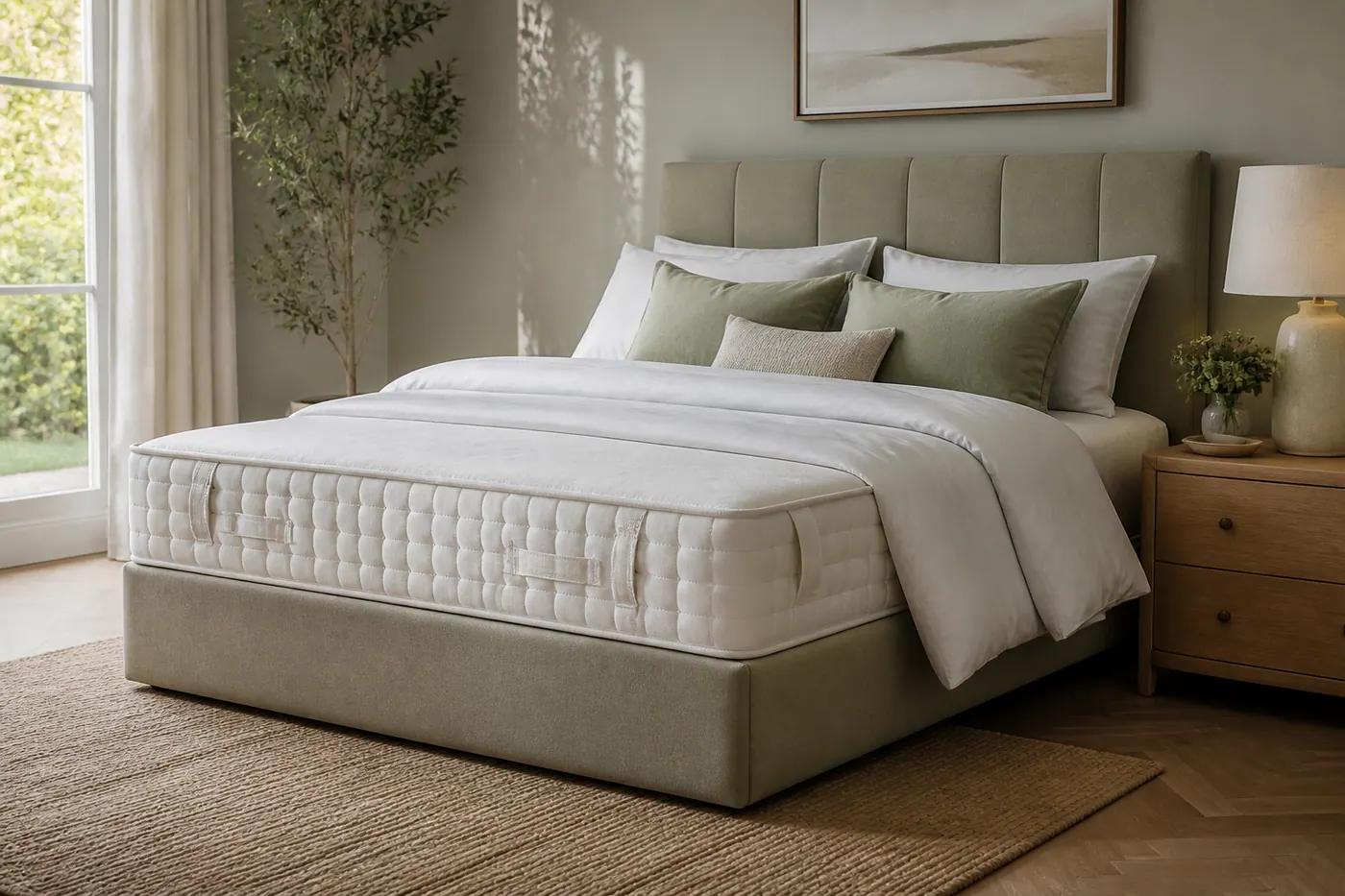
In short
A pocket sprung mattress uses steel coils, each in its own fabric pocket, so neighbouring springs move more independently than in open-coil units. Spring count is the number of pockets in a stated size, not a quality score alone. Wire gauge, coil geometry, zoning and comfort layers also determine support and feel.
How it works
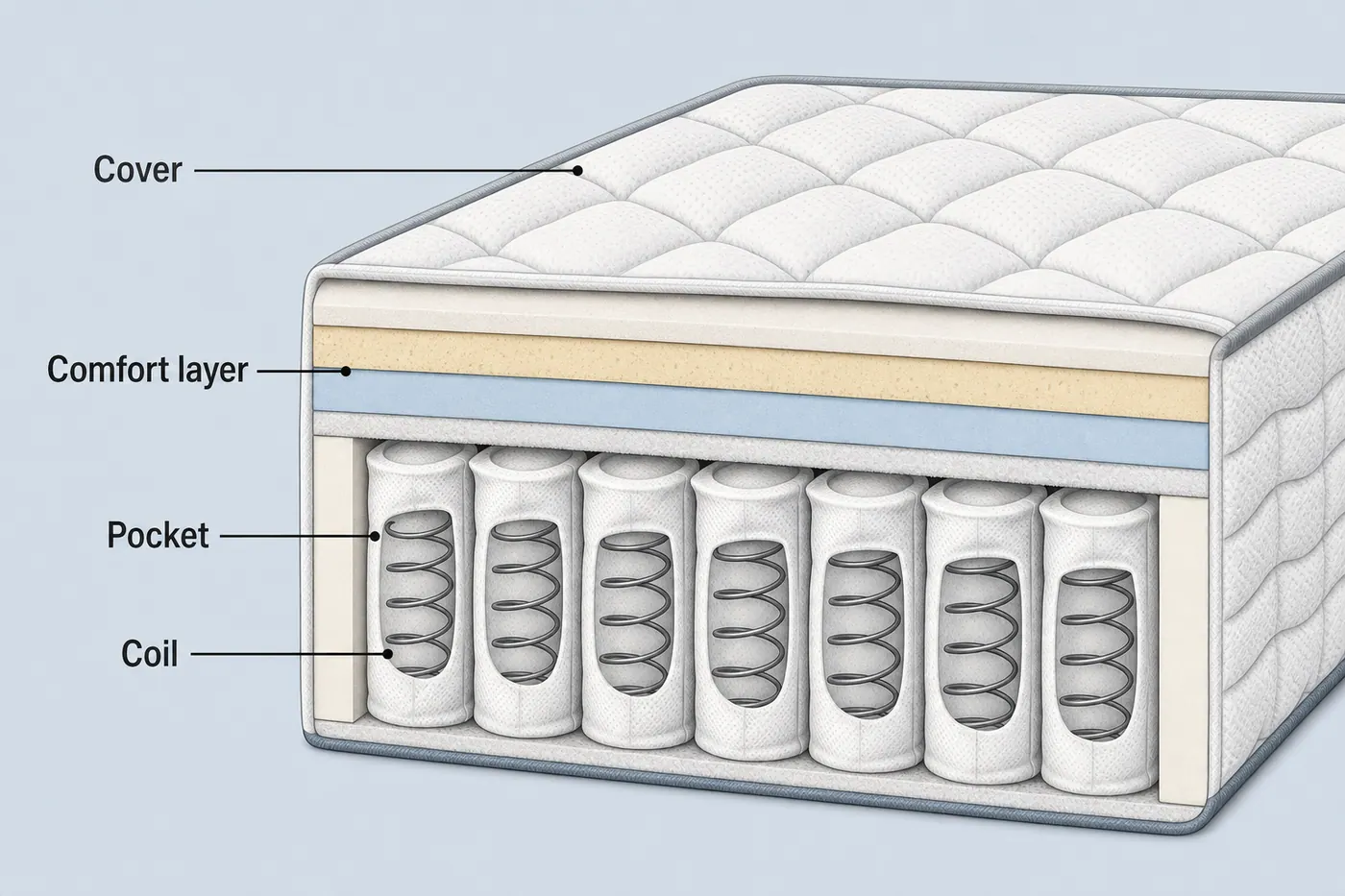
Materials used
- steel coil springs
- non-woven or woven spring pockets
- comfort foams or natural fillings
- cover fabric
Average lifespan
7– 10 years
How pocket springs differ from open coils
In a pocket sprung mattress, each steel coil sits in its own fabric bag. It can compress with less help from its neighbours. An open coil / Bonnell unit links coils with wire into one grid. Load travels across the lattice. That is why pocket units usually mould better and transfer less partner movement.
Spring count is not a quality score
UK shop listings often quote spring counts from several hundred into the thousands. Useful rules:
- Always read the count with the mattress size attached.
- Ask for springs per m² when comparing Single, King, and Super King.
- Inspect wire gauge, coil shape, zoning, and comfort layers. A lower count with better materials can outperform a higher count with thin padding.
Better-quality pocket units historically used calico or cotton pockets and hand-nested assemblies. Many modern units use non-woven pockets glued in rows. Process differences change airflow and side-to-side response.
Comfort layers above the spring unit
The spring core provides alignment and bounce paths. The sleep feel comes largely from wool, other fibres, latex, polyfoam, or memory foam above the pockets. A hybrid mattress is essentially a pocket core plus substantial foam or latex comfort layers.
Base compatibility
Pocket sprung mattresses are commonly used on divan bases and slatted bases. For foam-heavy hybrids on slats, check the maker’s maximum slat gap (often around 7 cm) so the comfort layers cannot hammock between laths.
Motion isolation and roll-together
Independent pockets reduce the linked-grid effect that encourages roll-together on open-coil beds. Couples still share some centre sink on very soft comfort layers. For density metrics, see spring count explained.
Related BedGuide entries
Frequently asked questions
- What does spring count mean on a pocket sprung mattress?
- Spring count is the number of pocketed coils in a stated mattress size. Density matters more than the raw number. One thousand springs in a UK Single is denser than one thousand in a UK Super King. Compare springs per square metre when sizes differ.
- Are pocket sprung mattresses better for couples than open coil?
- Pocket sprung units typically transfer less motion than Bonnell open-coil grids because coils are not linked into one wire network. Thick comfort layers can still couple some movement across the surface. Independence is relative, not absolute.
- How is a higher spring count usually achieved?
- Higher counts often use smaller-diameter coils packed more densely. Some builds stack micro-coils above a main pocket unit. Count alone does not prove better durability. Wire gauge, tempering and comfort fillings still govern long-term support.