When Sleep Needs Change
Entity: changing sleep needs mattress
In short
Bodies and rooms change. Pregnancy, later life, injury recovery or a new sleep position can make an old mattress feel wrong. This page explains practical bed system checks — support, height, access and toppers — not medical advice. For pain or health concerns, speak to a qualified clinician. BedGuide only explains furniture and sleep-system options.
How it works
Important limit
BedGuide explains beds and mattresses. It does not diagnose or treat health conditions.
Practical furniture checks
| Change you notice | Furniture check |
|---|---|
| Bed feels too soft or hard | Re-read spring tension vs feel |
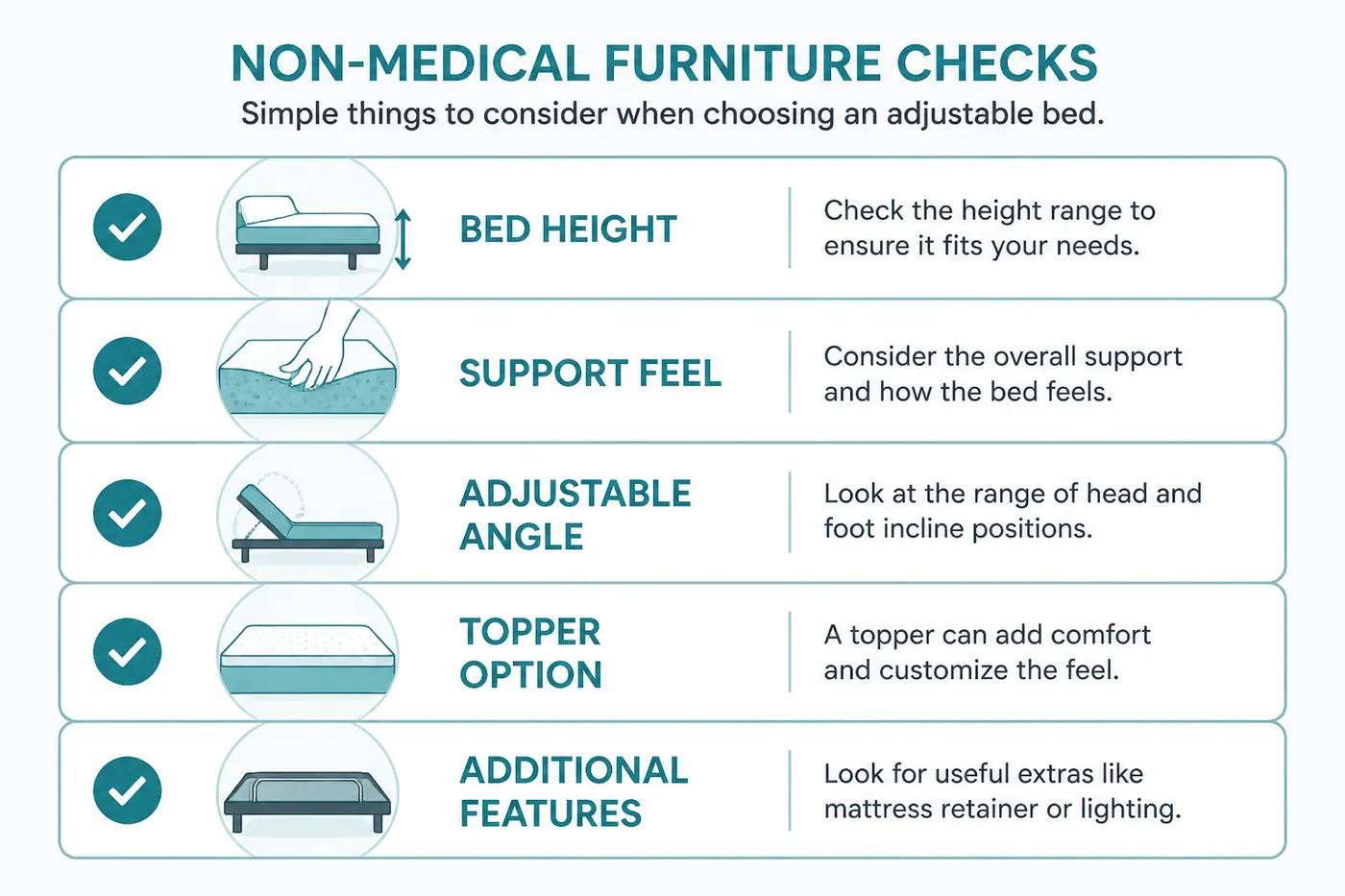
| Hard to get in or out | Check mattress + base height |
| Want head elevation | See adjustable beds |
| Need a short-term softer top | See toppers |
| Partner needs differ | See couples and zip-and-link |
Temporary versus replace
- A topper can change surface feel for a while.
- Wrong spring support for weight usually needs a different mattress.
- Trial periods are shop policies, not medical tests.
Related BedGuide entries
Frequently asked questions
- Should I buy a special pregnancy mattress?
- BedGuide does not give medical advice. Many people adjust pillows, bed height and temporary toppers instead of replacing a whole mattress. Ask a midwife or clinician about personal health needs.
- What bed changes help older sleepers practically?
- Practical furniture checks include mattress height for standing up, a stable edge, and sometimes an adjustable base for reading or resting positions. Personal health choices need clinician advice.