Mattress Guide for Stomach Sleepers (UK)
Entity: stomach sleeper mattress
In short
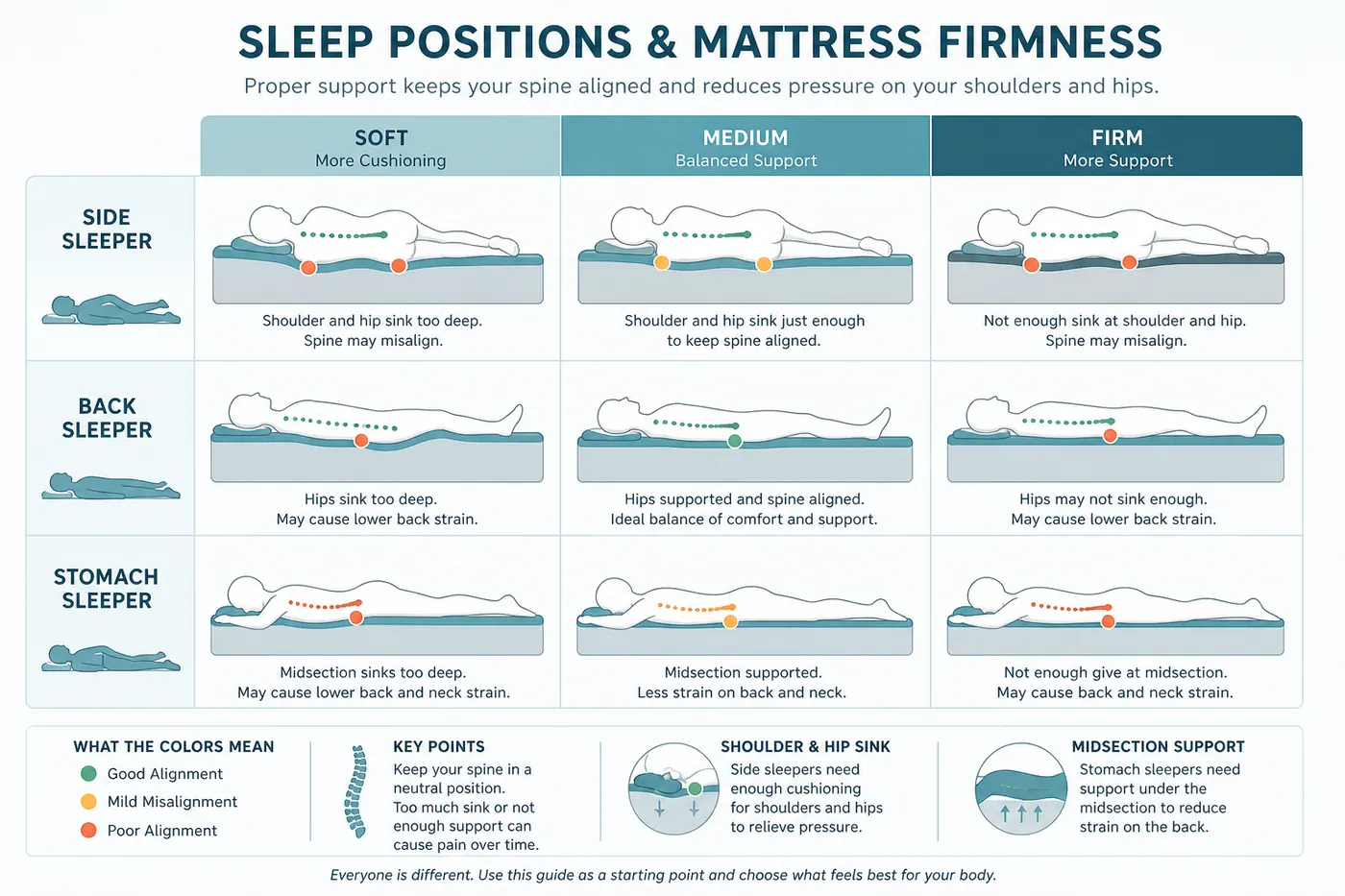
Stomach sleepers usually need firmer surfaces that stop the hips sinking and arching the lower back. Soft plush tops can feel nice briefly then strain the lumbar area. Match spring tension or foam density to body weight, and use a low pillow so the neck is not forced up. Soft, medium and firm labels still differ between shops.
How it works
Materials used
- pocket springs
- open coil springs
- firmer foams
- hybrid stacks
Average lifespan
6– 10 years
The main risk: hip sink
On your stomach, body weight presses the pelvis into the mattress. Too much sink arches the lower back. That is why firmer cores are a common starting point — not because “firm equals healthy” for every person.
Starting points (not prescriptions)
| Factor | Common stomach-sleeper pattern |
|---|---|
| Surface feel | Firm; avoid deep soft pillow tops |
| Support core | Higher tension / denser foam for weight |
| Builds to try | Firmer pocket or hybrid; some open-coil guest beds |
| Pillow | Low loft — pillow guide |
Combination sleepers who only spend part of the night on their stomach may need a medium compromise — see firmness and sleep position.
Related BedGuide entries
Frequently asked questions
- What mattress firmness do stomach sleepers need?
- Firmer surfaces are the usual starting point so hips do not drop and arch the lower back. Soft pillow tops can undermine that support. Body weight still shifts the useful band — heavier sleepers sink further into the same build.
- Can stomach sleepers use memory foam?
- Yes if the overall stack stays firm enough at the hips. Deep soft memory foam layers can allow too much sink. Check density and feel in person or via a clear trial policy when possible.
- What pillow should stomach sleepers use?
- Low loft. A thick pillow pushes the neck up while the body lies flat. See how to choose a pillow and pillow ergonomics.