Mattress Guide for Back Sleepers (UK)
Entity: back sleeper mattress
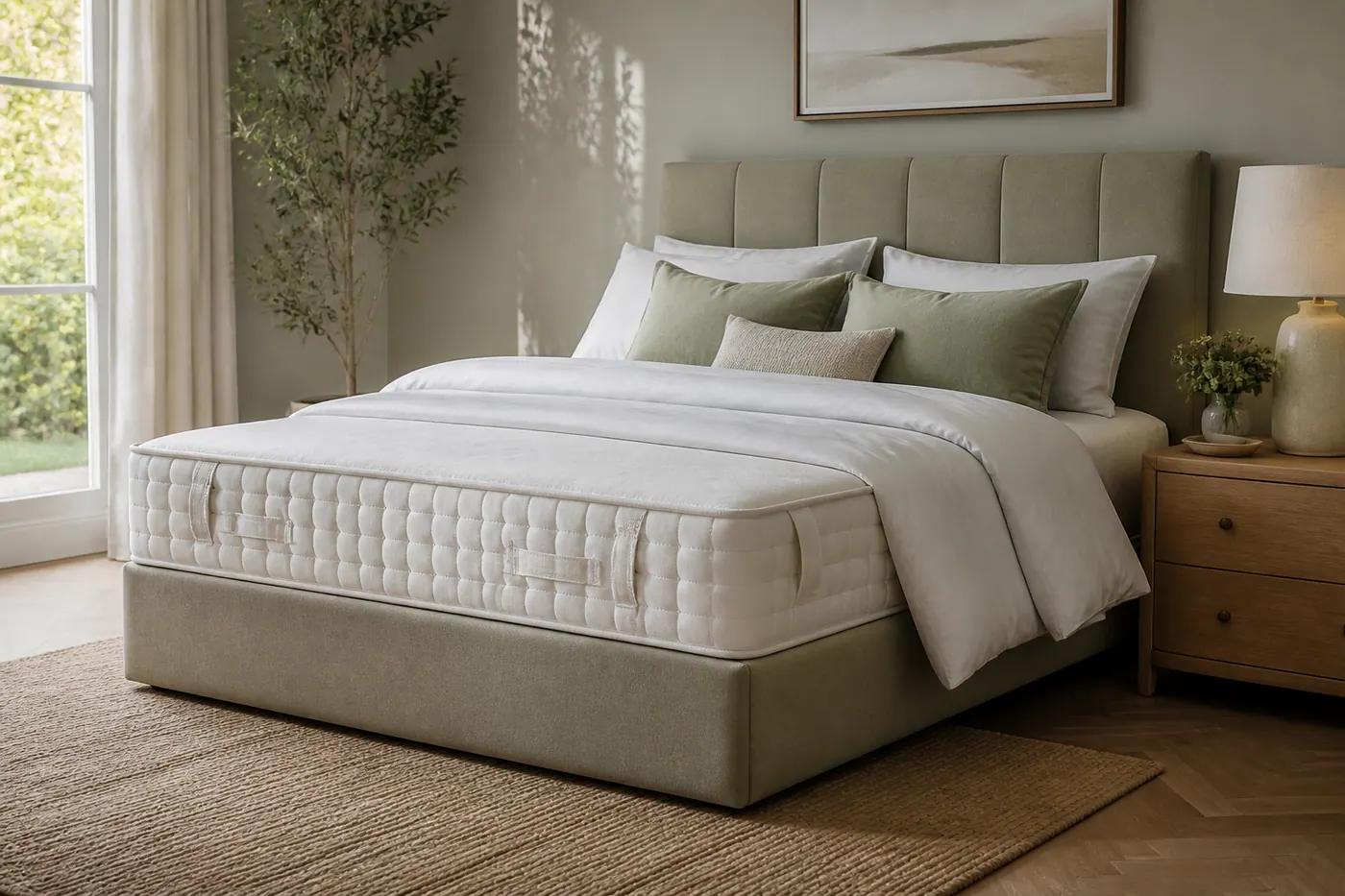
In short
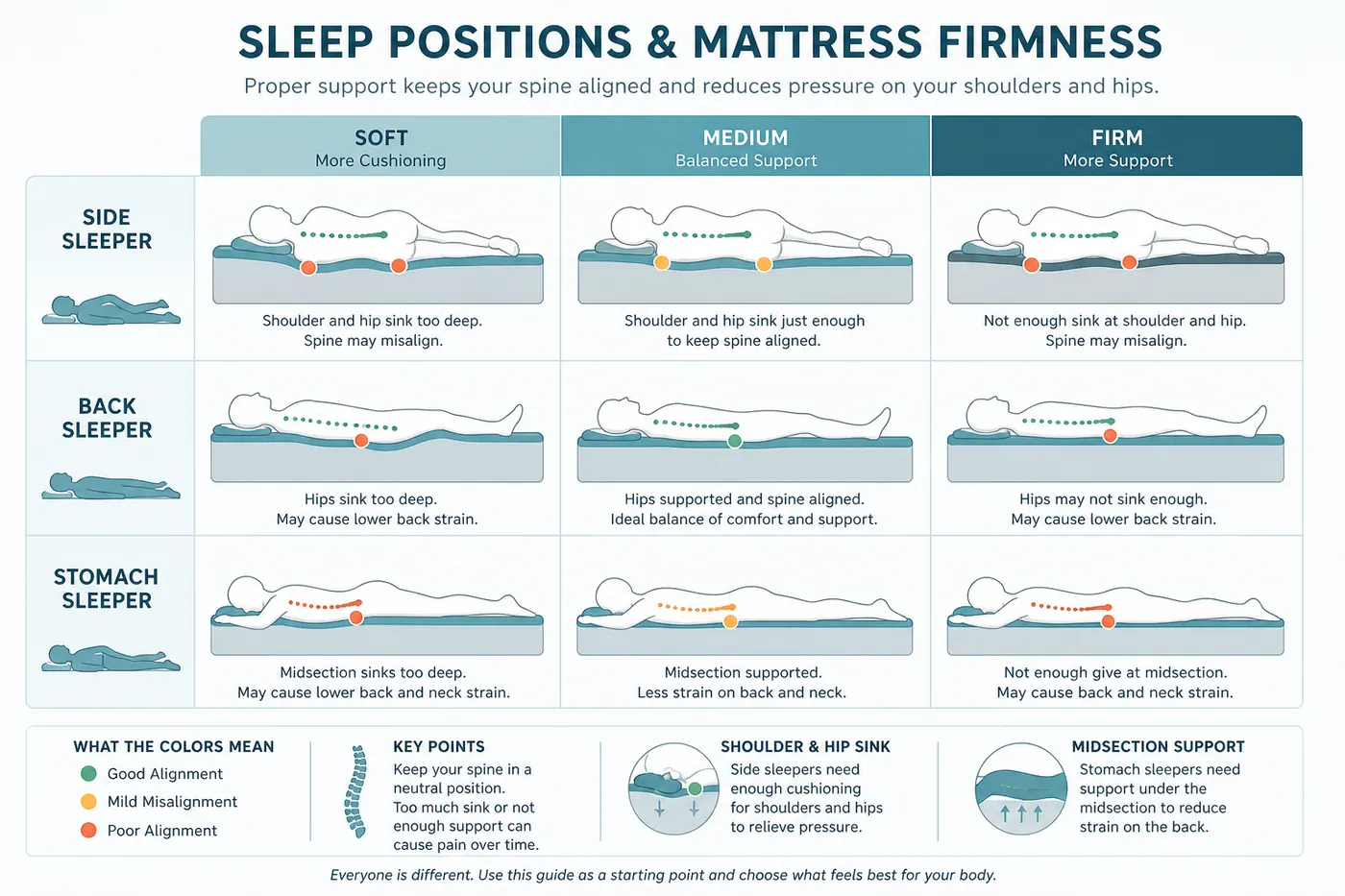
Back sleepers often prefer medium-firm to firm surfaces that limit hammocking of the lower back while still cushioning the shoulders lightly. Soft beds can let the hips sink and increase spinal curve. Match spring tension or foam density to body weight first. Soft, medium and firm shop labels are not a shared scale.
How it works
Materials used
- pocket springs
- memory foam
- latex
- hybrid stacks
Average lifespan
6– 10 years
What back sleeping needs
On your back, the mattress must support the hips and lumbar area so the spine does not sag into a hammock, while the surface still eases the shoulders a little.
Starting points (not prescriptions)
| Factor | Common back-sleeper pattern |
|---|---|
| Surface feel | Medium-firm to firm |
| Support core | Correct tension / density for weight |
| Builds to try | Pocket sprung, hybrid, latex; firmer foams if density suits |
| Pillow | Medium loft — pillow guide |
Read firmness and sleep position for how shop grades vary.
Claims to treat carefully
Words like “orthopaedic”, “posture” or “doctor recommended” are marketing unless tied to clear construction facts — see orthopaedic explained and support claims.
Related BedGuide entries
Frequently asked questions
- Are firm mattresses better for back sleepers?
- Many back sleepers prefer medium-firm to firm surfaces that limit hip sink. Very soft beds can increase spinal curve. Individual comfort and body weight still matter more than a single firmness word on a ticket.
- Do I need an orthopaedic mattress if I sleep on my back?
- Orthopaedic is a retail label, not a regulated medical grade. Check the real construction and tension. See orthopaedic mattress explained and support claims literacy. Persistent pain needs clinical advice.
- What pillow height suits back sleepers?
- Medium loft often keeps the neck nearer level with the spine. Very high pillows can push the head forward. See how to choose a pillow.