Reflex Foam Explained
Entity: reflex foam mattress
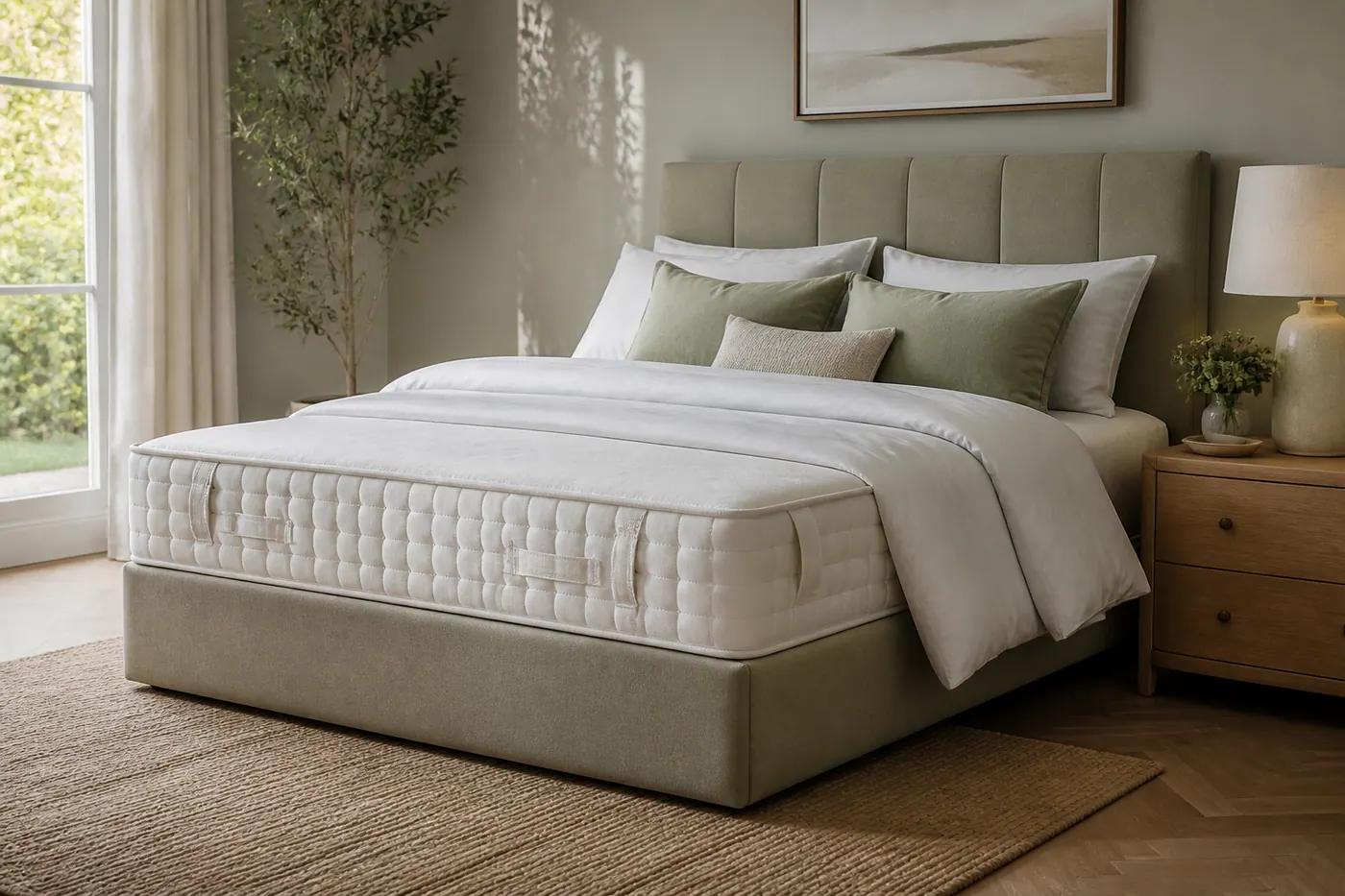
In short
Reflex foam is a UK retail name for firm, high-resilience polyurethane foam used in sofa beds, guest mattresses and some cheaper sleep surfaces. It bounces back faster than classic memory foam. It is not a medical grade. Density and thickness still decide how long it lasts. Treat the word as a foam style, not a quality score.
How it works
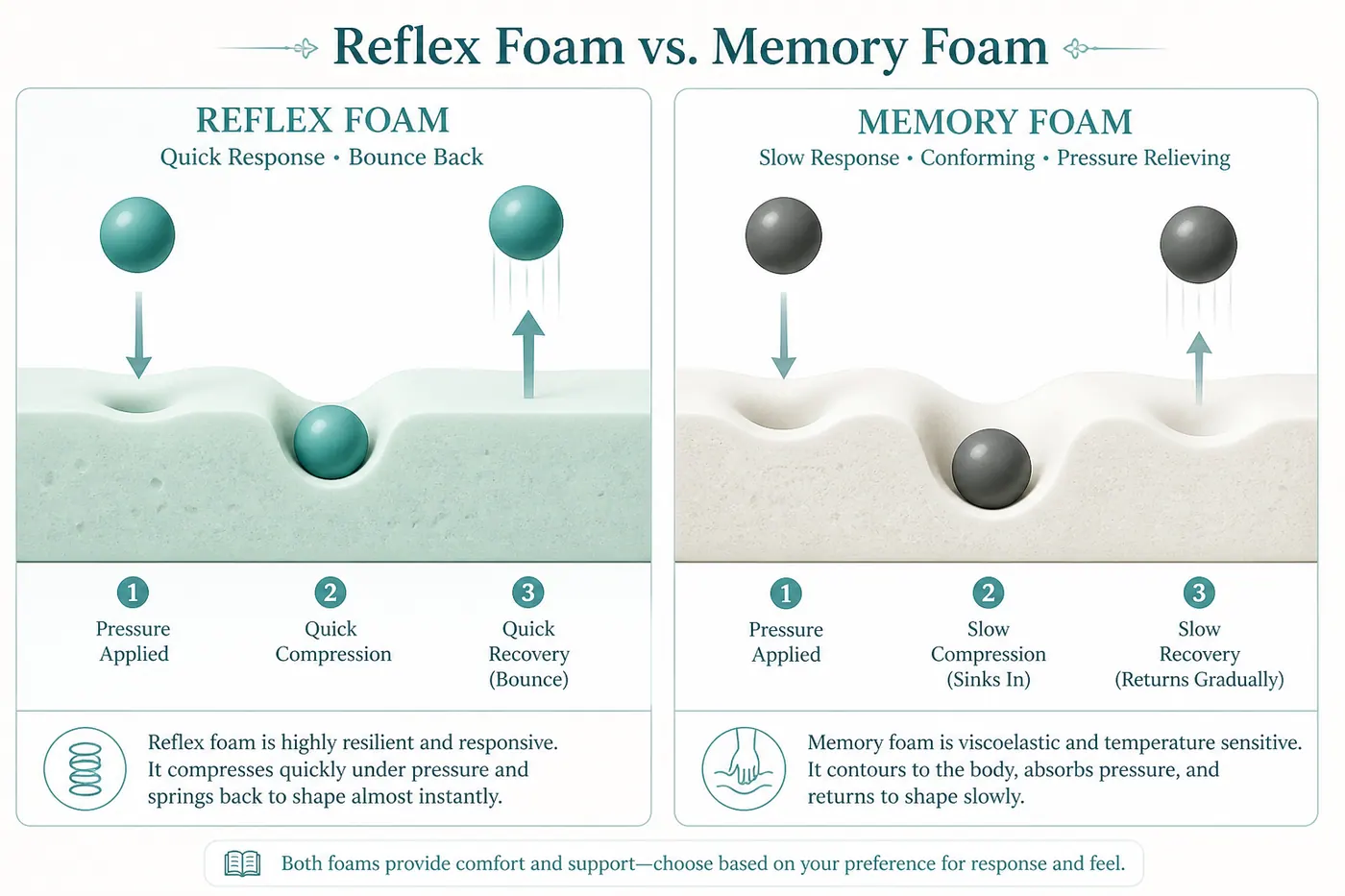
Materials used
- high-resilience polyurethane foam
- cover fabric
Average lifespan
3– 7 years
What shops mean by “reflex foam”
In short: a firmer, springier foam than soft seat foam or classic memory foam.
It is popular in:
- Sofa beds and guest beds
- Budget foam mattresses
- Some toppers and seat pads
What to check instead of the name
| Check | Why it matters |
|---|---|
| Thickness | Thin foam folds easily but may feel hard on a frame |
| Density | Higher density usually lasts longer under load |
| Base | Slats or solid deck change how firm it feels |
| Use | Guest nights versus every night |
Related BedGuide entries
Frequently asked questions
- Is reflex foam the same as memory foam?
- No. Memory foam softens with heat and recovers slowly. Reflex foam is usually firmer and more bouncey. Both can be polyurethane, but they feel different and suit different uses.
- Is reflex foam good for everyday sleep?
- Thin reflex foam is common in sofa beds for folding space. For every-night sleep, check density, thickness and base support. A short guest mattress is not automatically a long-term main bed.