What’s Inside a Mattress
Entity: mattress construction layers
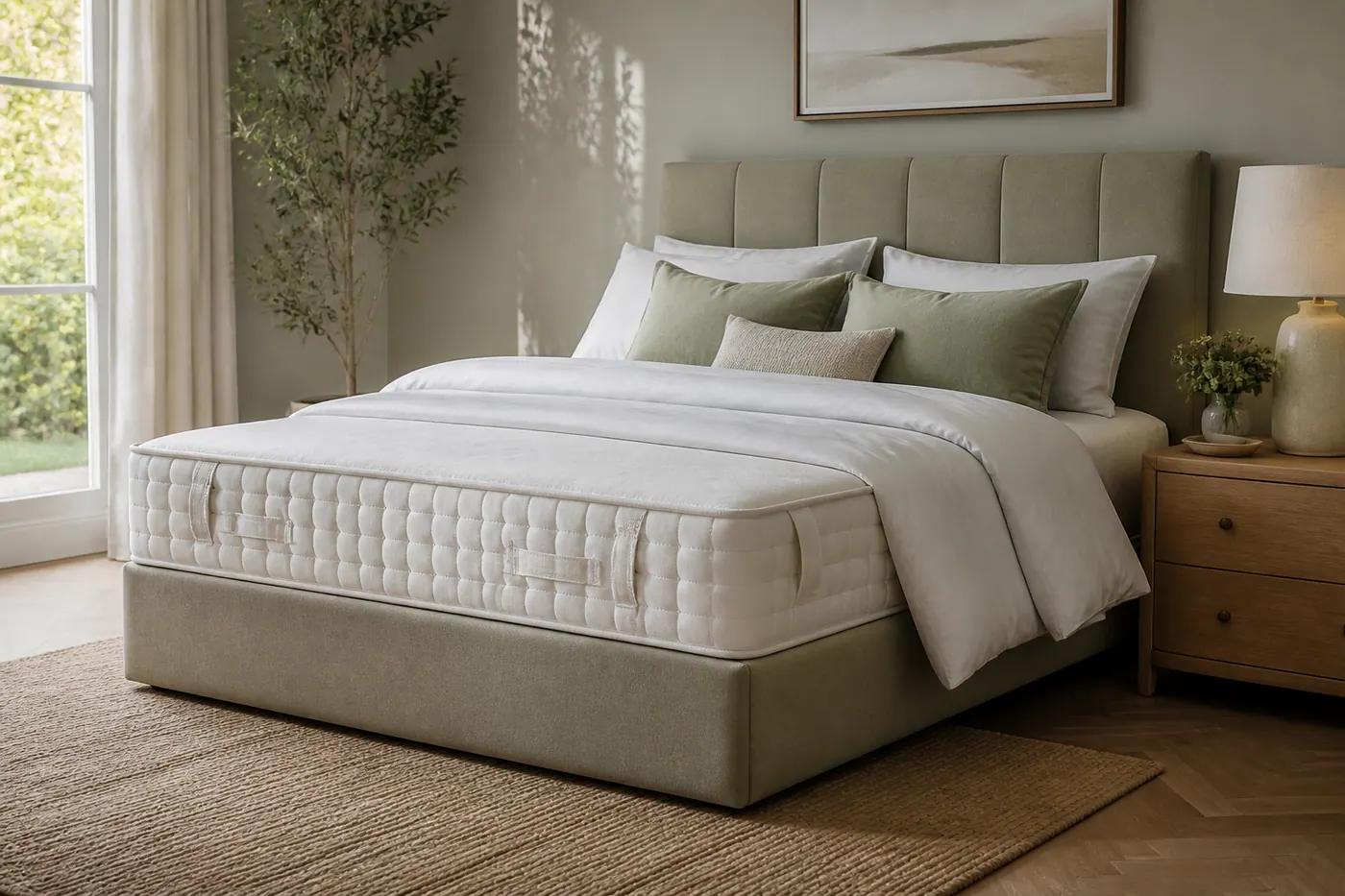
In short
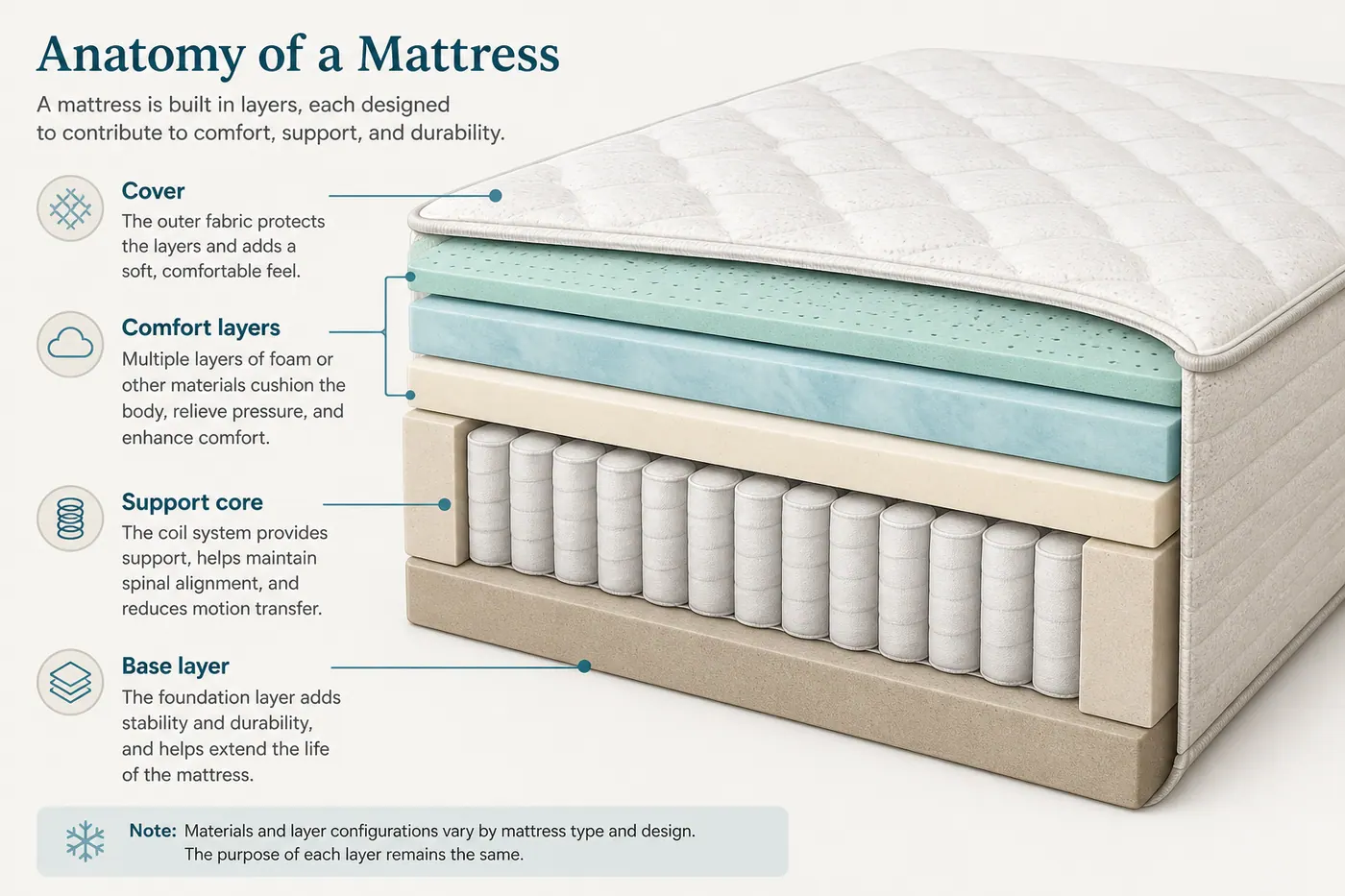
Most mattresses stack layers: a cover, comfort padding, and a support core. Pocket sprung and hybrid beds use steel springs in the core. Foam and latex beds use foam blocks instead. Edge foam, quilting and fire barriers may sit around or under those layers. Knowing the stack helps you read shop labels without guessing.
How it works
Materials used
- cover fabric
- foam or fibre comfort layers
- pocket springs or foam core
- edge support foam
Average lifespan
6– 10 years
The simple stack
| Layer | Job |
|---|---|
| Cover | The fabric you touch. May be quilted. |
| Comfort layers | Foam, latex, wool or fibre that set soft or firm top feel |
| Support core | Springs or firm foam that hold your weight |
| Base / insulator | Thin layer that sits toward the bed base |
Spring beds versus foam beds
- Pocket sprung and hybrid beds use a spring core.
- Memory foam and many all-foam beds use foam as the core.
- Latex can be a core or a comfort layer.
Labels to read next
- Core type (springs or foam)
- Spring tension vs top feel
- Foam density if the bed is foam
- Total depth for fitted sheets
Related BedGuide entries
Frequently asked questions
- What are the main layers inside a mattress?
- Most beds have a cover, one or more comfort layers, and a support core. The core may be pocket springs, open coils, foam or latex. Some beds also have edge foam and a thin insulator above the base.
- Does a thicker mattress mean better quality?
- Not always. Extra thickness can be soft padding, not stronger support. Read what the core is made of, then how thick the comfort layers are, then the total height.