Cleaning Memory Foam Mattresses
Entity: cleaning memory foam

In short
Memory foam can trap liquid inside its cell network. Soaking viscoelastic foam with water or detergent risks slow drying, odour, and material breakdown. Spot cleaning with minimal moisture works best. Blot rather than scrub. Enzymatic cleaners for protein soils are the usual safe approach for the foam core.
How it works
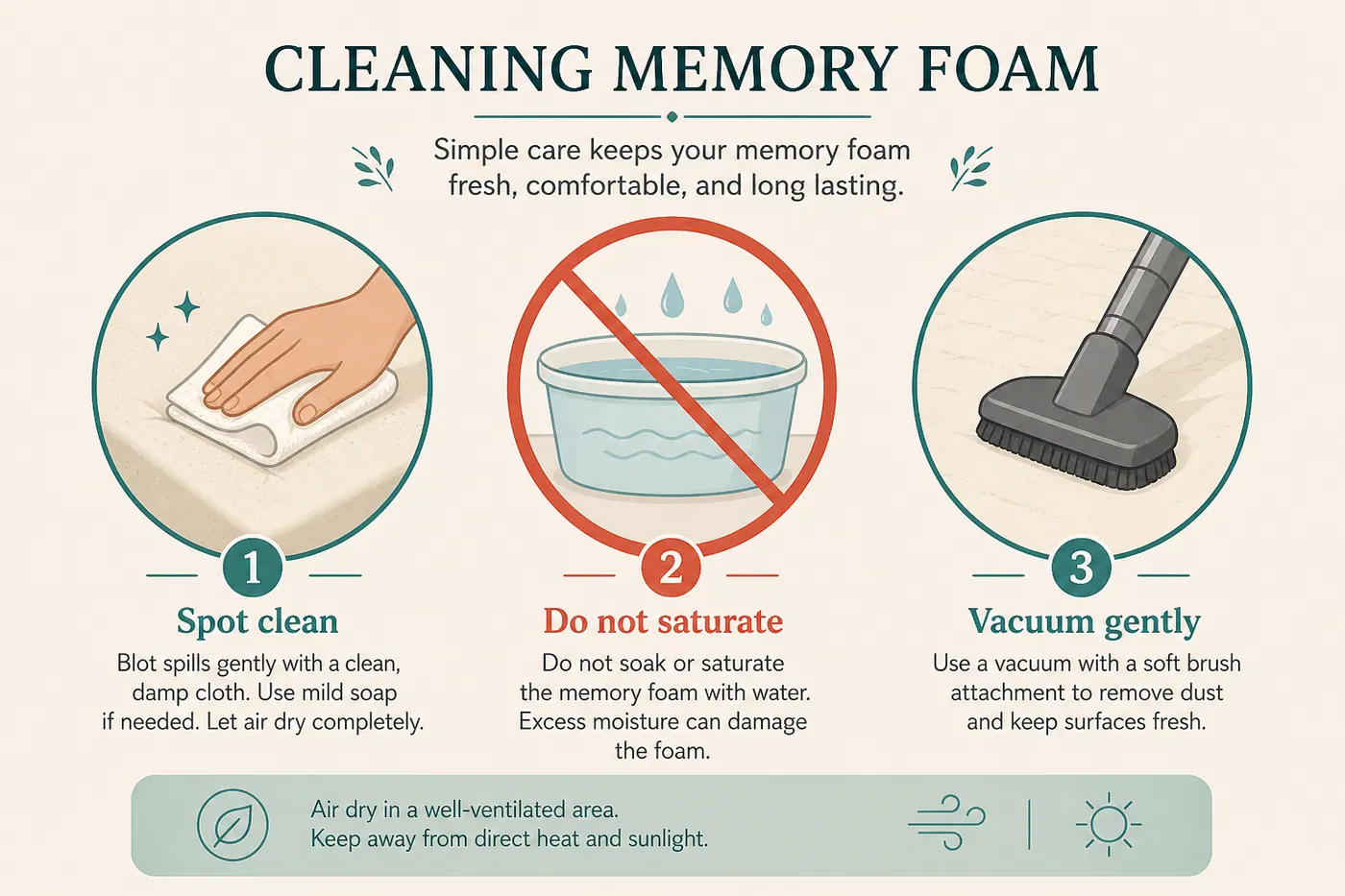
Why soaking is harmful
Water held inside foam cells keeps the polymer soft and creates conditions for microbial growth. Unlike spring units with large air gaps, foam cores have limited drying paths once soaked.
Step sequence
- Remove and wash covers per their care labels.
- Blot spills immediately. Do not rub deep into the foam.
- Use a lightly damp cloth with mild or enzymatic cleaner for protein soils.
- Blot dry. Air the mattress until no cool dampness remains.
- Remake with a protector.
Role of enzymatic cleaners
Enzymatic cleaners break down protein-based soils into smaller molecules that can be blotted away. They are still low-moisture spot treatments. They are not a licence to hose the mattress.
Related BedGuide entries
Frequently asked questions
- Can you steam clean a memory foam mattress?
- Generally avoid saturating steam on the foam core. Heat and moisture can drive liquid deep into cells where drying is slow. Prefer low-moisture spot methods and washable covers.
- How do you dry memory foam after a spill?
- Blot thoroughly and maximise airflow. Keep the room dry. Do not apply direct high heat that could damage the polymer. Fully dry before remaking the bed with waterproof layers.