Hypoallergenic Mattress Materials Explained
Entity: hypoallergenic mattress materials
In short
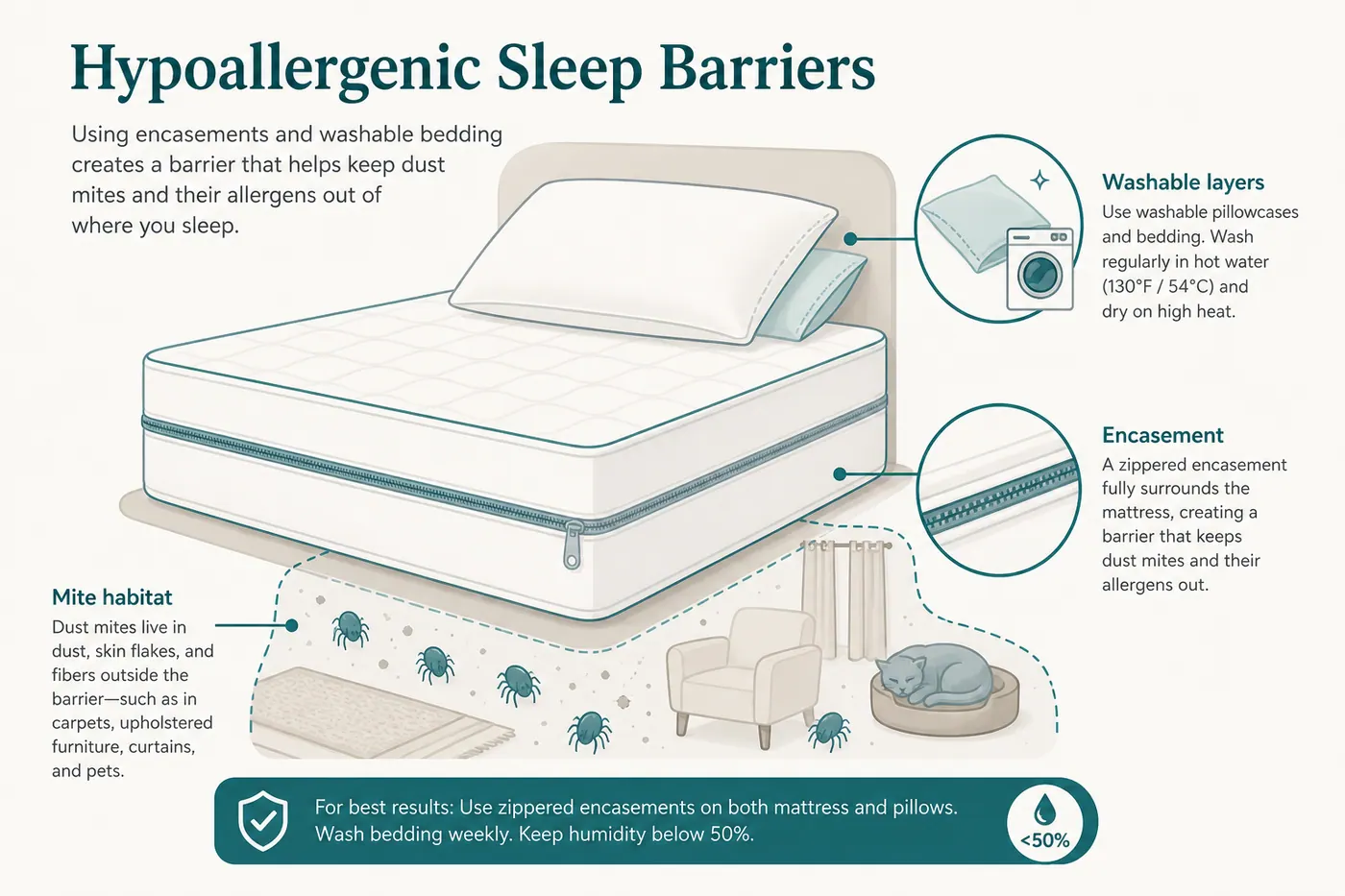
Hypoallergenic in bedding usually means materials or covers meant to reduce allergen exposure. It does not mean sterile or allergy-proof. Common strategies include tightly woven barrier encasements, washable covers, and fills with fewer loose fibre pockets. Dust-mite control is mostly about habitat and barriers. Individual allergies need clinical advice, not label reading alone.
How it works
What the word usually means
In shops, hypoallergenic is a materials or cover strategy — not a medical grade and not a promise of zero allergens.
Strategy types
| Strategy | How it helps |
|---|---|
| Zip encasement | Keeps allergens in the core |
| Washable covers | Removes allergen load from textiles |
| Tight weaves | Limits particle passage |
| Smooth foams / latex | Fewer loose fibre pockets than some fills |
Build a system, not a slogan
- Dust mites ecology — warmth, flakes, humidity
- Allergy-friendly sleep system — full stack
- Washing bedding — labels and heat
- Room humidity — bedroom temperature and humidity
Latex caution
Natural latex helps some people and harms others with latex protein allergy. That is a clinical question. BedGuide only flags the difference between natural and synthetic latex language.
Common mistakes
- Buying a new mattress but never washing pillows
- Treating “hypoallergenic” as sterile
- Skipping an encasement in a humid room
Related BedGuide entries
Frequently asked questions
- Does hypoallergenic mean no dust mites?
- No. It usually means reduced allergen exposure through barrier covers and washable textiles. Mattresses can still harbour mites without an encasement and humidity control.
- Is latex hypoallergenic?
- Some people prefer latex for fewer loose fibres. Others must avoid natural latex because of latex protein allergy. Synthetic latex differs. Treat labels carefully and seek clinical advice for known allergies.
- What should I buy first for a mite-aware bed?
- A proper washable protector or encasement, plus a sheet-washing routine, usually beats chasing a hypoallergenic mattress slogan. See the allergy-friendly sleep system.