Earplugs and White Noise Machines
Entity: earplugs and acoustic masking

In short
Earplugs reduce sound level at the ear canal. Ratings such as SNR or NRR estimate attenuation in decibels under test conditions. White, pink, and brown noise machines add a steady sound field that can mask intermittent noises. They raise the background so sudden sounds stand out less. Attenuation and masking are different strategies. Plugs lower level. Masking covers contrast.
How it works
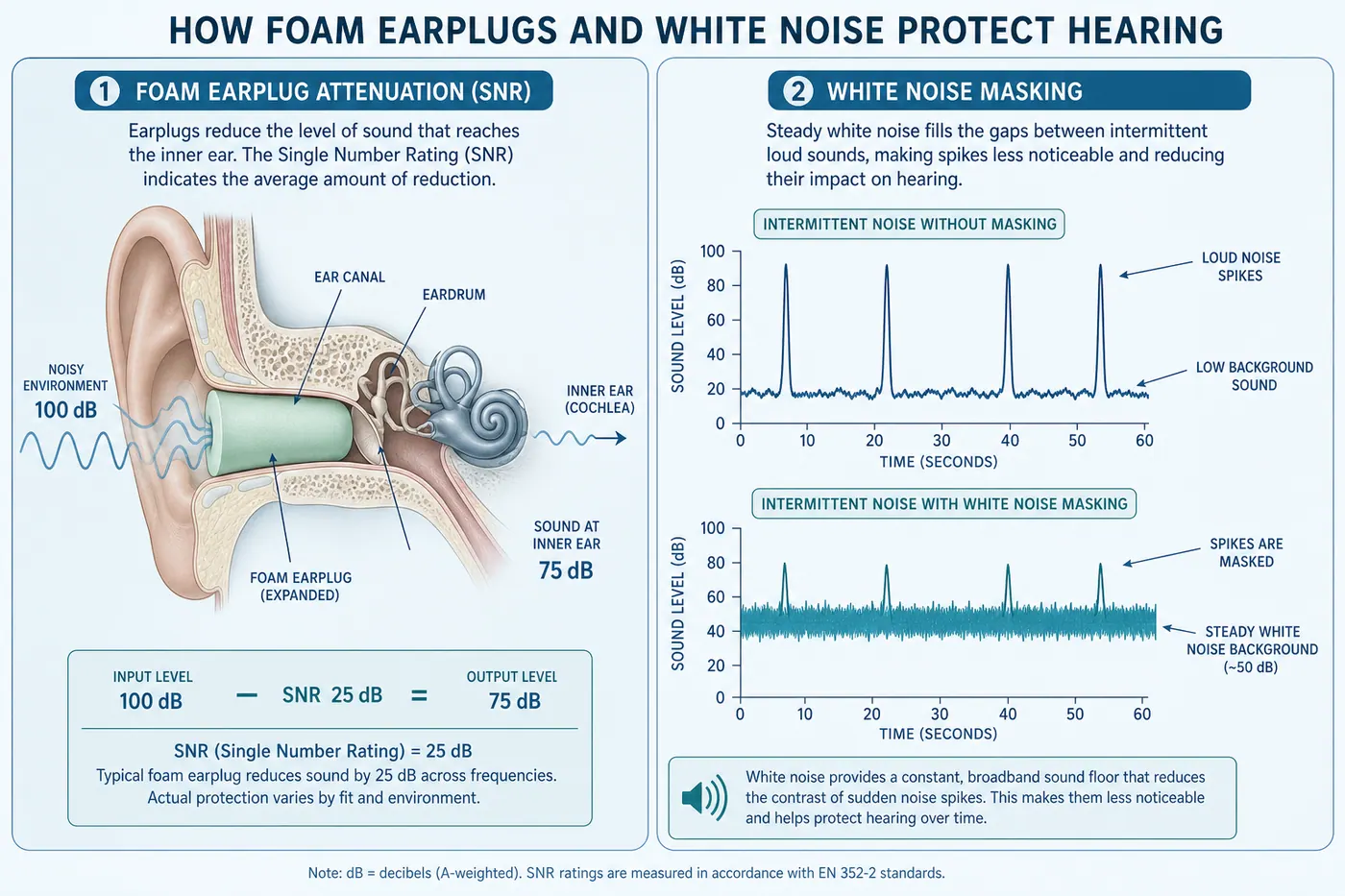
Two strategies for night noise
| Strategy | How it works | Limit |
|---|---|---|
| Earplugs | Attenuate level at the ear | Fit-dependent; comfort varies |
| Acoustic masking | Raise steady background | Does not remove the original noise source |
Using ratings carefully
Laboratory SNR/NRR values assume correct fit. Soft foam plugs need full expansion in the canal. Flanged silicone plugs need a seal. Partial insertion overstates real attenuation.
Related BedGuide entries
Frequently asked questions
- What does SNR mean on earplugs?
- SNR (Single Number Rating) is a European estimate of hearing protection attenuation in decibels under standardised test conditions. Real-world reduction depends on fit and correct insertion.
- Is white noise the same as silence?
- No. White noise adds sound energy across frequencies. It can make sleep easier in noisy environments by masking, but it is not the absence of sound.
- White vs pink vs brown noise?
- These labels describe different spectral slopes. White is flatter across frequency. Pink and brown emphasise lower frequencies more. Preference is individual.