care comparison
Mattress protector vs Mattress topper
Evergreen URL: /compare/mattress-protector-vs-topper
In short
A mattress protector is a thin barrier that shields the mattress from fluids and allergens while aiming to change feel little. A topper is a thicker comfort pad that softens or firms the surface. Protectors support hygiene and many warranty conditions; toppers modify contact feel without replacing a worn core. Use both when you need shield plus feel change.
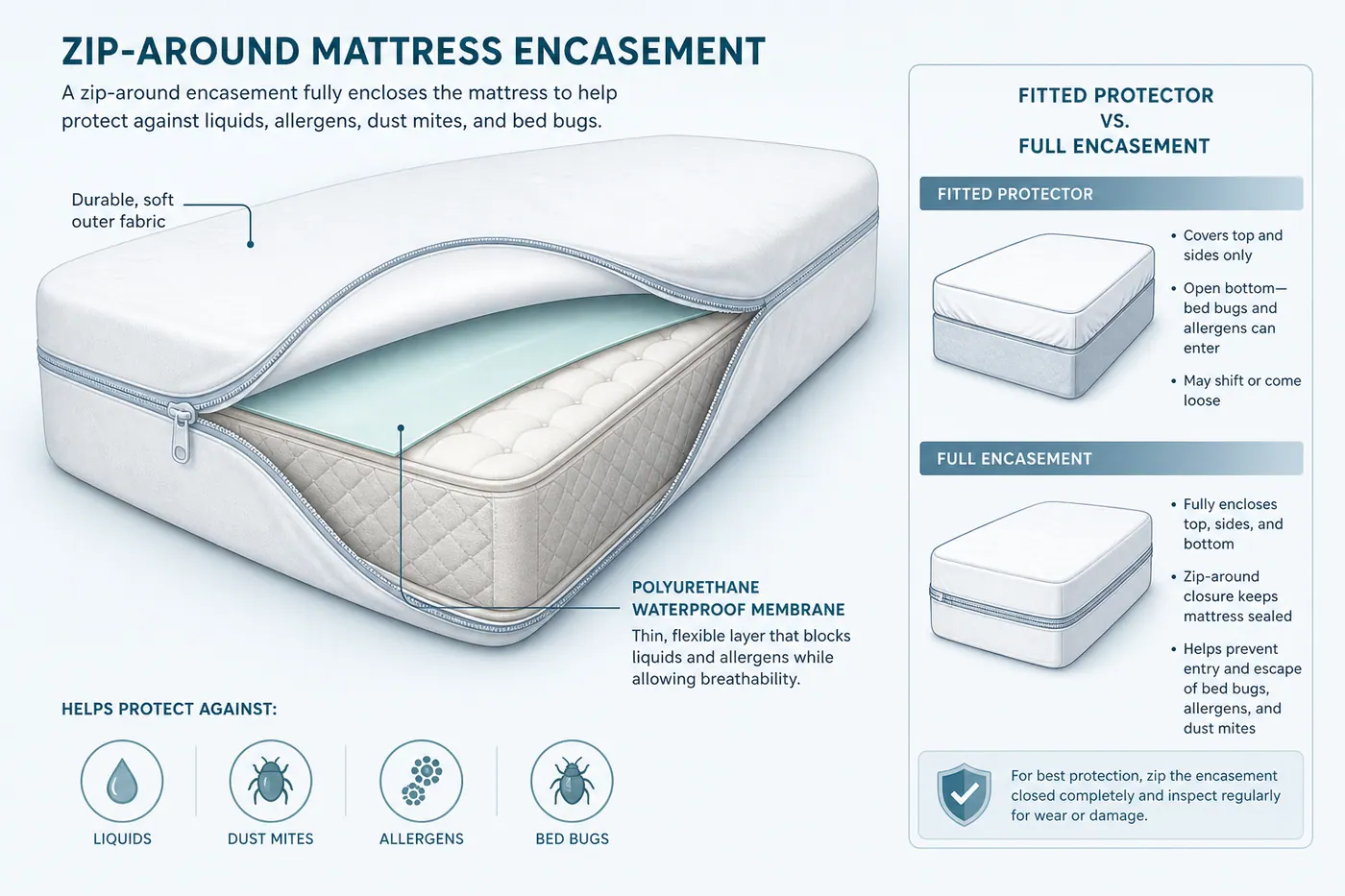
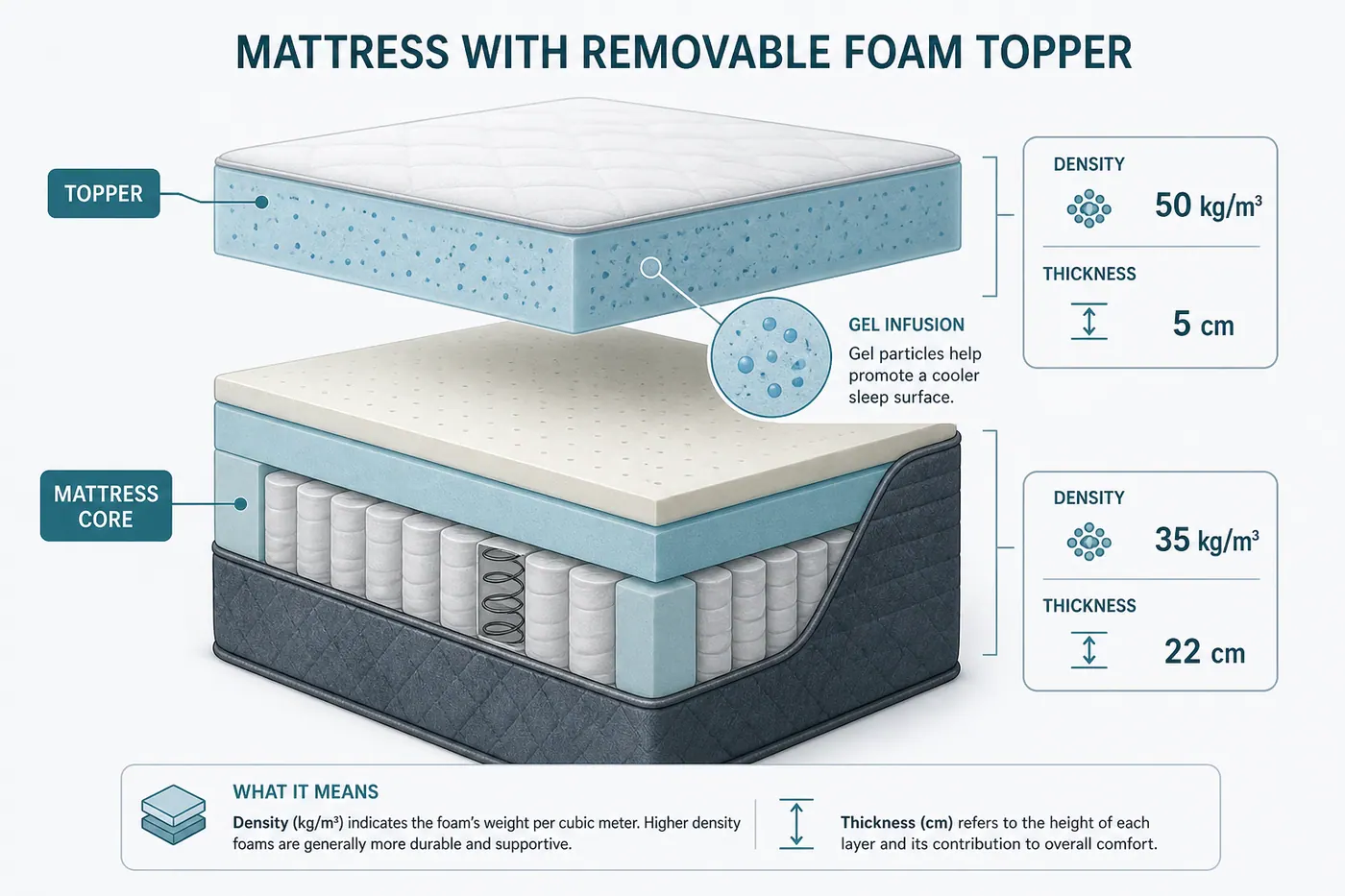
These layers sit above the mattress for different jobs. Confusing them leads to buying a thick pad when you needed a waterproof barrier, or expecting a topper to restore collapsed springs.
Key differences
| Criterion | Mattress protector | Mattress topper |
|---|---|---|
| Primary job | Shield mattress from fluids, stains and allergens | Change surface softness or cushioning |
| Typical thickness | Millimetres to lightly quilted ~1–2 cm | Often 3–8+ cm of foam, latex or fibre |
| Effect on firmness | Minimal when thin and correctly specified | Intentional soft or firm surface change |
| Worn core | Does not restore support | Masks feel; cannot rebuild collapsed springs or foam |
| Sheet depth | Usually negligible | Adds to total sleep-system height |
Mattress protector may suit if…
- You need fluid or allergen barrier protection
- Warranty conditions mention a suitable protector
- You want to keep the mattress feel largely unchanged
Mattress topper may suit if…
- The mattress is sound but the surface is too firm or too flat
- You want temporary guest-room comfort tuning
- You accept deeper fitted sheets for added height
Frequently asked questions
- Can I use a protector and a topper together?
- Yes. Place the protector on the mattress, then the topper, unless a product instructs otherwise. That keeps the core shielded while the topper changes feel.
- Will a topper fix sagging?
- No. Toppers change the first centimetres of contact. Deep body impressions or broken support usually mean the mattress itself needs replacement.