mattresses comparison
Latex vs Pocket sprung
Evergreen URL: /compare/latex-vs-pocket-sprung
In short
Latex mattresses use natural or synthetic latex foam for buoyant contouring. Pocket sprung mattresses use individual coils in fabric pockets for zoned spring support. Latex often feels springy without metal coils; pocket units tune tension with wire and coil design. Compare feel and care needs, not slogans.
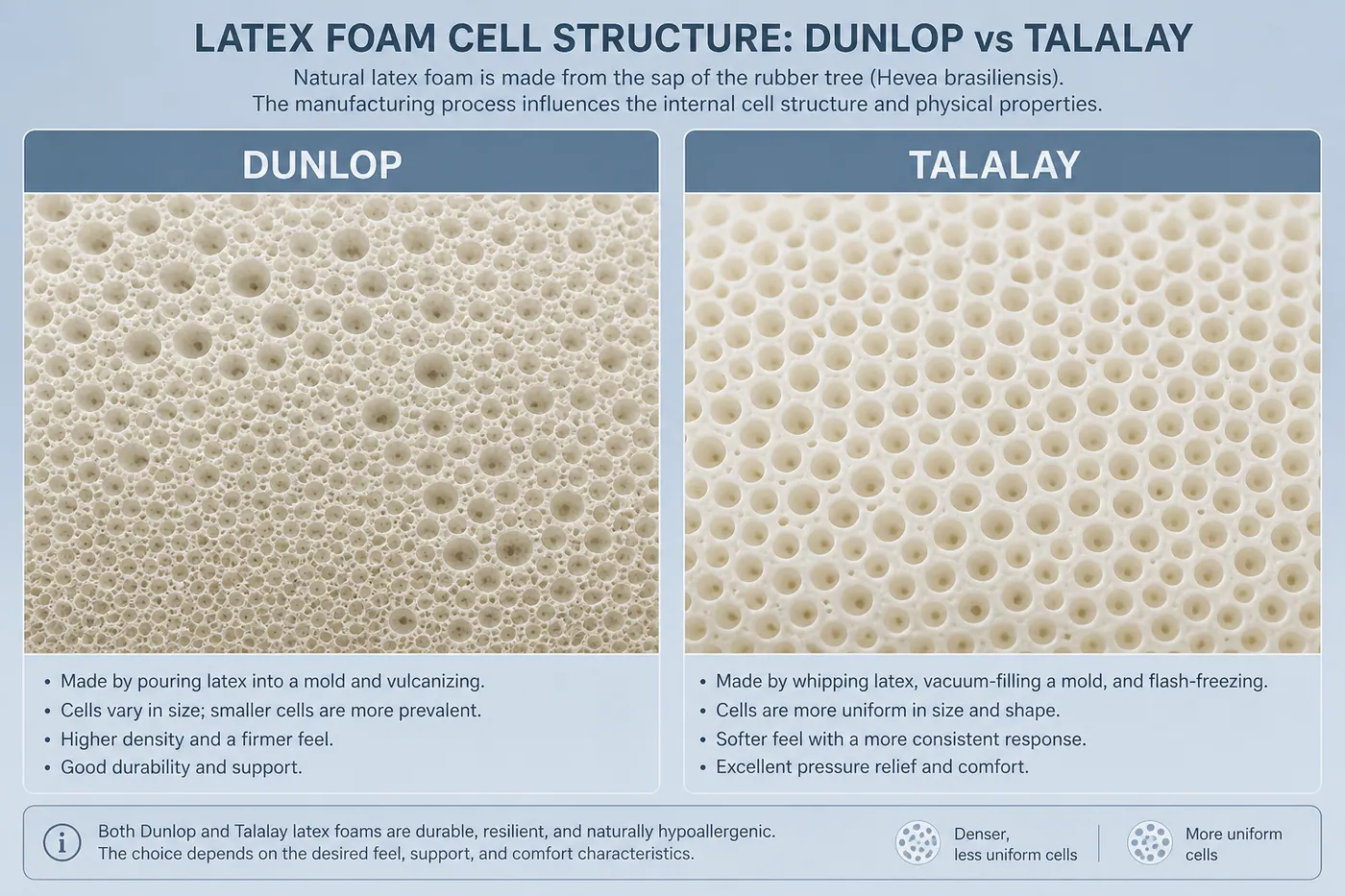
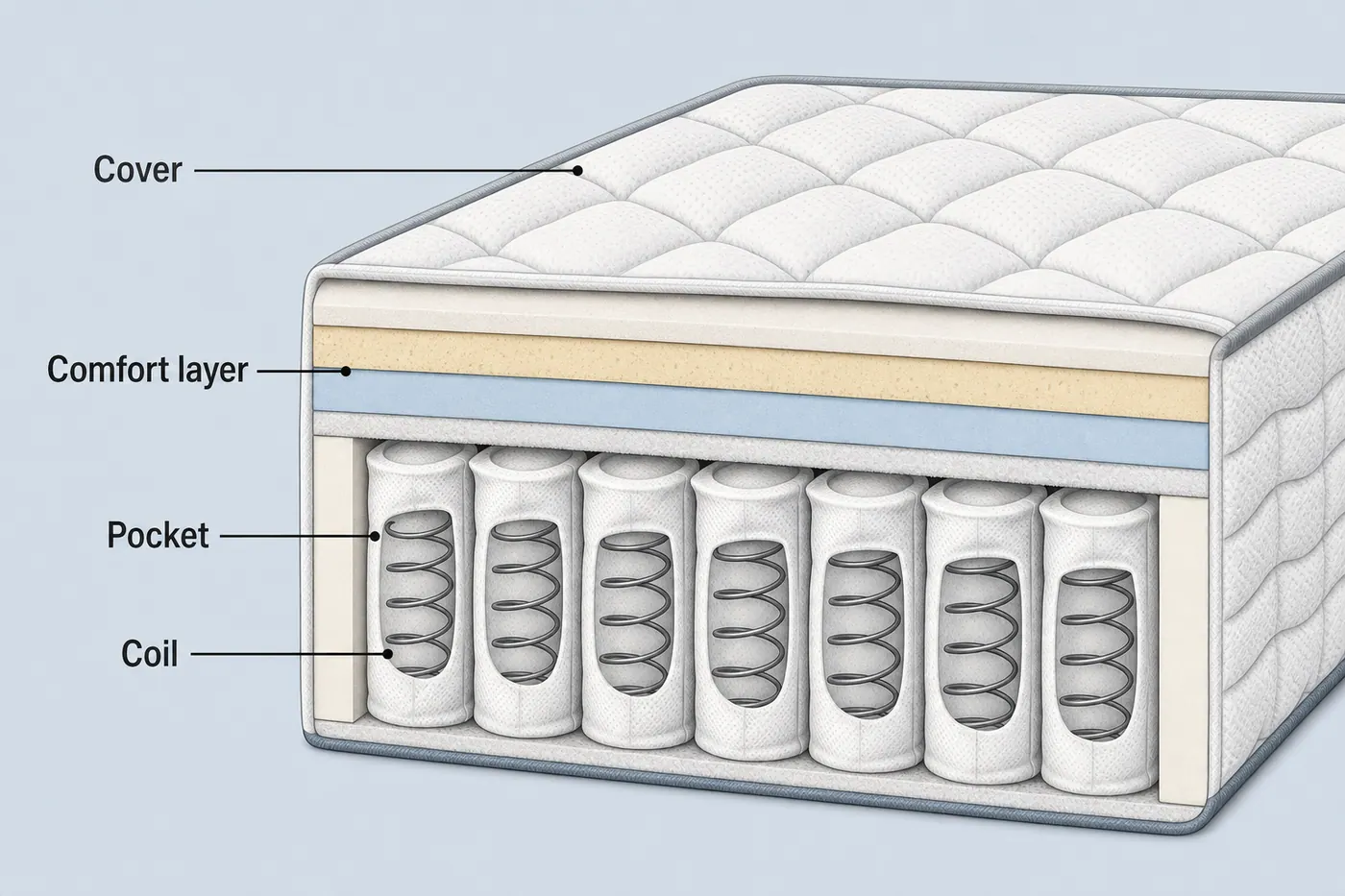
Some beds combine both. This page compares latex-led stacks with classic pocket sprung support so you know which mechanism you are choosing.
Key differences
| Criterion | Latex | Pocket sprung |
|---|---|---|
| Support mechanism | Latex foam resilience | Individual pocketed steel coils |
| Typical feel | Buoyant, responsive contouring | Spring push-back with surface fillings |
| Heat behaviour | Often more open than classic memory foam | Air paths through the coil unit |
| Weight of mattress | Latex cores can be heavy | Varies with coil count and upholstery |
Latex may suit if…
- You want responsive foam without memory-foam slow hug
- You prefer latex material characteristics
Pocket sprung may suit if…
- You want tunable spring tension for body mass
- You like traditional UK pocket sprung constructions
Frequently asked questions
- Is latex always natural?
- No. Latex may be natural, synthetic, or blended. Ask which layers are latex and which standard any organic textile claims cover.