beds comparison
Bunk bed vs High sleeper
Evergreen URL: /compare/bunk-vs-high-sleeper
In short
A bunk bed stacks two sleep surfaces. A high sleeper lifts one mattress to free floor space for a desk, sofa or storage underneath. Both need guardrails, ladder clearance and strict age/weight rules. Choose by whether you need two beds or one bed plus under-space.
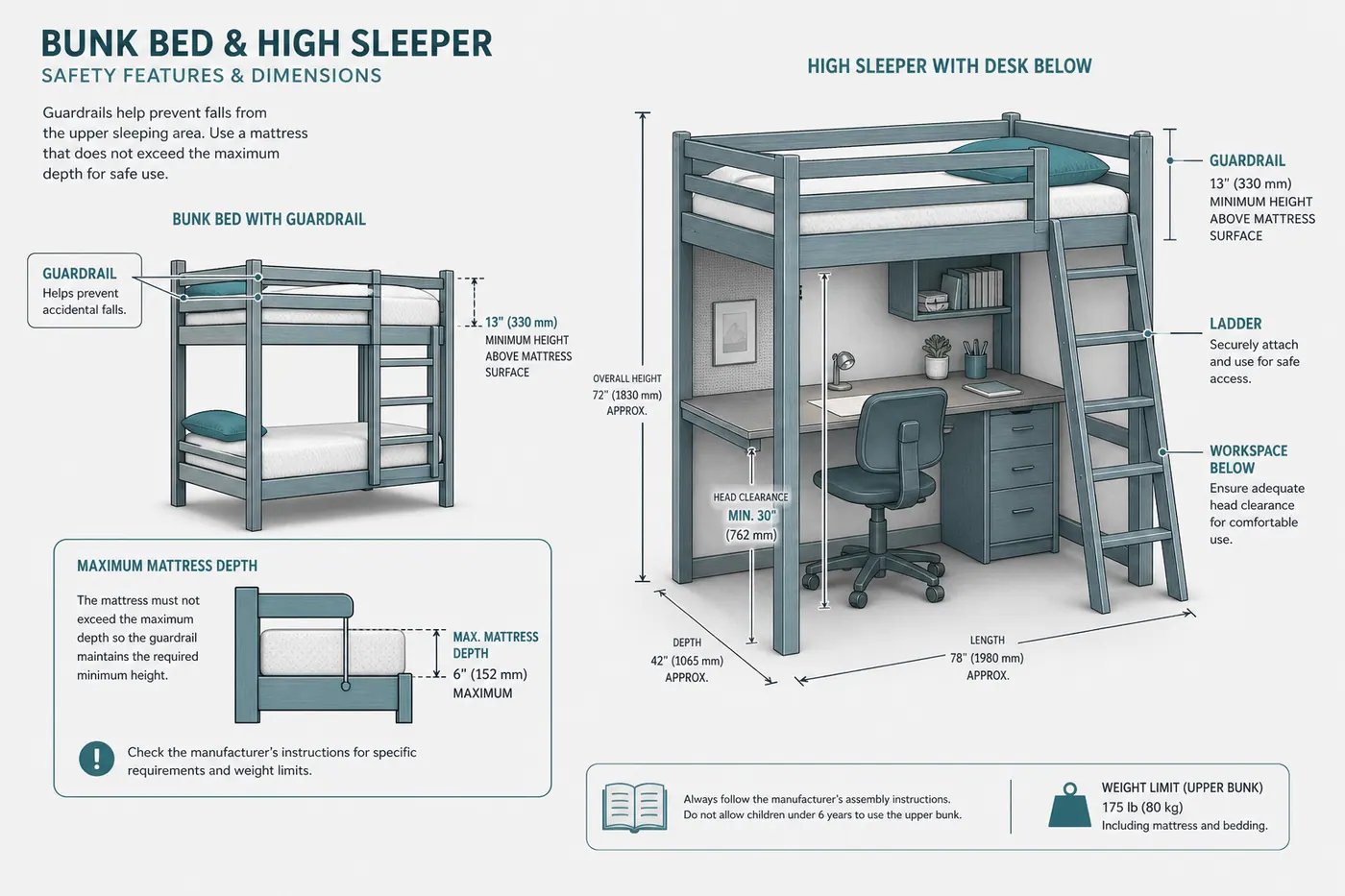
These are space strategies, not mattress types. Mattress width is often still a UK Single — measure centimetres and follow the frame’s safety sheet.
Key differences
| Criterion | Bunk bed | High sleeper |
|---|---|---|
| Sleep places | Usually two mattresses | Usually one raised mattress |
| Under-space use | Lower bunk is a bed | Desk, seating or storage zone |
| Best when | Two children share a room | One sleeper needs floor space below |
| Safety focus | Top and bottom bunk rules | Height, rail and ladder rules |
Bunk bed may suit if…
- You need two regular sleep surfaces in one footprint
- Siblings sharing is the main goal
High sleeper may suit if…
- One child needs a bed plus study or lounge space
- You do not need a second everyday mattress
Frequently asked questions
- Can toddlers use the top bunk or high sleeper?
- Product age guidance usually says no for very young children on raised beds. Always follow the manufacturer’s age and weight limits.